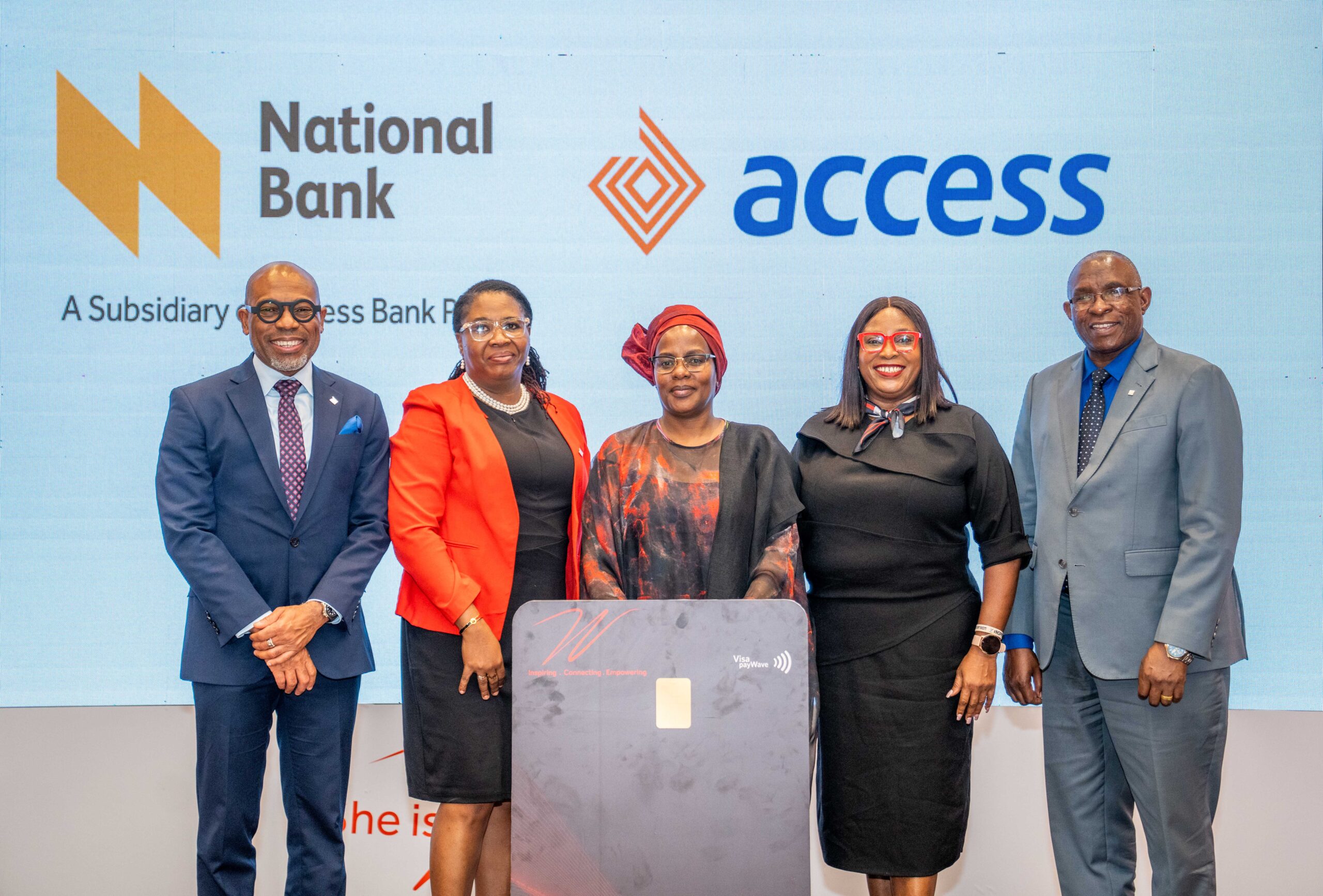
In a strategic move to deepen financial inclusion and support women-backed small and medium sized enterprises (SMEs), Access Bank Kenya and National Bank of Kenya (NBK) have joined forces to roll out the “W Initiative,” a comprehensive banking ecosystem tailored specifically for women entrepreneurs. The partnership aims to harness the strengths of the two banks while bridging longstanding financing gaps affecting women-owned businesses across Kenya.
NBK has previously operated two separate women-focused programmes: “NIA,” its conventional banking option, and “Almasi Lady,” a Shariah-compliant solution. Under the new W Initiative, these programmes are consolidated into one inclusive platform. The purpose is to simplify access, reduce fragmentation, and offer women entrepreneurs a more coherent suite of financial and non-financial services under one umbrella. According to the banks, this unified approach is intentionally designed around the realities and aspirations of Kenyan women in business.
Access Bank Kenya brings to the table access to a broader, pan-African financing framework. Across the wider network of its parent group, the W Initiative has reportedly disbursed USD 141 million to women entrepreneurs. This demonstrates a tested model of gender-lens financing that the Kenyan subsidiaries are now deploying locally. By leveraging Access Bank’s regional footprint and combined resources, the banks aim to deliver tailored solutions at scale, rather than reinventing tools for each individual branch or product line.
The W Initiative offers more than just loans. The programme’s design emphasises a holistic support system including trade financing, insurance, custom banking products (such as “W Cards” and “W Loans/Trade”), and non-financial support services: capacity-building, mentorship, exposure trips, market linkages and networking.
This reflects an emerging industry recognition that access to capital is only one part of what women-led SMEs need. Equally important are business development support, market access, risk mitigation and ongoing guidance — especially in economies where structural barriers, collateral requirements and financial literacy have historically limited women’s access to formal finance.
The banks point to persistent structural inequalities in access to credit for women-owned enterprises in Kenya. According to their public statements, only around 7 per cent of women-owned MSMEs access formal credit, and women-led businesses receive about 36 per cent of total MSME lending.
While publicly available studies across Africa and Kenya confirm that women entrepreneurs often face unequal access to formal finance — due to factors such as lower collateral ownership, gendered risk perceptions, or lack of tailored products — precise national-level statistics matching those exact figures remain difficult to independently verify.
Nonetheless, the existence of a gap is widely acknowledged in the industry, and gender-lens financing is increasingly viewed by banks worldwide as both a social responsibility and a viable commercial strategy.
The partnership is not a move driven by competition but by strategic alignment: NBK and Access Bank Kenya are both subsidiaries of the same parent group. By standardising women-focused financing under a single banner, the group ensures consistency, clarity and scalability across its regional operations. This intra-group alignment allows for pooling of capital, shared expertise and group-wide best practices — benefiting customers, reducing duplication, and improving operational efficiency.
If implemented effectively, the W Initiative could catalyse greater participation of women in entrepreneurship and formal business in Kenya. By offering accessible finance, risk-mitigated loans, trade facilities, insurance and capacity building, the banks address multiple barriers at once. The comprehensive support structure increases the likelihood that women-led SMEs will survive initial challenges, scale up operations and access larger markets.
Moreover, the unified, well-resourced platform may serve as a blueprint for other banks in Kenya and beyond, encouraging more widespread adoption of gender-lens financing models. For a country where SMEs contribute significantly to economic activity, expanding inclusive finance could translate into broader employment, growth and social impact.