
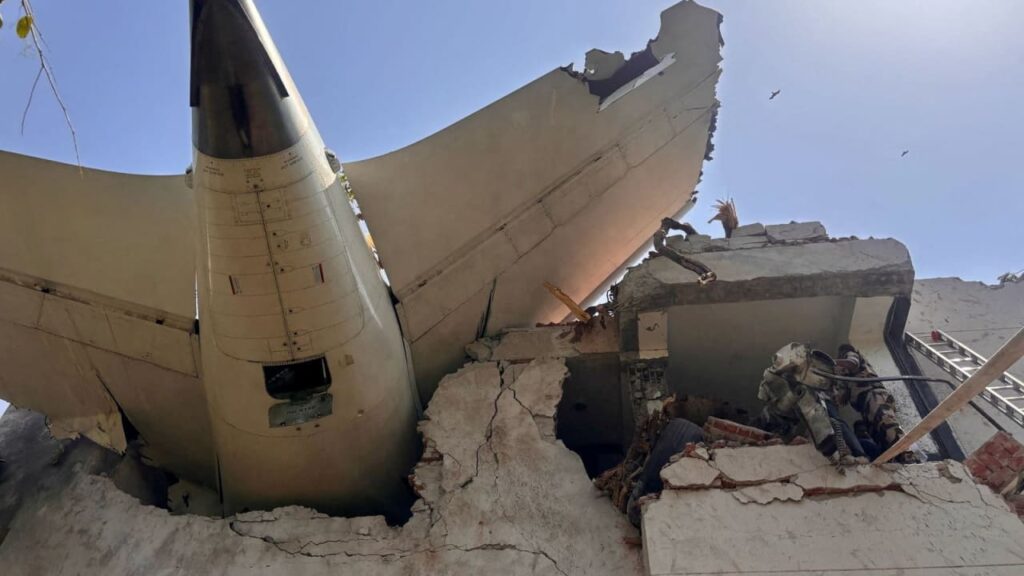
The deadly crash of an Air India Boeing 787 Dreamliner in Ahmedabad, which killed more than 260 people, is intensifying global scrutiny over whether aviation accident investigations are keeping pace with the growing complexity of modern aircraft systems.
As investigators continue to analyse the circumstances surrounding the disaster, a former Boeing manager and whistleblower has warned against an early drift towards pilot error, arguing that unresolved technical and manufacturing risks within the Dreamliner deserve far closer examination.
Ed Pierson, who previously raised internal safety concerns during Boeing’s production of the 787, says the aircraft’s highly integrated electrical architecture creates the potential for cascading system failures, particularly if wiring defects or manufacturing lapses are involved.
“The danger is that investigators default too quickly to human error,” Pierson has said, cautioning that modern aircraft failures can emerge from complex interactions between software, electrical systems and production quality, rather than a single isolated action in the cockpit.
The London bound flight crashed shortly after take off from Ahmedabad’s Sardar Vallabhbhai Patel International Airport, striking buildings near the runway. Only one passenger survived. It was the first fatal hull loss involving a Boeing 787 since the aircraft entered commercial service in 2011.
Manufacturing concerns resurface
Pierson has pointed to years of internal quality warnings linked to production pressure, repeated system test failures and early Dreamliner aircraft that required extensive rework before delivery. He argues that these issues have never been fully resolved and should form a central part of the investigation.
According to Pierson, the 787 relies more heavily on electrical systems than previous generations of aircraft, replacing many traditional hydraulic and pneumatic functions. While this design offers efficiency gains, it also increases the risk that a single fault can trigger wider system disruptions.
“These aircraft are flying computer networks,” he has said. “If something goes wrong deep in the system, it may not present itself in obvious ways.”
Questions over transparency
The whistleblower has also criticised the limited transparency of the preliminary findings released so far, noting that key data from aircraft health monitoring systems has not been fully disclosed. He says incomplete information risks narrowing the investigation too early and undermining public confidence.
India’s Aircraft Accident Investigation Bureau has confirmed that both engines lost thrust shortly after take off, following movement of the fuel control switches from “RUN” to “CUTOFF”. However, investigators have not yet established why this occurred and have not ruled out technical or maintenance related causes.
Aviation safety experts note that in modern aircraft, switch movements recorded in cockpit data do not always indicate direct pilot input, particularly in the presence of system faults or electrical anomalies.
A broader test for aviation safety
With more than 260 lives lost, the Ahmedabad crash is increasingly being viewed as a wider test of whether traditional investigative approaches are sufficient for aircraft that rely heavily on software, sensors and integrated systems.
While final conclusions may take months or years, critics warn that early narratives can shape public perception and policy long before all technical evidence is fully understood.
Air India and Boeing have said they are cooperating fully with investigators, urging patience as the inquiry continues.
For families of the victims and regulators worldwide, the outcome of the investigation may have implications far beyond a single crash, potentially influencing how future air disasters are examined in an era of increasingly complex aircraft design.