
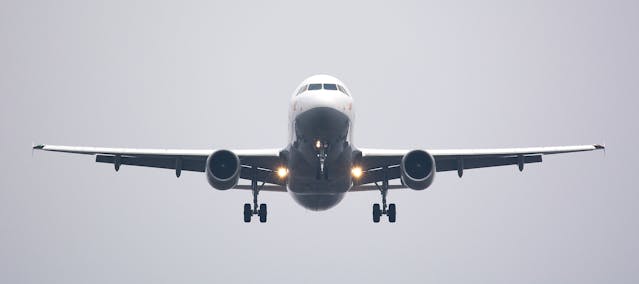
Airbus SE has reported strong commercial momentum and steady financial performance for the first half of 2025, despite facing ongoing supply chain constraints, particularly in engine availability for the A320 Family aircraft.
Airbus Chief Executive Officer Guillaume Faury said, “The commercial performance in the first half of 2025 has been strong across the Company. Our H1 financials reflect transformation progress in our Defence and Space division and the lower commercial aircraft deliveries compared to a year ago. We are producing aircraft in line with our plans but deliveries are backloaded as we face persistent engine supply issues on the A320 programme.” He added that the recently renewed zero-tariff agreement between the European Union and the United States for civil aircraft was “a welcome development” for the industry.
Orders and Deliveries
Airbus booked gross commercial aircraft orders totalling 494, a sharp increase from 327 aircraft in the same period last year. Net orders stood at 402 aircraft after cancellations, up from 310 a year earlier. The total order backlog reached 8,754 aircraft by the end of June 2025.
Airbus Helicopters secured net orders for 171 units, down from 233 in H1 2024, but orders were well distributed across its product portfolio. Airbus Defence and Space recorded €5.1 billion in order intake, compared to €6.1 billion last year.
Despite strong order activity, aircraft deliveries were marginally down. Airbus delivered 306 commercial aircraft (H1 2024: 323), comprising 41 A220s, 232 A320 Family aircraft, 12 A330s, and 21 A350s. Helicopter deliveries increased to 138 units (H1 2024: 124).
Financial Performance
Airbus recorded a 3 percent increase in consolidated revenues, reaching €29.6 billion (H1 2024: €28.8 billion). However, revenues from commercial aircraft activities decreased by 2 percent to €20.8 billion, mainly due to lower delivery volumes. By contrast, Airbus Helicopters posted 16 percent revenue growth to €3.7 billion, and Defence and Space rose 17 percent to €5.8 billion.
EBIT Adjusted, Airbus’ key indicator for underlying profitability, increased to €2.2 billion (H1 2024: €1.39 billion). This performance was supported by improved results in Defence and Space and cost control across the business. Notably, EBIT Adjusted for Defence and Space rebounded to €265 million, compared to a loss of €807 million in H1 2024. Helicopters delivered €249 million in EBIT Adjusted, up from €230 million. The commercial aircraft segment saw EBIT Adjusted decline to €1.71 billion from €1.95 billion, reflecting fewer deliveries despite a favourable hedge rate and reduced R&D expenditure.
The company’s reported EBIT reached €1.62 billion (H1 2024: €1.46 billion), after accounting for net adjustments totalling €-587 million. These included €-391 million from dollar working capital mismatch, €-105 million from a workforce adaptation plan in Defence and Space, and €-57 million related to the stabilisation of Spirit AeroSystems work packages.
Net income rose to €1.53 billion, nearly doubling from €825 million in H1 2024. Earnings per share increased to €1.93, up from €1.04.
However, free cash flow before customer financing declined to €-1.61 billion (H1 2024: €-529 million), due to inventory build-up to support production ramp-up and a high number of aircraft awaiting engines. The net cash position dropped to €7.0 billion, from €11.8 billion at the end of 2024, partly due to the dividend payout and the weaker dollar.
Production Outlook and Strategic Updates
Airbus reaffirmed its commitment to scaling production, with the A320 Family ramping toward 75 aircraft per month by 2027. The A330 is stabilising at four aircraft per month, targeting five by 2029, while A350 production aims to reach 12 per month by 2028. The A220 line is projected to produce 14 aircraft per month by 2026.
Challenges remain, particularly with Spirit AeroSystems, whose components are critical to the A350 and A220 programmes. Airbus is progressing with the planned acquisition of certain Spirit work packages, although final regulatory approvals have shifted the expected closing to Q4 2025.
On the A400M military transport aircraft, Airbus has reached an agreement with OCCAR to advance seven deliveries to France and Spain, providing greater visibility on programme planning.
R&D and Investments
Self-financed research and development expenses decreased to €1.41 billion from €1.59 billion, reflecting continued focus on efficiency and programme maturity.
The company’s financial result swung to a positive €490 million (H1 2024: €-108 million), driven by revaluations of equity investments and financial instruments.
Full-Year 2025 Guidance
Airbus maintained its guidance for 2025, excluding any potential impact from tariffs:
- Around 820 commercial aircraft deliveries
- EBIT Adjusted of approximately €7.0 billion
- Free cash flow before customer financing of about €4.5 billion
The integration of selected Spirit AeroSystems assets is expected to have a manageable financial impact, consistent with earlier projections.
Board Update
In a post-closing development, the Board of Directors has nominated Oliver Zipse, current Chairman of BMW AG, to join Airbus as a non-executive director in 2026. Airbus Chairman René Obermann stated, “His wealth of global industry experience will be invaluable to the Company as we move forward.”