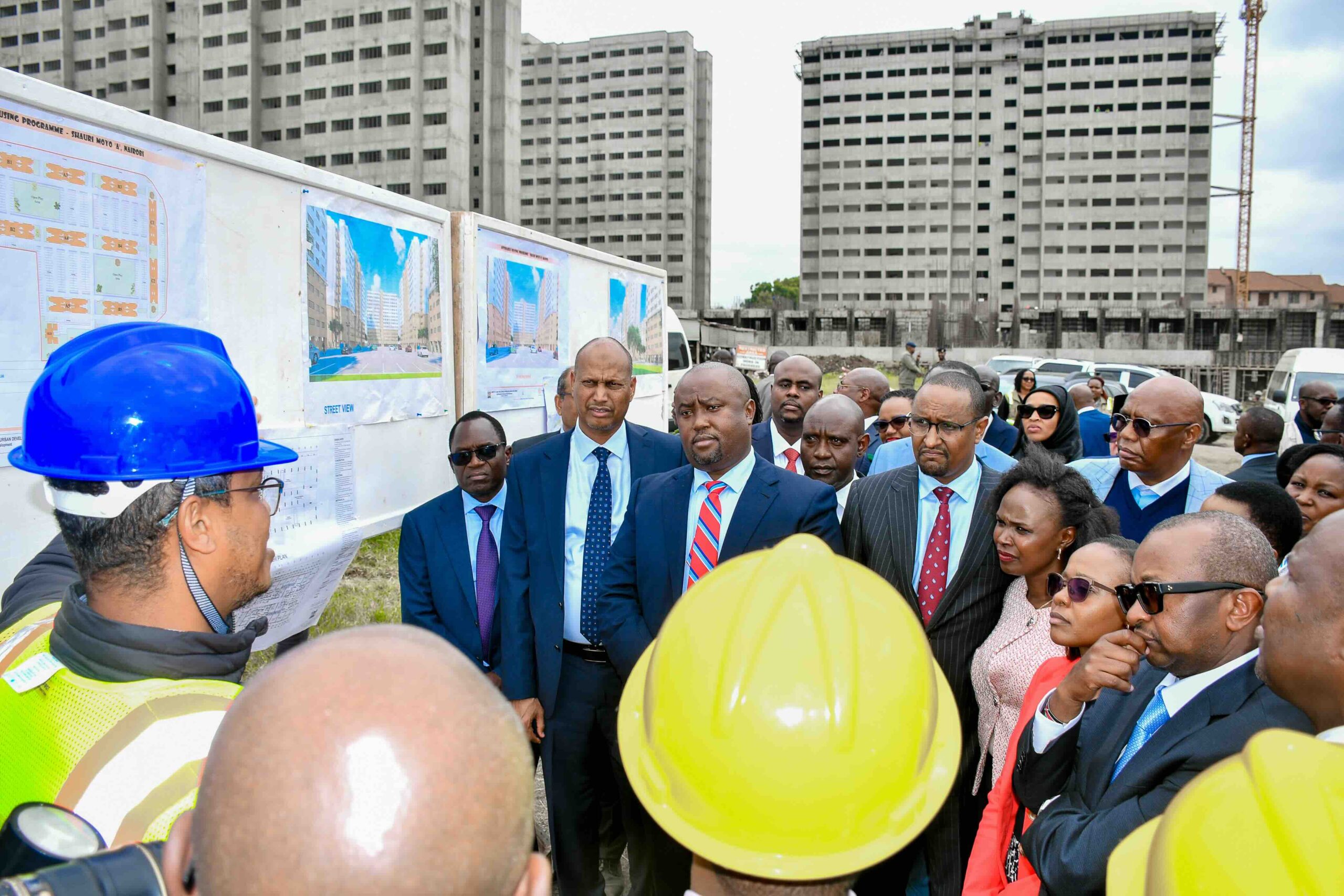
The State Department for Housing and Urban Development has clarified that most of the Sh2.56 billion recorded as “refunds” under the Boma Yangu voluntary savings scheme was used by Kenyans to purchase homes.
In a response to a Sunday Nation article published on July 19, 2026, the department said the platform uses the term “refunds” to describe different movements of money out of savings wallets, including funds transferred as deposits for allocated housing units.
According to the department, Sh1.76 billion, representing 68.6 per cent of the cumulative Sh2.56 billion recorded by June 30, 2026, was applied as deposits towards home purchases.
The remaining Sh803.3 million represents cash withdrawals by savers exercising their right to access their money under the Affordable Housing Act, 2024.
The department said Boma Yangu operates using a savings wallet and a deposit wallet. Savers accumulate funds before transferring them to a selected housing project for consideration during unit allocation.
Where a saver is successfully allocated a house, the deposit is transferred to the relevant financier or implementing agency. Those who are not allocated units can redirect the money to another project or withdraw it.
The department further reported that cumulative savings on the platform had increased from Sh2.47 billion in May 2025 to Sh5.47 billion, while registered users grew from 1.02 million to 1.26 million.
It added that approximately 30 per cent of registered users are actively saving towards home ownership at any given time.
“One in every five savers who takes a refund, other than for a purchase deposit, subsequently returns to saving for a home,” the department said.
The government maintained that withdrawals are a deliberate feature of the scheme, allowing households to respond to financial needs such as school fees, medical expenses and business obligations while pursuing the long-term goal of home ownership.