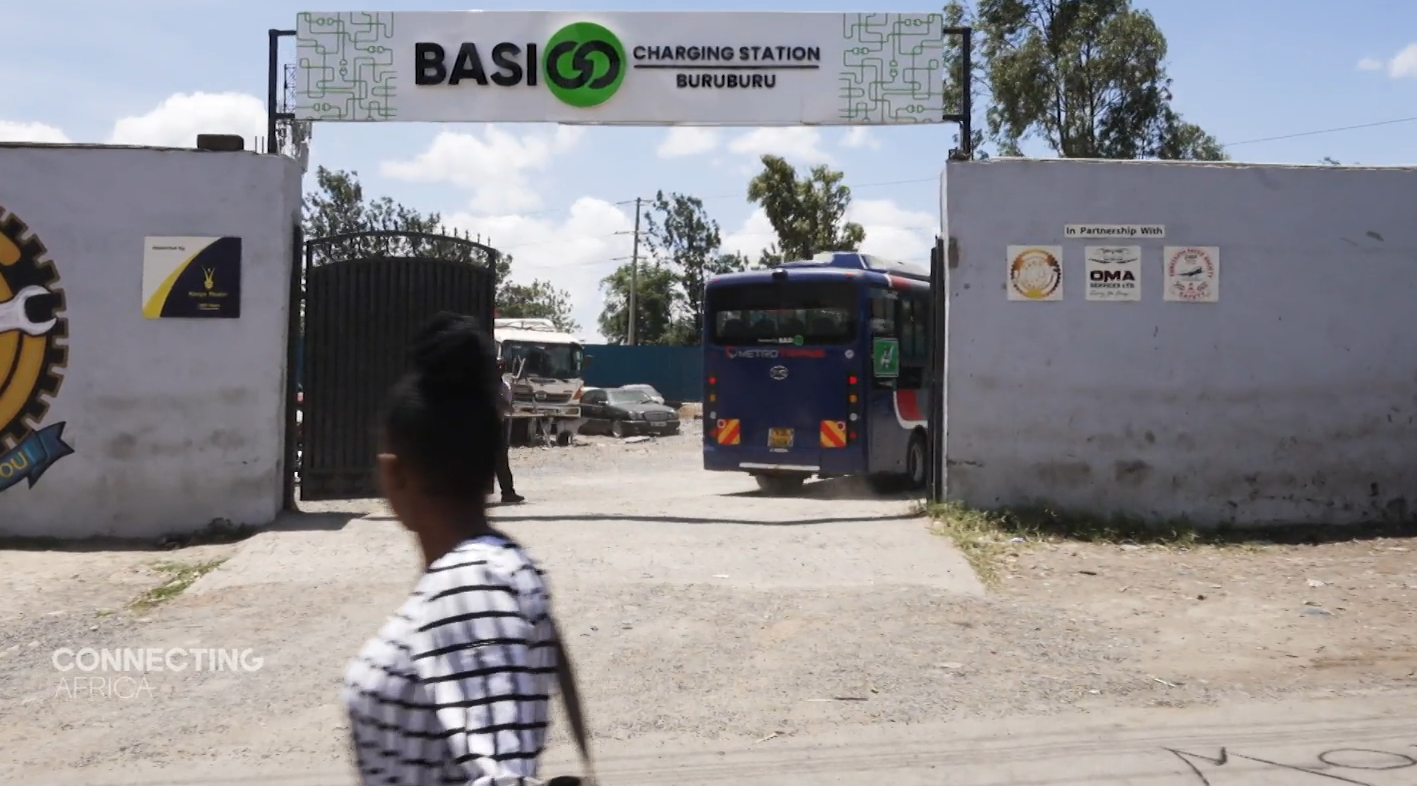
BasiGo, at the forefront of the electric mobility revolution in Africa, is poised to spearhead the transformation of public transport across East Africa. With plans to roll out 1,000 electric buses in the region over the next three years, the company is set to redefine sustainable transportation.
With a population of 4.4 million people, Tumi, an e-bus company, estimated that 46% relied on public transport to get around in 2022. But as these cities grow so does the air pollution that comes with it.


“Our goal is to electrify the public transport fleet in every African city. But our near-term goal is to deploy 1,000 electric buses between Kenya and Rwanda in the next three years,” said Jit Bhattacharya, Co-Founder and CEO of BasiGo Ltd.
“African cities need to undergo a sustainable mobility revolution. So, that has to begin really with buses since it is such an important mode of travel for the vast majority of people, and we want to help lead that change”, he added.
BasiGo builds, sells, and maintains electric buses throughout Kenya and Rwanda. The company imports and locally assembles e-buses to sell to private companies. BasiGo said these buses can travel up to 400 kilometres on a single charge, which takes about two hours to complete. “It’s critical that we deploy the charging directly along the bus routes. This is to ensure that a bus operator or a matatu owner here in Nairobi can use an electric bus in the same way that they use their diesel bus,” said Bhattacharya.
While BasiGo said it imports most of the materials needed to build e-busses, with only 5% of buses being locally sourced, BasiGo’s CEO states: “Our aspiration over the next few years is to eventually raise that to 25 to 30%.” He added, “We are going to create 300 green manufacturing jobs here in Kenya,”
Since opening in 2022, BasiGo said its buses have driven more than 1.5 million kilometres and have carried about two million passengers, and they have no intention of slowing down anytime soon.
Manganese
Africa’s power to become an unrivalled player in the global supply chain of electric vehicle batteries is fuelling BasiGo’s ambition.
The continent has an abundance of the minerals needed to make the batteries that go into electric vehicles and battery storage devices, including lithium, cobalt, and nickel. But another relatively unknown mineral used in batteries is Manganese.
It’s emerging as an important component in the manufacturing of lithium-ion batteries, and one country, South Africa, has one of the largest reserves in the world. Louis Nell, CEO of Manganese Metal Company, told Giokos, “40% of global production comes out of South Africa.”
Nell said manganese presents some safety and economic benefits:
“[Manganese] provides some thermal stability to the battery, which is a safety concern. Compared to the other minerals, manganese is the cheapest or the most affordable of the lot compared to cobalt, nickel, and lithium […] we all know that some of the other minerals are plagued by concerns over ethical mining.” As a result, demand for its use in electric vehicle batteries and other lithium-ion batteries is increasing.
On the outskirts of Mbombela, a city in northeastern South Africa, this industrial complex plays an increasing role in the global electric vehicle revolution. Teheli Morabe, COO of Manganese Metal Company, said, “We get 80,000 tons of ore every year, and we produce 28,000 tons of product every year”.
Manganese goes through a complex production process, Morabe continues: “We mill it into a fine powder. We dissolve it in a process called leaching with acid to get it all into a soluble form. We then take it through various stages of purification. We take it to the tank house where we inject electricity to get the metal to plate on the steel sheets.”
As the EV market grows, the Manganese Metal Company has big expansion plans to keep the battery-grade refining process within the continent’s borders.
“[…] We’ve got ambitions to build a 5,000-ton battery grade manganese sulphate plant. It’ll be a Brownfields extension to our current operations […] we could be in the market by probably the end of 2026,” said Nell.
This article is extracted from the latest episode of Connecting Africa, in which CNN International’s Eleni Giokos delves into the potential of Africa’s electric vehicle industry and its power to become an unrivalled player in the global supply chain