
Nairobi County’s public health facilities have more than tripled their annual revenue in a single financial year, rising from about KSh 800 million to KSh 2.6 billion in FY 2025/26. The county is now aiming for KSh 4 billion in FY 2026/27, a target that would put far more money directly into the hands of the hospitals and health centres that serve the city’s residents.
The growth has come through a strengthened Facility Improvement Financing (FIF) framework, which allows facilities to keep and reinvest the money they collect instead of sending it to a central account. Under the arrangement, hospitals and health centres can put their revenue back into medicines, medical equipment, infrastructure and day-to-day service delivery. The county says the shift has also brought tighter financial accountability and better management of resources across its health facilities.
More beds for the most vulnerable patients
Much of the investment has gone into care for mothers and newborns. The county has set up 23 neonatal intensive care beds and 20 adult ICU beds, along with 224 additional newborn beds to strengthen neonatal care.
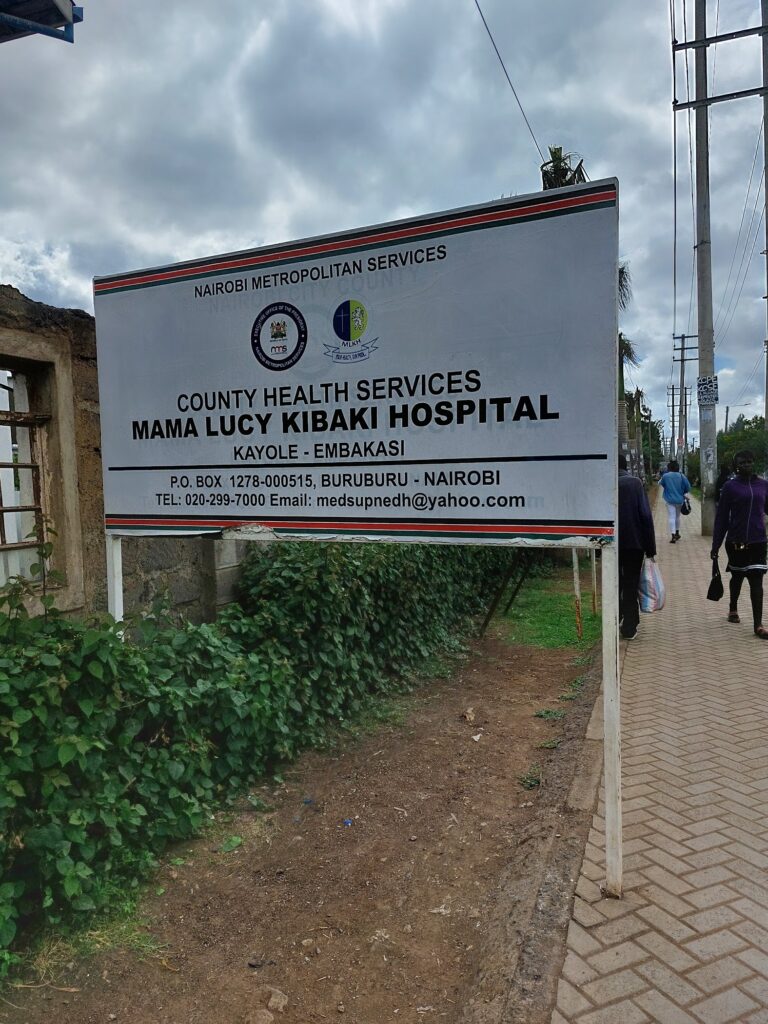
Newborn care services have been expanded at Mama Lucy Kibaki Hospital and Mbagathi Hospital, two of the busiest referral facilities in the county. Families in Eastlands, Kibra, Lang’ata and surrounding areas rely heavily on both.
Emergency caesarean services closer to home
New maternity theatres at Kayole II and Mathare North now offer emergency caesarean sections within the communities they serve. Expectant mothers facing complications in these areas previously had to be referred to larger hospitals, often in heavy traffic, at the moment when delays are most dangerous.
Maternity services have also been expanded at Riruta, Ruai, Pumwani Majengo and Kaloleni. Riruta Health Centre alone now handles more than 100 deliveries a month, showing how much demand there is for well-equipped maternity care at the neighbourhood level.
By spreading delivery services across more facilities, the county also hopes to ease pressure on its main referral maternity hospital.
Pumwani’s national recognition and centenary
Pumwani Maternity Hospital, one of the busiest maternity hospitals in the region, was recognised nationally in May 2026 for excellence in maternal and newborn healthcare. The hospital recorded about 16,500 deliveries in 2025.
Nairobi County was also recognised for its overall performance in healthcare delivery, a sign that the improvements are being noticed beyond the county’s borders.
The award comes ahead of a milestone for Pumwani, which will celebrate 100 years of maternal healthcare service in December 2026. For generations of Nairobi families, the hospital has been where their children were born, and the centenary gives the county a chance to mark both that history and the hospital’s recent turnaround.
Dental care reaches more neighborhoods
Beyond maternal health, the county has widened access to dental care. More than 20 dental units have been rolled out across Nairobi, with dental services now available at facilities including Makadara, Bahati, Dandora I, Kayole II and Baba Dogo.
At Mama Lucy Kibaki Hospital, specialised maxillofacial services, which treat conditions and injuries of the face, jaw and mouth, have been strengthened. To staff the expanded services, the county has brought in about 50 additional dental personnel through recruitment initiatives.
Until recently, residents of many of these areas had to travel long distances or pay for private clinics to get even basic dental treatment.
The jump in facility revenue is central to the county’s health strategy. If the KSh 4 billion target for FY 2026/27 is met, facilities will have even more resources to stock medicines, maintain equipment and extend services to more residents.
The challenge will be to keep up the accountability gains that came with the FIF reforms, so that the extra revenue continues to show up on the wards, in the theatres and in patients’ care.
Related Content: 170 Neurosurgical Experts Convene in Nairobi to Address Africa’s Shortage of Specialists