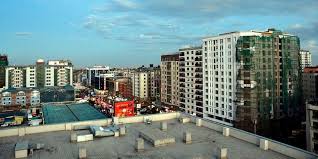
Nairobi rental yields have climbed to their highest level in two decades, driven by sustained rent increases and subdued growth in property sale prices, according to the Hass Property Index for the fourth quarter of 2025.
Data released by HassConsult shows that nationwide property prices rose by 0.3 per cent in the final quarter of the year and by 7.7 per cent over the full year. Over the same period, rents declined nationally, falling by 0.9 per cent in the fourth quarter and by 2.5 per cent for the year, largely due to softer rental markets at the Coast and in other major towns.
In contrast, Nairobi recorded stronger rental performance, pushing city rental yields to a record 7.4 per cent, the highest level since HassConsult began tracking the index in 2007.
“Nairobi’s rental yields have been on a clear upward path for the last two years, climbing steadily above 7 per cent after many years of running at between 5 and 6 per cent. It is a shift happening across the board, despite the city’s property fortunes being markedly mixed across different locations,” said Sakina Hassanali, Co CEO of HassConsult.
Across Nairobi’s suburbs, property prices rose by 0.8 per cent in the fourth quarter, while rents increased by 1.5 per cent, contributing to the rise in yields. House rental growth was strongest in the city’s most affluent neighbourhoods, led by Ridgeways at 9.6 per cent and Lavington at 9 per cent over the year. Quarterly growth was strongest in Runda, where rents rose by 3.1 per cent between October and December.
Sales price performance within the city remained mixed. Apartments in Westlands recorded the largest annual decline, with prices falling by 11.5 per cent in 2025, although the decline slowed to just 0.5 per cent in the fourth quarter as demand improved and occupancy stabilised. HassConsult noted that rents in Westlands had stabilised at around Sh134,000 per month from May 2025, helping to arrest further price declines.
A similar trend was observed in Kileleshwa and Upper Hill, where large volumes of new apartment supply weighed on rents earlier in the year before turning positive in the final quarter.
“In the apartments market, demand has never stopped expanding, but each area is now finely tuned in the volume of new development it can absorb at a time, and very large developments often create a dip in rates as entrants discount to gain full occupancy,” Hassanali said.
The market for houses continued to outperform apartments in several suburbs. Runda recorded the strongest annual house price growth in the city at 12.8 per cent, although growth slowed to 0.9 per cent in the fourth quarter. Lavington, Muthaiga and Ridgeways also posted annual price increases of over 10 per cent, with Lavington leading quarterly growth at 2.8 per cent.
Nairobi’s satellite towns delivered an even stronger performance. Property prices across the 14 monitored satellite towns rose by 4.5 per cent in the fourth quarter, while rents increased by 8.7 per cent, lifting yields to 5.2 per cent, the highest level since 2019.
Annual house price growth in satellite towns was led by Juja at 12.2 per cent, while rental growth was strongest in Ruiru, where house rents rose by 15.6 per cent over the year, followed by Kiambu at 14.4 per cent. Although price growth moderated in the final quarter, HassConsult noted that demand for housing in satellite locations remained resilient, supported by affordability pressures within the city.
Apartment performance in satellite towns was more varied. Syokimau recorded the strongest annual apartment price growth at 10.1 per cent, while Kiambu saw the largest annual decline at 4.4 per cent. Apartment rents, however, rose across all satellite towns.
The Hass Property Index shows that the average value of a property in Kenya has increased from Sh7.1 million in 2000 to Sh39.6 million in December 2025, while the market has continued to shift towards apartments, which now account for more than 70 per cent of all properties offered for sale.
HassConsult said the latest data highlights a structural shift in Nairobi’s property market, with rental income playing an increasingly central role in investment returns amid more moderate capital appreciation.