- Safaricom customers can pay up to KSh 200 to a Pochi la Biashara merchant without incurring a transaction charge.
- Charges for payments above KSh 200 are capped at KSh 50 during the 90-day offer ending on October 31, 2026.
- The revised pricing could help small businesses and informal traders accept more digital payments while keeping business and personal money separate.
For many Kenyans, paying for vegetables, a boda boda ride, lunch or household supplies through M-PESA is already part of everyday life.
However, transaction charges can influence whether a customer pays digitally or withdraws cash, especially when buying low-cost items from small traders.
The revised Pochi la Biashara pricing addresses this concern by making small payments more affordable and clearly showing customers what they will pay.
Under the offer, customers can make Pochi la Biashara payments of up to KSh 200 free of charge, up from the previous KSh 100 threshold.
For payments above KSh 200, transaction charges rise according to clearly defined bands but remain capped at KSh 50. The promotional charges apply until October 31, 2026.
What are the current Pochi la Biashara charges?
The temporary pricing structure is as follows:
| Amount paid | Customer charge |
|---|---|
| KSh 1–200 | Free |
| KSh 201–500 | KSh 7 |
| KSh 501–1,000 | KSh 13 |
| KSh 1,001–1,500 | KSh 23 |
| KSh 1,501–2,500 | KSh 33 |
| KSh 2,501–250,000 | KSh 50 |
This means that if I pay KSh 150 to a fruit vendor using Pochi la Biashara, I do not incur a transaction charge.
If I pay KSh 800, the charge is KSh 13. A payment of KSh 3,000 attracts a KSh 50 charge, and the fee remains KSh 50 even for higher payments within the permitted transaction limit.
The important point is that not every Pochi transaction is free. Only payments of up to KSh 200 qualify for the zero-charge offer, while higher amounts attract the charges shown above.
Why does the KSh 200 free limit matter?
KSh 200 may appear like a small amount, but it covers many transactions made daily in Kenya.
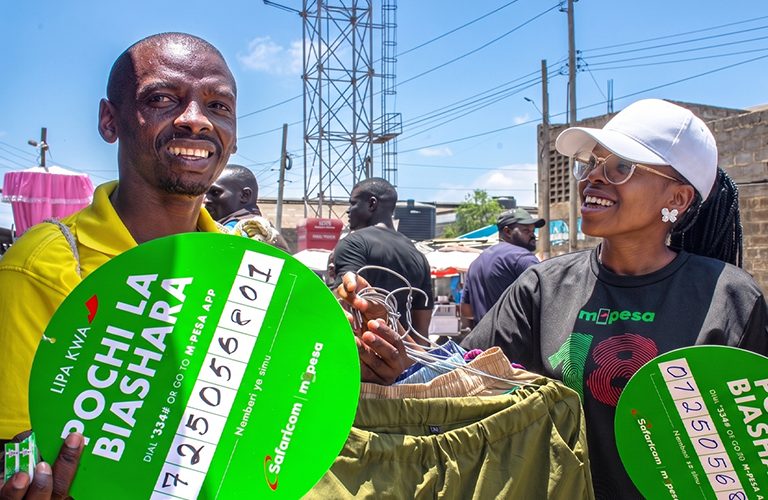
It could be payment for groceries at a neighbourhood kiosk, vegetables at the market, a meal at a food stall or services provided by a small informal trader.
Removing the transaction charge on such payments gives customers less reason to withdraw cash before shopping. For traders, it can make it easier to ask customers to pay directly into their Pochi wallets.
A business receiving many small payments could also spend less time handling cash, looking for change or confirming informal credit arrangements.
Does the merchant pay the Pochi transaction charge?
The displayed transaction charge is paid by the customer making the payment.
However, the merchant benefits when lower customer charges encourage more people to pay digitally. The money received is deposited into the trader’s Pochi la Biashara wallet, separate from their personal M-PESA balance.
This separation is one of the biggest advantages for informal businesses.
A trader who receives business and personal money in the same wallet may struggle to tell how much the business has made or whether part of the operating capital has been spent on personal needs.
Pochi la Biashara provides a dedicated space for business collections, making it easier to follow sales and manage cash flow.
How does transparent pricing help small businesses?
For customers, transparency means knowing the transaction cost before completing a payment.
For traders, predictable charges make it easier to explain payment options to customers without uncertainty or disagreement at the point of sale.
The clear pricing bands also help customers choose the most convenient way to pay. A person paying KSh 500, for example, knows the charge is KSh 7, while somebody paying KSh 1,000 knows the cost is KSh 13.
This matters to small traders because unexpected charges can discourage customers from using digital payment channels, particularly for low-value purchases.
Pochi is becoming more than a payment wallet
Safaricom is also expanding Pochi la Biashara into a broader business wallet for small traders.
In addition to receiving payments and separating business money, eligible merchants can access services such as Taasi Pochi business credit.
Traders can also save and invest through Ziidi Pochi, protect their income through Tuunza Mapato insurance and buy business voice and data bundles through Ofa ya Pochi, with packages starting from KSh 10.
Merchants can also sell airtime and earn a commission of up to 5%.
These services are valuable because many informal traders require more than a way to receive money. They also need tools to save, access working capital, protect their income and communicate with customers.
Safaricom’s newsroom has previously described Pochi la Biashara as a product designed around the needs of small and informal traders.
What should customers and traders remember?
The free KSh 200 threshold and the KSh 50 maximum charge are part of a 90-day offer ending on October 31, 2026.
Customers should therefore confirm the applicable charge on the M-PESA confirmation screen before entering their PIN, particularly after the promotional period ends.
For traders, Pochi la Biashara offers three practical benefits: affordable customer payments, a clear record of sales and separation of business funds from personal money.
For customers like me, the value is equally straightforward: I can pay a small trader directly, see the charge before confirming and avoid carrying cash for everyday purchases.
That combination of affordability, transparency and practical business tools could help more small traders participate in Kenya’s digital economy.