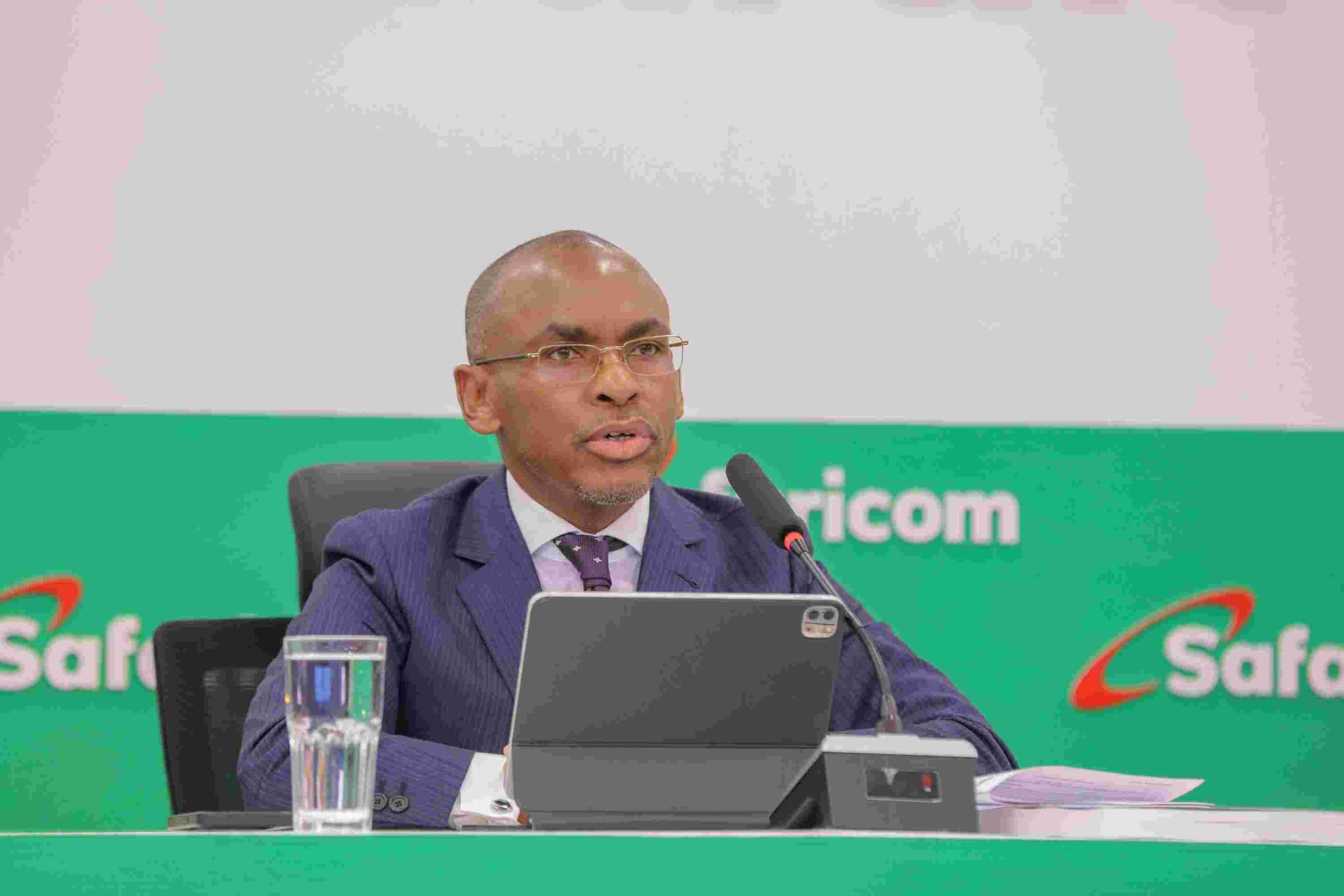
Safaricom Plc shareholders approved a record KSh80.13 billion dividend after the Kenyan telecommunications company reported its strongest financial performance and said its Ethiopian operation was approaching break-even.
The Nairobi-based company will pay a final dividend of KSh1.15 per share for the year ended March 31, bringing the total annual distribution to KSh2 per share. Safaricom paid an interim dividend of KSh0.85 per share in March.
The payout, the largest in the company’s history, marks a return to dividend growth after Safaricom held its distribution unchanged for three years as it absorbed the cost of entering Ethiopia and dealt with the impact of a weaker Ethiopian birr.
Safaricom said its Ethiopian business is on course to break even in the financial year ending March 2027, potentially easing pressure on the group’s earnings and cash flow.
“This has been a defining year for us,” Chief Executive Officer Peter Ndegwa said in a statement following the company’s annual general meeting. “We did this while delivering our strongest financial performance yet.”
Safaricom shares gained 50.3% during the financial year, lifting the company’s market value to KSh1.1 trillion as of March 31. Its market capitalisation subsequently climbed to about KSh1.44 trillion in the weeks preceding the AGM.
The final dividend is expected to be paid on or around September 4 to shareholders registered by the close of business on August 4. Safaricom investors will have received about KSh280 billion in dividends over the past five years, including the latest distribution.
Ethiopia Investment
Safaricom entered Ethiopia as part of a consortium that was awarded the country’s first private telecommunications licence in 2021. The expansion offered the Kenyan company access to one of Africa’s largest populations but required significant investment in network infrastructure, customer acquisition and mobile money services.
Its performance was also affected by currency depreciation after Ethiopia introduced foreign-exchange reforms in 2024.
Safaricom said the operation is now moving closer to profitability as it expands connectivity and financial services in the country.
In Kenya, the company continues to derive much of its growth from M-PESA, its mobile money platform. M-PESA generated KSh182.7 billion in revenue during the year to March and processed transactions valued at KSh41.68 trillion, according to the company.
Safaricom’s total service revenue stood at KSh414 billion during the period.
Vodacom Raises Stake
Shareholders also approved resolutions linked to changes in Safaricom’s ownership after Vodacom Group increased its stake in the company.
Vodacom acquired an additional 15% interest through Vodafone Kenya Ltd. from the Kenyan government, lifting its shareholding to 55%. The government retained a 20% stake, while public investors hold the remaining 25%.
Safaricom Chairman Adil Khawaja said the transaction would give the company greater access to Vodacom’s scale, expertise and regional reach as it implements its Vision 2030 strategy.
The strategy seeks to reposition Safaricom from a traditional telecommunications provider into a broader technology company. Its priorities include expanding broadband and 4G and 5G coverage, increasing smartphone access and using artificial intelligence to improve customer service.
Shareholders also re-elected Edward Okaro to the board and retained Ernst & Young as the company’s external auditor.