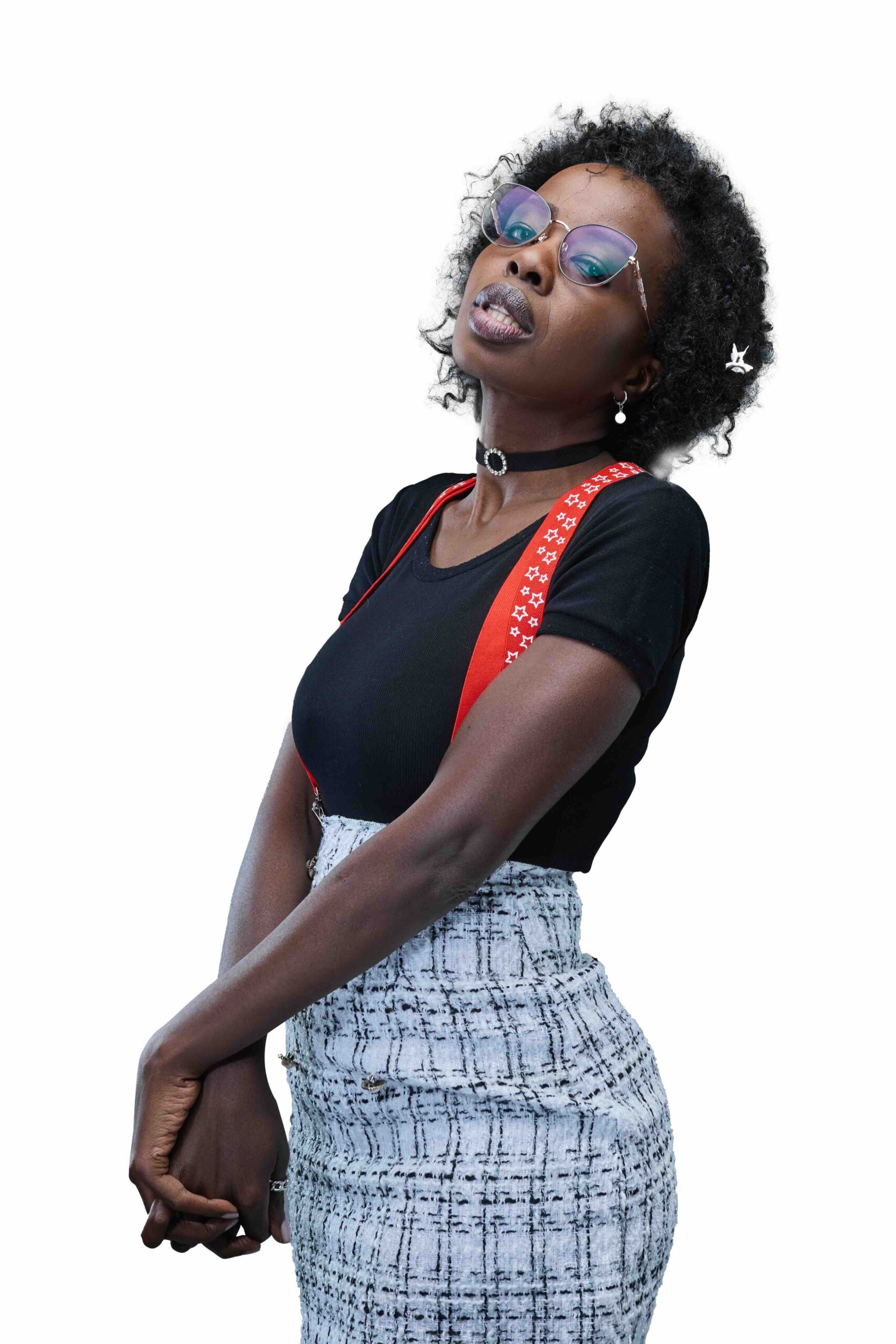
Her parents told her she was throwing her life away. They said art was a “game” for children. But Rose K. Njoroge wasn’t listening. From the quiet Kabuku village in Limuru to the high-stakes world of Kenyan cinema, this screen siren has lived a life more dramatic than the scripts she writes.
In this exclusive, Rose breaks her silence on her midnight escape to Nairobi, the “curse” of winning a Kalasha award too soon, and her small screen debut on Showmax’s gender flip comedy Adam to Eve:
Who is Rose K. Njoroge?
My name is Rose K. Njoroge. I am many things. I am a scriptwriter. I am an actress.
Where did you grow up?
I grew up in Limuru. A small place called Kabuku just near St. Paul’s University. Yes, I am very much a village girl.
Do you remember your first acting role?
My journey into acting started when I was a kid. I was brought up in PCEA, and I remember the Sunday school teachers going like, we feel like you’re very talented. They gave me a role as a false prophetess. It was my first time performing in front of people, so I don’t know what they saw in me. It was one of those plays that you do in front of other churches. It’s an inter church competition and then every church has its own play. We performed ours and I got an award as best lead actress. So, I guess the teachers were right.
When did you decide to focus on acting?
From then on, I remember that’s what ignited my dream into film. Before then, I wanted to get into music. I really knew I was going to be a big-time singer one day. But then it was either film or music. After sitting my Form 4 exams, my parents had other ideas for me. Because they believed art does not pay. And art nimchezo, you know, like, be serious, you are 18 now.
So, they got me into software engineering. Yes, but I never finished school. I felt like this wasn’t where I was supposed to be. This was not my dream. Someone else chose it for me. And since they were not allowing a secondary opinion, I packed my bags in the middle of the night and I ran. Yeah, to Nairobi by myself to chase my dreams.
Someone from my hometown had told me that they had seen auditions at the Kenya National Theatre. So, my plan was to go for the audition. I believed they would pick me, because I am one of the best. I had this pipe dream that the following year I would go back to Limuru in my car and, you know, have an apartment of my own and I will tell my parents you see you were wrong.
When did you get your first breakthrough in the industry?
My parents were right. Art is not easy. Because for the first five years it was tough.
I started acting in set books as almost every other actor in the industry has done. I did two years of travelling theatre. It was very, very hard. After two years, I knew that life wasn’t for me. So, I wanted to get into film.
I luckily got an audition for a feature film. So now I’m like, I will not shoot for the stars. I will go for the role that no one is going for and maybe that will broaden my chance of making it.
So, I did that. I walked into the audition room and introduced myself. I said I am auditioning for Ann, which is a small character.
I remember the director Gilbert Lukalia asking me, “What’s your strength in acting?”
And I said, my ability to cry easily. So, he says, “Let’s see it.” I was so nervous that as soon as he said, let’s see it, the floodgates opened and I cried. It was so bad that the people in the room asked if I was okay.
A couple of days later I got a call and was told I had the role. I went back now to do my role as Ann. They were like, no, it’s not for Ann, it’s for Julie. Julie was the main character. This film was called Strength of a Woman. It was my first role in a feature film. After we shot the movie, it was submitted for the 2014 Kalasha Awards, where I won Best Lead Actress in a Feature Film.
After you won your Kalasha Award, what happened next?
I thought it would put me where people can see me. Sometimes these awards might even work against you because producers will now think you are an A-list star and I can’t afford her. It took me like three years to get my next role, and it was in a short film. So, it wasn’t something that is sustainable.
I am thankful for Kalasha, but it did not do for me what I thought it was going to do for me because the industry doesn’t work like that.
I have an award sitting at home to show that I’m a good actress. But no one’s hiring you because they think you’re too up there.
How did you transition into screenwriting, and what drew you to that side of the industry?
I was always passionate about writing. It started with compositions in school and I would get 30/30. Then I got into writing novels in high school. When you are an only child, you have a lot of time to create things in your head because you don’t have siblings. You create worlds, so I was creating worlds and putting them down on paper.
Of course, I didn’t finish the novels, but I had Facebook. Facebook was always asking me, what’s on your mind? I am like you know what Facebook, I will tell a short story. So, I started telling the short stories and then I garnered a following from the short stories, and people were sharing them far and wide.
Then one day I get a DM from Canadian filmmaker Neil Schell. Neil was like, I think you would be great for our TV series. We have one season ready and are looking to do season two and we think you would be a great addition. Mind you, I had never written anything professionally before. So that was a big deal. This was towards the end of 2017. I was contracted to write for the show called Monica which starred Brenda Wairimu and Raymond Ofula.
At the time, I was also working on my short film based on post-election violence called The Statistic which I also produced and starred. This short film garnered local and international media attention from outlets such as BBC.
Was scriptwriting your comeback into the industry?
As soon as people saw I could write Monica, that’s when the calls came in—to write a short film here, a movie there. People stopped associating me with acting and now I was a full-time scriptwriter. I wrote scripts up until 2022. From 2017 to 2022 I did not act in anything, I was just a scriptwriter.
How did you end up in Adam to Eve?
The first project I did with Lizz Njagah and Alex Konstantaras was in 2022 for a film called Village Vendetta. And then in November of the same year, they called me up. They had already gone back to Greece, and they told me they had a concept for a TV show. A script did not exist, but they had the full concept. And would I be interested? I said yes. They told me the show is called Adam to Eve.
They had wanted me to write the pilot episode to pitch and see if it became anything. You know you just write an episode, you’re paid, and then you move on with your life. You do not know that two years later you will get another call and be told, yes, someone believes in the project. We are working on it now.
You also appear in the show as Tasha, Makori’s (Blessing Lung’aho) onscreen girlfriend. Tell us about this.
Usually, the characters that I play on screen I already know I am playing them. It’s not the best approach because you start to tailor them around your strengths.
For Tasha, I had no idea I was going to play her. So, I wrote to her unbiased.
After we finished the writing process, I got a call from Gerald Langiri. He tells me Alex has said this role was yours. I did not hesitate as I wanted to really push myself out of the comfort zone.
Did you get satisfaction in playing Tasha?
I love Tasha. I love; I adore Tasha. Tasha is a nerd. She’s introverted. But even in her introversion, she is willing to put herself out there and do things that scare her. And in that, she finds one of the best relationships for her.
Blessing plays a beautiful Makori, and that made the relationship between Tasha & Makori so good. I was very happy to play Tasha. It was authentic. I feel like I did her justice. I have gotten amazing feedback from it. So yes, I love Tasha as a character.
What advice would you give your 18-year-old self?
To be honest, keep that fire. When I was 18, I was very determined—this is the direction I want to take, and it doesn’t matter what anyone else says. This is what I feel is right for me. Everyone around me said it was the foolishness of youth and that I would get to 25 and regret it. As much as the journey to where I am now has been hard, it has totally been worthwhile.
In your 15 years in the acting and writing career, is there anything you wish you had done differently?
I would be less comfortable. I kept waiting for things to happen to me. I kept waiting for the calls to come and for people to reach out. But the truth is, people forget you. In cinema, if I do not see you in six months, I will forget you. If I see someone else almost every day or once a week, they are fresh in my mind. Instead of waiting for that call or for someone to reach out, I would have reached out more. I would have been more active, so to speak.