
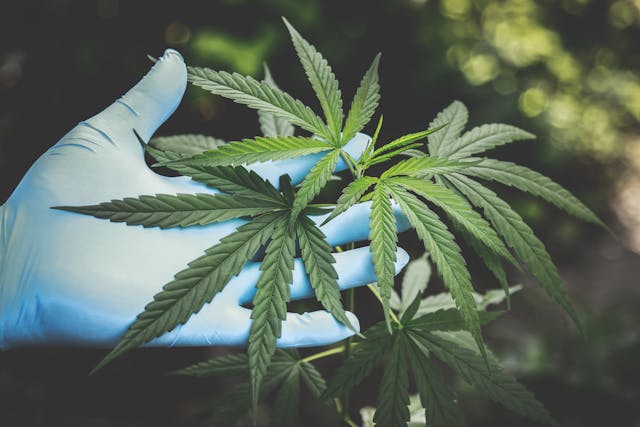
President Donald Trump has ordered the reclassification of marijuana under United States federal law, signalling a major shift in American drug policy while stopping short of full legalisation, a move that contrasts sharply with Kenya’s continued hard line on cannabis.
On 18 December 2025, Mr Trump signed an executive order directing federal agencies to begin moving marijuana from Schedule I to Schedule III under the Controlled Substances Act. Schedule I is reserved for drugs deemed to have no accepted medical use and a high potential for abuse.
“Today I am pleased to announce that I will be signing an executive order to reschedule marijuana from a Schedule I to a Schedule III controlled substance with legitimate medical uses,” Mr Trump said during the signing at the White House. He framed the decision as a response to sustained pressure from patients and families seeking relief through medical treatment, adding, “We have people begging me to do this, people that are in great pain.”
The reclassification acknowledges medical use and lowers federal restrictions, potentially easing research barriers and reducing regulatory pressure on cannabis businesses operating legally under state laws. However the President stressed that the move does not amount to nationwide legalisation.
“This is not the legalisation,” Mr Trump said. “It does not legalise marijuana in any way, shape or form, and in no way sanctions its use as a recreational drug.”
Under the executive order, the Attorney General is required to complete a formal rule making process, including administrative review, before the change takes effect. Until then, marijuana remains illegal at the federal level for recreational use in the United States.
Kenya maintains prohibition
Kenya’s position remains unchanged. Cannabis, commonly known locally as bhang, is illegal under the Narcotic Drugs and Psychotropic Substances Control Act of 1994. The law criminalises possession, cultivation, sale and trafficking, with penalties that can include lengthy prison sentences.
Government agencies have consistently maintained that international or foreign policy shifts on cannabis do not alter Kenya’s domestic laws. While the United Nations has adjusted the global classification of cannabis to recognise medical and scientific use, Kenyan authorities have reiterated that the substance remains prohibited locally.
Growing debate but no policy shift
Despite the firm legal stance, debate over cannabis policy has intensified in recent years. Legal practitioners and civil society groups have mounted constitutional challenges, arguing that criminalisation infringes on rights to health, privacy and religious freedom. The Rastafarian community has been at the forefront of these efforts, seeking exemptions for religious use.
There have also been calls from some legal and economic commentators to consider regulated medical or industrial use, citing potential benefits for healthcare, research and agriculture. So far, these arguments have not translated into legislative change.
The contrast between Washington and Nairobi underscores diverging global approaches to cannabis regulation. While the United States moves cautiously toward recognising medical value within a tightly controlled framework, Kenya continues to prioritise prohibition, even as legal challenges and public debate gather pace.