

Since the outbreak of crises in Libya in 2012, then in Mali and the entire central Sahel, as well as the proliferation of Boko Haram in the countries of the Lake Chad Basin, the Sahel region has been facing enormous security challenges that are aggravated by political, geopolitical, socio-economic, and environmental factors. The deterioration of the security situation is aggravated by highly porous borders, attacks by non-state armed groups as well as inter-community conflicts that have had and continue to have negative impacts on communities and force millions of people to be displaced. But also this situation has generated a major crisis of governance and lack of confidence in the governments of the affected countries having led to a wave of coups d’état and political transitions in : Mali, Niger and Burkina Faso and Chad. The crisis in the Sahel prevails in a context where women were already subject to several forms of violence and discrimination underpinned by socio-cultural barriers deeply rooted in tradition.
Against this backdrop, women are actively working for peace. They have organized themselves into associations at local, national, and regional levels to influence peace and to advocate for the advancement of their rights. But their efforts face several challenges, mainly organizational and lack of funding. It is in this context that UN Women has developed and is implementing since 2023 a program aimed at strengthening the capacities of women’s organizations for peace in the Sahel. Funded by the Government of Netherlands, the program plans to support 103 organizations applying a comprehensive approach combining institutional, technical and advocacy support and partnership.
Building on the commitments of UNSCR 1325, 2024 marked a pivotal shift toward strengthening local women’s organizations and positioning them as key actors for inclusive peace. At the core of the initiative, lies a powerful bet on grassroots transformation. A total of 103 women-led peace organizations received tailored support spanning institutional diagnostics, technical training, coaching, and access to equipment. Twelve organizations now operate from fully equipped, staffed offices, and five have successfully mobilized new funding based on project proposals developed with the program’s guidance. Fifteen organizations began designing income-generating initiatives to secure independent funding streams.
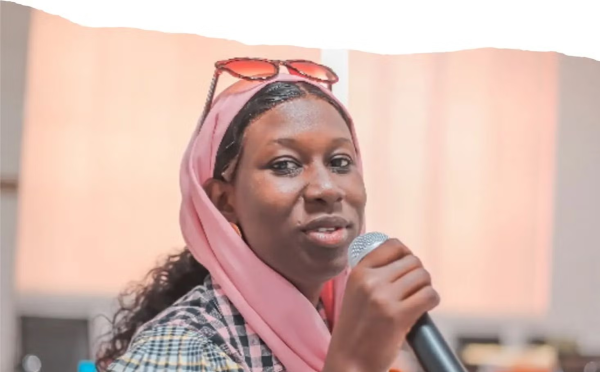
“The project transformed our structure. We revised our policies, gained visibility, and secured international funding.”
– Young women leader, APSJ Mauritania
Beyond capacity building, the program invested in coalition building and advocacy. A mapping of peace-focused women’s organizations was completed in all five countries, laying the foundation for connected national networks and an emerging regional alliance. Virtual convenings and a digital platform piloted in Mali are facilitating knowledge exchange and cross-border solidarity. The 103 organizations are now informally networked across countries, forming the backbone of a regional movement of women peacebuilders in the Sahel.
A cohort of 170 women leaders across the five countries received in-depth training in advocacy strategy, messaging, and influence. Women’s organizations developed national advocacy plans with concrete actions, strategic targets, and implementation roadmaps. The execution of those plans has already begun through targeted lobbying and partner engagement. So many successful advocacy initiatives have been conducted. For example, a National Women’s Dialogue was organized in Niger after the July 2023 coup, uniting 44 women’s groups to define priorities for inclusive transition. Those priorities were presented to the government and some of them considered in the transition roadmap.
In all the five countries, women hold quarterly citizen dialogues to reflect on solutions for durable peace and their inclusion in peace processes.
With a dedicated visual identity “Sahel Women’s Leadership for Peace” the initiative rolled out communications campaigns targeted millions of people across all countries. Public debates, radio programs, and digital storytelling amplified the voices and priorities of women peacebuilders, while increasing public awareness of the WPS agenda.
With this innovative approach, UNWOMEN is catalyzing deep shifts in the peace infrastructure of the region. From grassroots organizations gaining legitimacy and funding, to regional coalitions taking shape and national advocacy plans being rolled out, women are now repositioned as peace leaders. The initiative is not just building capacity, it is reshaping systems. And as these women organize, influence, and lead, they are redefining what inclusive peace looks like in some of the region’s most fragile contexts. Even though the region is still in crisis, there is hope that this women’s movement will contribute to the stabilization of the region.
Distributed by APO Group on behalf of UN Women – Africa.