
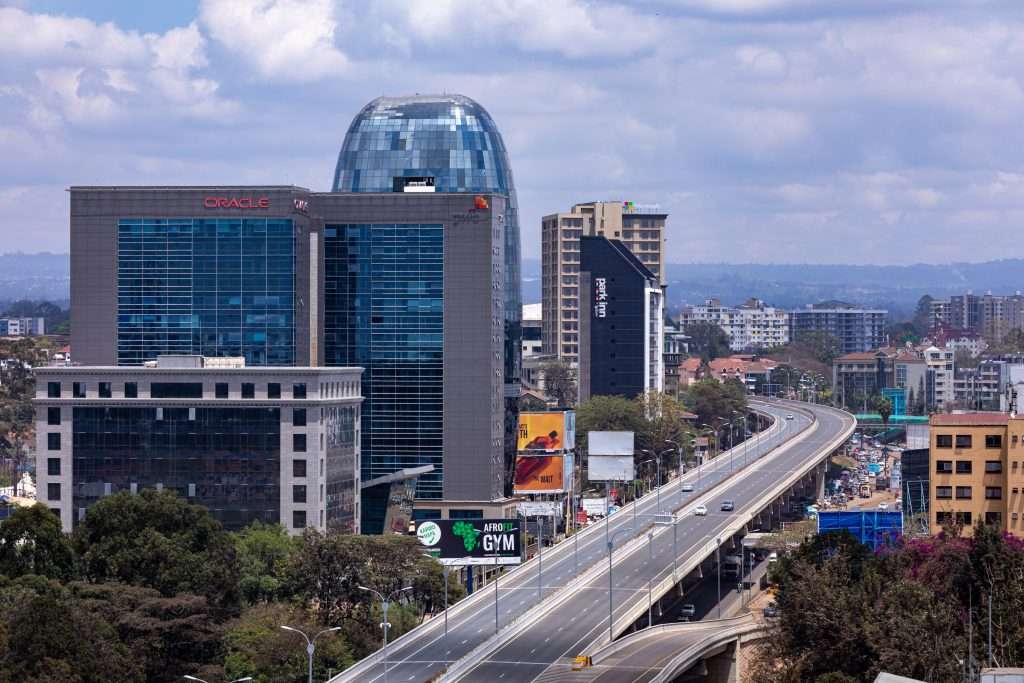
Land prices in Nairobi’s suburbs recorded their slowest quarterly growth in three years, as appreciation slowed to 0.7 per cent in the third quarter of 2026, down from 1.4 per cent in the previous quarter.
According to the latest HassConsult Land Price Index, the average asking price for an acre of land in Nairobi’s suburbs stood at Sh233.5 million, reflecting a slowdown in a market that had recorded stronger gains earlier in the year.
Despite the moderation, 13 of the 18 suburbs tracked by the index recorded positive price growth, led by Karen, where land prices rose by 3.0 per cent to an average of Sh81.8 million per acre.
Westlands followed with a 2.7 per cent increase to Sh521.7 million per acre, while Kitisuru recorded a 2.6 per cent rise to Sh105.2 million. Muthaiga and Loresho also registered gains of 2.0 per cent and 1.9 per cent, respectively.
However, some neighbourhoods experienced declining land values. Muthangari recorded the sharpest quarterly drop at 3.1 per cent, followed by Gigiri at 2.2 per cent, Riverside at 1.5 per cent and Spring Valley at 1.2 per cent.
HassConsult Co-CEO and Creative Director Sakina Hassanali said the latest figures suggest that the stronger appreciation recorded in the previous quarter may not have signalled a sustained recovery.
“The sharp moderation in the third quarter suggests that the previous quarter’s rebound was a temporary acceleration rather than a sustained shift in land-price momentum. Nairobi’s land market appears to be returning to a period of more measured appreciation, following the stronger gains recorded earlier in the year,” said Hassanali.
A similar trend was witnessed in Nairobi’s satellite towns, where quarterly land price growth slowed to 0.65 per cent from 1.4 per cent, bringing the average asking price to Sh33.7 million per acre.
Ngong recorded the highest quarterly appreciation at 2.2 per cent, followed by Thika at 2.0 per cent and Ruaka at 1.9 per cent. Meanwhile, Mlolongo experienced the steepest decline at 2.2 per cent.
The report also revealed that land investments in most satellite towns have delivered lower returns than short-term government securities over the past two years.
Of the 14 satellite towns surveyed, 12 recorded land price appreciation below the modelled cumulative returns from rolling 91-day Treasury bills, with only Ruiru and Juja outperforming the benchmark.
Hassanali noted that the changing investment returns could influence how buyers approach land ownership, particularly in emerging urban centres.
“Satellite towns have historically attracted buyers investing in land for future capital appreciation. However, as returns from passive landholding become less competitive with alternative investments, the economic justification for purchasing land may increasingly depend on its intended use,” she said.
Despite the recent slowdown, the index shows that land remains a strong long-term investment, with values in Nairobi’s satellite towns having increased 13.8-fold since December 2007, compared with 7.72-fold in Nairobi’s suburbs.
The findings point to a changing property investment landscape, where buyers may increasingly weigh the practical use of land against the returns available from alternative investments.