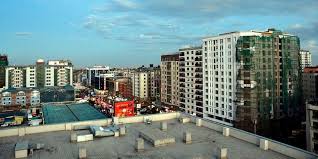
Nairobi’s real estate market recorded mixed fortunes in the second quarter of 2026, with land prices rising across both suburbs and satellite towns even as the cost of completed homes declined in areas outside the capital.
According to the latest HassConsult Property and Land Price indices, average property prices in Nairobi suburbs increased by 0.9 per cent to Ksh33.1 million during the quarter.
In contrast, property prices in satellite towns declined by 0.6 per cent to an average of Ksh14.52 million, although the contraction was smaller than the 0.9 per cent drop recorded during the first quarter.
The decline was widespread, with eight out of 10 satellite towns reporting falling house prices. Six of the nine apartment markets surveyed in the satellite towns also recorded price reductions.
Ongata Rongai registered the steepest quarterly decline in house prices at 2.7 per cent, bringing the average value to Ksh15.6 million. Ngong followed with a 2.5 per cent drop to Ksh19.4 million.
Nairobi Suburbs Record Growth
Within Nairobi, all 14 suburbs covered in the house price survey recorded positive quarterly growth.
Ridgeways led the market after house prices increased by 3.4 per cent to Ksh85.2 million. Karen followed with a 3.2 per cent rise to Ksh113.4 million, while Lavington recorded a 3.1 per cent increase to Ksh82.5 million.
HassConsult attributed the contrasting performance to the greater sensitivity of buyers in satellite towns to rising household expenses and difficult economic conditions.
Inflation increased from 4.4 per cent in March to 6.7 per cent in May before easing to 6.4 per cent in June, placing additional pressure on household purchasing power during the quarter.
Despite the slowdown in property sales, rental demand remained strong.
Rental prices in Nairobi suburbs increased by 1.4 per cent, while those in satellite towns grew by 1.1 per cent.
Runda led rental growth in the suburbs at 3.4 per cent, followed by Ridgeways at 3.2 per cent. Among satellite apartments, Ongata Rongai, Athi River and Mlolongo recorded increases of 3.5, 3.2 and 3.0 per cent, respectively.
Property yields in Nairobi suburbs remained unchanged at 7.4 per cent, while satellite town yields edged up from 5.3 to 5.4 per cent.
Land Prices Rise Across the Market
Unlike completed homes, land prices increased in both Nairobi and its satellite towns during the quarter.
Land prices in Nairobi suburbs rose by approximately 1.4 per cent, improving from growth of 0.8 per cent during the previous quarter.
Satellite-town land prices also increased by about 1.4 per cent, up from growth of 0.5 per cent in the first quarter.
The report indicated that demand improved after the publication of the Nairobi City County Development Control Policy 2026, which addressed some of the uncertainty developers had faced over planning approvals.
Developers and individuals building their own homes increasingly targeted comparatively affordable areas suitable for detached and semi-detached housing.
Langata recorded the highest quarterly land price growth among Nairobi suburbs at 4.1 per cent, pushing the average cost of an acre to Ksh94.7 million.
Karen followed with a 3.2 per cent increase to Ksh79.5 million per acre, while Runda rose by 2.9 per cent to Ksh105.6 million. An acre in Nyari averaged Ksh128.2 million after prices increased by 2.5 per cent.
HassConsult Co-CEO and Creative Director Sakina Hassanali noted that Karen and Langata had recorded their strongest quarterly growth in a decade as buyers shifted towards areas with lower land-acquisition costs.
Ruiru and Thika Lead Satellite Towns
Ruiru emerged as the strongest-performing satellite town, with land prices increasing by 4.1 per cent to Ksh42.2 million per acre.
Thika recorded growth of 3.8 per cent to Ksh32.4 million, while Ruaka rose by 2.8 per cent to Ksh115.7 million per acre.
However, seven of the 14 satellite towns surveyed still recorded negative growth. Ngong performed worst after prices fell by 2.5 per cent, while Limuru registered a 0.8 per cent decline.
The report linked Ruiru’s performance to major mixed-use developments, including Tatu City and Northlands, which have attracted industrial and commercial investment and created demand for housing.
Thika’s proposed elevation to city status was also cited as a factor supporting land prices, while the Nairobi Western Bypass and Ruaka’s proximity to the United Nations complex boosted developer interest in the town.
HassConsult observed that the market was becoming increasingly selective, with price growth concentrating in areas supported by employment centres, infrastructure projects and expanding commercial activity.
The firm’s long-term analysis further showed that Ksh1 million invested in satellite-town land at the end of 2007 would have grown to Ksh13.71 million by June 2026. A similar investment in Nairobi suburban land would have risen to Ksh7.66 million, compared with Ksh2.92 million in the general property sales index.