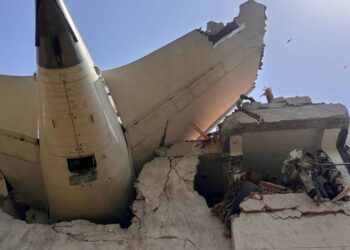
India civil aviation ministry has confirmed the successful recovery and access of critical flight recorder data. This marks a significant milestone in efforts to uncover the sequence of events that led to one of India’s most devastating air disasters in recent memory.
Crash Overview: A Brief but Fatal Flight

On 12 June, Air India Flight 171, a Boeing 787-8 Dreamliner en route to London, crashed just 40 seconds after taking off from Ahmedabad airport in western India. The incident claimed the lives of at least 270 people, with only one survivor among the 242 passengers on board. The aircraft, piloted by Captain Sumeet Sabharwal and co-pilot Clive Kundar, issued a mayday call moments after takeoff—its final transmission—before crashing into a densely populated neighborhood.
Recovery of Black Boxes and What They Reveal
Investigators recovered both Enhanced Airborne Flight Recorders (EAFRs)—commonly referred to as “black boxes”—from the crash site on 13 and 16 June. One recorder was found lodged on a rooftop, while the other was retrieved from scattered debris. These units, which include both the Flight Data Recorder (FDR) and the Cockpit Voice Recorder (CVR), are designed to capture comprehensive data crucial to post-crash analysis.
The recorders store critical flight parameters such as engine thrust, fuel flow, flap and gear lever positions, and fire handle activation. They also archive cockpit audio, including pilot communications, individual mic input, and ambient sounds within the flight deck. Together, this data helps reconstruct the final moments of a flight and uncover potential causes of the crash.
Ongoing Investigation and International Collaboration
The Indian Aircraft Accident Investigation Bureau (AAIB), leading the probe in collaboration with the US National Transportation Safety Board (NTSB), accessed the data earlier this week. According to the aviation ministry, a detailed analysis of the FDR and CVR is currently underway. The goal: to piece together the flight’s final seconds and identify contributing factors that could help prevent future tragedies.
“The analysis of CVR and FDR data is underway,” the ministry said in a statement. “These efforts aim to reconstruct the sequence of events leading to the accident and identify contributing factors to enhance aviation safety and prevent future occurrences.”
Jennifer Homendy, Chair of the NTSB, emphasized the importance of transparency and timely findings. Speaking to Reuters, she urged the Indian government to release investigation details as soon as possible for the benefit of public safety and global aviation standards. “We have had excellent cooperation from the Indian government and the AAIB,” she noted.
Concerns Over Delay and Transparency
The nearly two-week gap between the crash and the official data download has raised eyebrows among aviation experts, with some calling the delay unusual for a high-profile case involving an advanced aircraft like the Boeing 787. Experts stress the importance of timely access to flight recorder data to maintain public trust and support the investigation’s integrity.
As investigators sift through the vast troves of data, the aviation community—and the families of those lost—await answers. The findings could take several weeks to finalize, but the analysis of these flight recorders is expected to shed light on what went wrong in those final 40 seconds and how similar incidents might be avoided in the future.