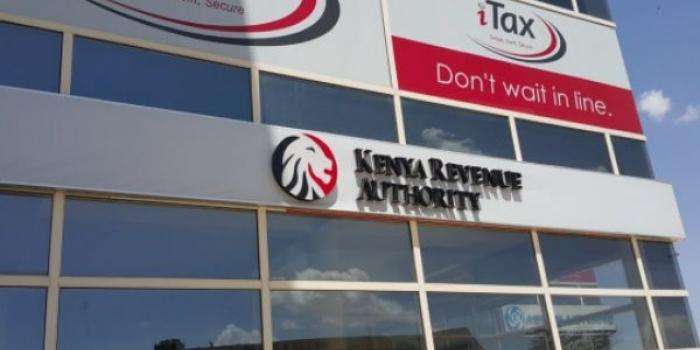
Kenya’s tax authority missed its revenue target for the first half of the 2025 and 2026 financial year, deepening concerns over the government’s ability to fund key programmes without increasing borrowing or cutting spending.
The Kenya Revenue Authority (KRA) collected Sh1.161 trillion between July and December 2025, falling Sh152.2 billion short of the Sh1.314 trillion required to remain on track for the full year target of Sh2.627 trillion, according to data from the National Treasury.
The outcome represents 88.4 per cent of the midyear goal and underscores mounting strain on public finances at a time when debt servicing costs remain elevated and the scope for new tax measures is limited.
While collections were higher than in the same period a year earlier, the growth was insufficient to meet Treasury projections. The shortfall mirrors the previous financial year, when the authority raised Sh1.07 trillion in the first half against a target of Sh1.23 trillion, missing the mark by Sh163.46 billion.
That earlier underperformance followed the rejection of the Finance Bill, which forced the government to abandon several proposed tax increases. In the current fiscal year, there were no major legislative disruptions, yet revenue mobilisation continued to face structural challenges.
Treasury officials have pointed to the seasonal nature of corporate tax payments, which typically rise toward the end of the financial year, as a potential buffer that could narrow the gap. Even so, analysts warn that the Sh2.627 trillion target is among the most ambitious in recent years, and failure to achieve it would likely widen the fiscal deficit.
A larger deficit could push the government to increase borrowing or delay planned development projects. Domestic borrowing has already climbed sharply, raising concerns about crowding out private sector credit, while access to external financing is constrained by high debt levels and tighter global financial conditions.
The Parliamentary Budget Office has cautioned against an overreliance on new taxes, urging a stronger focus on enforcement and compliance. “Rather than relying on the introduction of new tax policies that are likely to create new tax burdens on Kenyans, the government may focus on improving tax administration through better enforcement of current tax policies, enhanced data analytics and increased use of technology to simplify tax processes and improve tax compliance,” the office said in a past review.
The revenue authority has rolled out a series of digital tools, including electronic invoicing and data matching systems, aimed at expanding the tax base. Despite these efforts, compliance remains uneven, particularly among small and informal businesses that account for a large share of economic activity.
President William Ruto’s administration has repeatedly pledged to stabilise public finances while maintaining development spending, a balancing act that is becoming increasingly difficult as revenue growth lags behind expectations.