
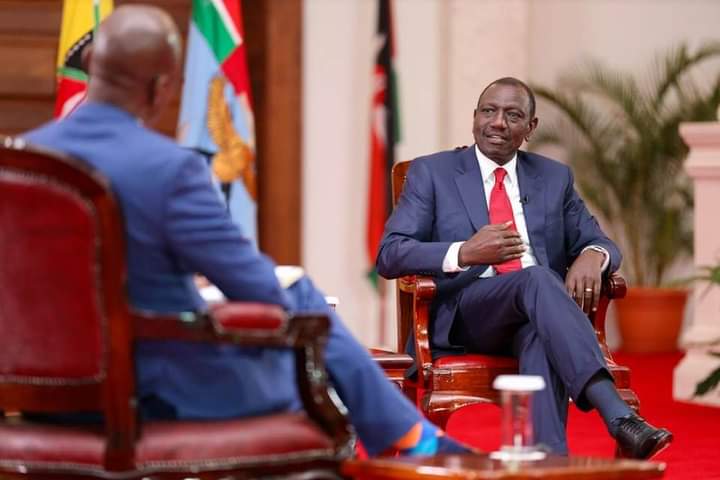
President William Ruto chaired a Cabinet meeting at State House on Tuesday, highlighting the government’s commitment to transformative infrastructure, economic development, and social welfare policies.
Infrastructure Development Milestones
The President announced that construction of the Bomas International Convention Complex will commence in two weeks. The project aims to establish a world-class conferencing hub, enhancing Kenya’s profile in global events.
Meanwhile, construction of the Talanta Hela Stadium at Jamhuri Park, Nairobi, is progressing steadily, with 40% of the 60,000-seater stadium already completed. Upon completion later this year, it will become Kenya’s largest stadium since the Moi International Sports Centre, Kasarani, was built 45 years ago.
Cabinet also directed that the 170km four-lane Rironi-Mau Summit Road project be finalised for groundbreaking by June 1, 2025. The upgrade from a single to a dual carriageway is expected to ease traffic congestion and enhance connectivity between Nairobi and Western Kenya. The project is scheduled for completion by June 2027.
Boosting Tourism and Economic Growth
The government announced an increase in international tourist arrivals, which rose by 14.6% in 2024 to 2.4 million visitors, generating KSh 452.2 billion. With a projected three million visitors in 2025, Kenya plans to invest in sustainable tourism, Meetings, Incentives, Conferences, and Exhibitions (MICE) facilities, and cruise tourism.
Other measures to boost tourism include promoting eco-friendly and community-based tourism and expanding target markets, particularly in the United States and China. Notably, cruise tourism has grown by 163.5%, necessitating further investment in port facilities.
Public Health and Environmental Safety
Cabinet approved a nationwide asbestos removal initiative to eliminate health risks associated with the hazardous material, which remains in government buildings, schools, hospitals, and water supply systems. The National Environment Management Authority (NEMA) will oversee the safe removal and disposal, with county governments designating disposal sites. Under the ‘Polluter Pays’ principle, property owners will bear the removal costs.
Youth Employment and Labour Reforms
The Cabinet endorsed the Internship and Volunteer Policy to create structured pathways for youth employment. This initiative seeks to address gaps in existing programmes, providing fair terms for interns and volunteers while equipping young professionals with necessary skills.
Additionally, the policy formalises volunteerism in public service, recognising its role in disaster response and national development, benefiting degree, diploma, and certificate holders in various fields.
Strengthening Financial and Cooperative Sectors
Amendments to the Sacco Societies Act, 2008, were approved to enhance the efficiency and competitiveness of Kenya’s Savings and Credit Cooperatives (SACCOs). Key reforms include a SACCO Shared Services Framework, a Central Liquidity Facility, and a centralised data repository. These measures aim to modernise financial operations and improve financial inclusion.
Advancing Gender Equality and Disability Rights
The Cabinet sanctioned the National Policy on Women’s Economic Empowerment to bridge gender gaps in financial inclusion, property ownership, and skills development. The policy establishes a coordinated framework to foster economic opportunities for women.
Additionally, the Cabinet approved the Persons with Disabilities National Policy, 2024, to enhance accessibility, economic empowerment, and social inclusion. This aligns with Kenya’s Vision 2030 development agenda.
Transforming Refugee Management
The Shirika Plan was endorsed to shift Kenya’s approach to refugee management from humanitarian aid to a development model. The initiative will integrate refugees into host communities by establishing sustainable settlements with essential infrastructure and economic opportunities. The plan will be implemented in partnership with the United Nations High Commissioner for Refugees and development partners.
Governance and Public Sector Efficiency
The Cabinet approved the Public Service Human Resource Management and Development Bill, 2024, alongside regulations for a Public Finance Management (Training Revolving Fund). These measures seek to standardise HR policies across government institutions, improve workforce productivity, and support professional development through continuous training.
Additional Cabinet Approvals
Other significant approvals from the Cabinet meeting include:
- Hosting of the 2025 World Rally Championship (WRC) Safari Rally in Naivasha, Nakuru County.
- Elevation of Jaramogi Oginga Odinga Teaching and Referral Hospital to a national referral facility and its establishment as a State Corporation.
- Upgrading of four technical training institutions to national polytechnic status.
- Implementation of the Bosto Multi-purpose Dam and Mokubo Water Supply projects in Bomet and Kisii counties.
- Establishment of the Kenya Advanced Institute of Science for postgraduate education.
- Agreement between Kenya and Somalia on Defence Cooperation.
- Frameworks for space exploration cooperation with Rwanda and Egypt.
The Cabinet’s resolutions reaffirm the government’s commitment to infrastructure transformation, economic growth, and social inclusion, laying the foundation for a more prosperous and sustainable future for Kenya.