
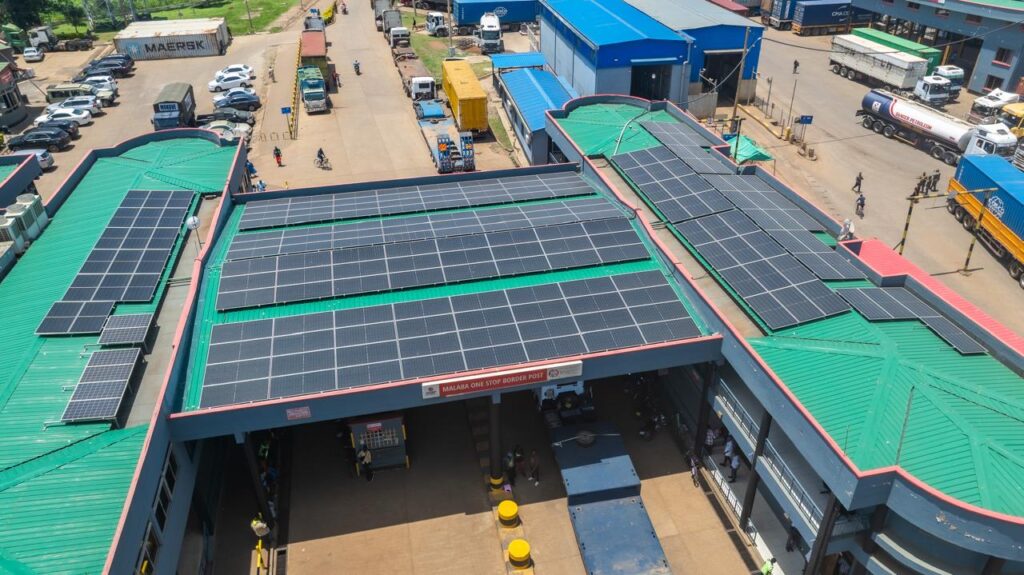
Kenya has taken a major step toward greener, more resilient trade infrastructure with the launch of a solar power system at the Malaba One-Stop Border Post.
The Kenya Revenue Authority, TradeMark Africa and the Swedish Government say the initiative will cut electricity costs by up to 90%, reduce diesel dependence, and keep cargo clearance systems running despite frequent grid outages.
The hybrid solar system, installed under the Swedish-funded KETEI programme, will generate more than 233,000 kilowatt-hours annually and meet 78% of the border post’s energy needs. It is also expected to reduce carbon emissions by more than 2,000 tonnes over the coming decades.
For Malaba, one of Kenya’s busiest cargo gateways on the Northern Corridor, the project links climate action directly to trade efficiency. Previously, outages of up to eight hours disrupted customs systems, cargo scanners, security infrastructure and lighting, slowing clearance and increasing risks for traders.
Sweden’s Ambassador to Kenya, Håkan Åkesson, described the project as a climate-smart investment that strengthens trade systems while supporting sustainable economic transformation.
KRA said reliable renewable power will make border operations more predictable, lower exposure to fuel price volatility, and improve safety. TMA added that the Malaba project, together with similar support at Moyale OSBP, shows how green infrastructure can support regional trade under the African Continental Free Trade Area.