As Kenya marked the 35th anniversary of the historic Saba Saba protests on 7th July 2025, former Prime Minister and Orange Democratic Movement (ODM) leader Raila Odinga made a bold call: “Do we embrace chaos, or a coming together of minds and a country?”
Raila is not calling for more protests. In fact, he cancelled a planned rally at Nairobi’s Kamukunji grounds amid a heavy police presence and multiple roadblocks. Instead, the veteran opposition figure is calling for something deeper—a national dialogue to address what he terms as Kenya’s enduring socio-political and economic crisis.
“The most important struggle is for good governance and economic opportunities,” Odinga told reporters during a press conference held in lieu of the cancelled rally.
Why Now?
Odinga argues that Kenya today faces many of the same injustices that sparked the Saba Saba demonstrations in 1990: rising economic hardship, state repression, and unaccountable leadership. “You know a rogue police force that shoots people with impunity; this is a force that we inherited from the colonialists,” he said, referencing the recent police brutality witnessed during youth-led protests.
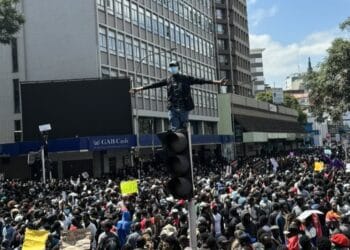
With thousands of Kenyans having taken to the streets in recent weeks, demanding better living conditions and protesting against the controversial Finance Bill 2025, Odinga believes it is time to channel the growing discontent into a structured civic process rather than sporadic street actions.
A National Conclave
At the heart of Odinga’s proposal is the formation of a broad-based, intergenerational national conclave—a platform that brings together voices from across Kenya’s political divide, youth movements, regional blocs, and civil society.
He envisions this forum as the engine for what he calls “irreducible reforms,” with its outcomes culminating in a national referendum. According to Odinga, this is how citizens can regain control of their democracy and ensure that reforms are implemented with their direct participation.
Four Pillars of the Conclave
Raila Odinga outlined four key themes for the proposed civic dialogue:
- Deliberation through the conclave – A unified national conversation to chart Kenya’s democratic and economic path forward.
- Police reforms – Transforming the security sector to end impunity and restore public trust.
- Transparency and anti-corruption – A renewed commitment to fighting graft and enhancing accountability.
- Youth empowerment and economic inclusion – Tackling unemployment and ensuring that young Kenyans are meaningfully included in the economy and decision-making.
“This forum must be tasked with crafting irreducible reforms and changes necessary to take the country forward,” Odinga insisted.
A Veteran’s Plea for Unity
Odinga, one of the original architects of the Saba Saba movement that eventually led to the reintroduction of multiparty democracy in Kenya, said his appeal was not a return to the streets but a higher call for unity.
“As a living architect of the events leading to Saba Saba, I choose a coming together of minds and a country in the interests of the country,” he stated.
A Complicated Political Standing
While Odinga positions himself as a national unifier, his recent political decisions have drawn mixed reactions. Since losing the 2022 presidential election to President William Ruto, Raila has oscillated between opposition leadership and forming strategic alliances with the ruling regime. This has cost him the backing of some opposition figures and grassroots supporters.
Nonetheless, with tensions running high across the country and protest fatigue setting in, his latest proposal for a civic-led national conversation may resonate with Kenyans yearning for change through dialogue, not destruction.
As the country reflects on the legacy of Saba Saba, one question now stands: Will Kenya heed Raila’s call for a national reckoning—or spiral deeper into unrest?