The United States and the European Union have struck a high-stakes framework trade agreement that imposes a 15 percent tariff on most EU imports — a significant reduction from the previously threatened 30 percent rate — narrowly avoiding a major transatlantic trade war.
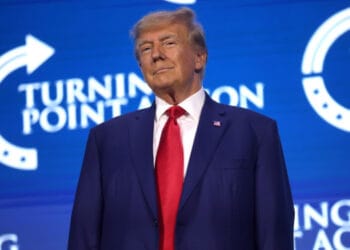
The announcement came following a pivotal hour-long meeting between U.S. President Donald Trump and European Commission President Ursula von der Leyen at Trump’s golf resort in western Scotland. The meeting sealed months of tense negotiations and marked what President Trump heralded as “the biggest deal ever made.”
The agreement, described by both sides as a framework rather than a finalised treaty, sees the EU pledging to invest an estimated $600 billion into the U.S. economy, alongside substantial increases in imports of American energy and defence equipment.
“We have a trade deal between the two largest economies in the world, and it is a big deal. It will bring stability. It will bring predictability,” said President von der Leyen, who characterised Trump as a tough but determined negotiator.
The deal closely mirrors elements of a similar framework accord signed between the U.S. and Japan last week, valued at $550 billion. Trump said the new EU agreement would surpass it in scope, involving $750 billion in energy purchases and “hundreds of billions of dollars” in arms deals.
Reactions Mixed in Europe
While the agreement prevents immediate economic retaliation, the 15 percent base tariff still falls short of Europe’s ambition for a zero-for-zero tariff regime. Bernd Lange, Chair of the European Parliament’s trade committee, criticised the arrangement as “imbalanced”, noting that the scale of EU investment in the U.S. could come at the expense of domestic economic priorities.
German Chancellor Friedrich Merz welcomed the deal, stating it had averted a disruptive trade conflict that could have severely impacted Germany’s export-heavy economy and automotive industry. Volkswagen, Mercedes-Benz, and BMW had all been vulnerable to a threatened 27.5 percent U.S. import tariff on cars and parts.
Tariff Details and Exceptions
Under the deal, most goods — including pharmaceuticals and semiconductors — will face a 15 percent U.S. tariff. However, several categories have been exempted. These include:
- Aircraft and aircraft parts
- Certain chemicals
- Generic drugs
- Semiconductor equipment
- Agricultural products
- Natural resources and critical raw materials
The U.S. will maintain its 50 percent tariff on steel and aluminium, although von der Leyen indicated the EU may push for a quota system instead. Discussions around tariff treatment for spirits remain unresolved.
A U.S. official noted the commercial aircraft tariff will remain at zero, pending a review, and suggested there is a “reasonably good chance” it could stay below the 15 percent threshold.
A Political Win for Trump
The agreement comes as a major political victory for President Trump, who has positioned himself as a global trade reformer and is working to reduce long-standing U.S. trade deficits. Trump has struck similar deals with the United Kingdom, Japan, Indonesia and Vietnam but has yet to deliver on his goal of “90 deals in 90 days.”
A senior U.S. official described the EU market as a “$20 trillion economy… five times bigger than Japan,” and emphasised the potential for increased access for American farmers, fishermen, and manufacturers.
The euro responded modestly to the news, gaining around 0.2 percent against the dollar, sterling, and yen shortly after the announcement.
Challenges Ahead
Analysts have cautioned that the agreement, while politically significant, remains a broad framework and lacks many of the details found in conventional trade deals. Carsten Nickel, deputy research director at Teneo, described it as “merely a high-level, political agreement” that could lead to “different interpretations along the way.”
The EU had prepared counter tariffs on €93 billion ($109 billion) of U.S. goods had the talks failed. That retaliatory action is now suspended, though Trump retains the option to raise tariffs again should the EU not meet its investment pledges.
Despite recent animosity — including Trump’s past remarks that the EU was “formed to screw the United States” — both sides struck a conciliatory tone. Von der Leyen affirmed continued dialogue on unresolved sectors, including steel, agriculture, and standards for automobiles.
As it stands, the deal brings temporary calm to one of the world’s most consequential trade relationships, though its long-term durability remains to be tested.