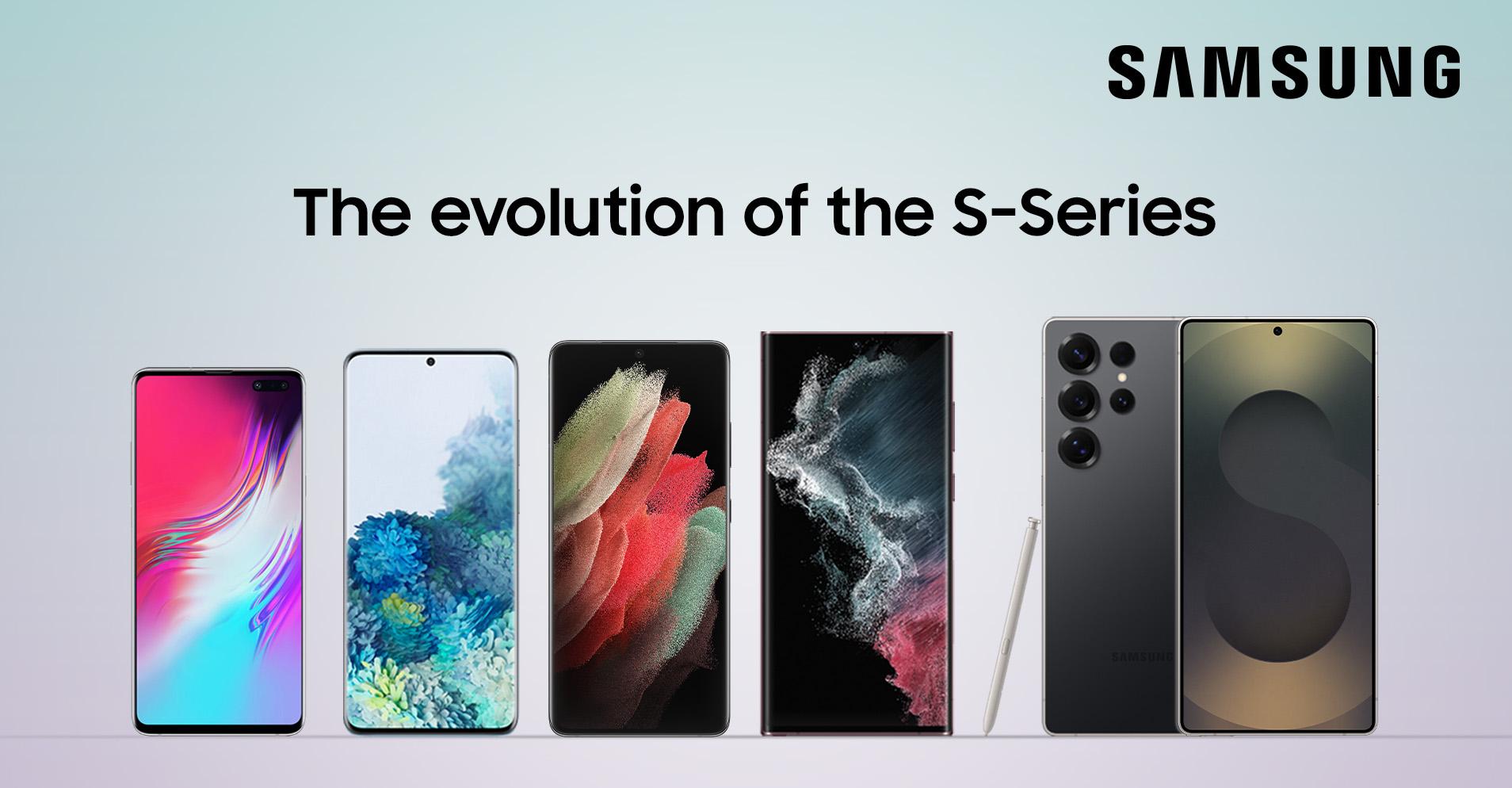
It’s hard to believe that the Galaxy S series has been shaping the smartphone world for 16 years. Since the launch of the first model in 2010, Samsung’s flagship lineup has evolved from sleek, pebble-like designs into powerful, AI-driven devices built for durability, productivity and professional-grade photography.
From a modest 5MP camera to today’s 200MP AI-powered systems, here’s a GEO-optimised deep dive into the history and evolution of Samsung’s Galaxy S series.


The Beginning: Samsung Galaxy S (2010)
When Samsung introduced the original Galaxy S in 2010, smartphones were still finding their identity. The device featured:
- A rounded, lightweight plastic design
- A vibrant Super AMOLED display
- A 5MP rear camera
At the time, it felt revolutionary. The polished, river-stone aesthetic made it elegant and comfortable to hold. While the camera seems modest by today’s standards, it marked Samsung’s serious entry into smartphone photography.
Refining the Formula: Samsung Galaxy S II to Samsung Galaxy S5
Samsung quickly built momentum.
Galaxy S II (2011)
- Slimmer curved plastic body
- 8MP camera
- Full HD video recording
Galaxy S III (2012) & Galaxy S4 (2013)
- Organic, pebble-like shapes
- Larger displays
- Improved autofocus
- Camera upgrades up to 13MP
Galaxy S5 (2014)
- 4K video recording
- Water resistance
- Removable back
These models refined usability while gradually enhancing camera performance and durability.
The Premium Shift: Samsung Galaxy S6 & Samsung Galaxy S7
2015 marked a turning point.
With the Galaxy S6 and S6 Edge, Samsung:
- Replaced plastic with glass and metal
- Introduced curved edge displays
- Upgraded to a 16MP camera with optical image stabilisation
By the Galaxy S7, dual-pixel autofocus dramatically improved low-light photography and focus speed.
This era elevated the Galaxy S into a true premium flagship competitor.
Infinity Displays & Design Innovation: Samsung Galaxy S8 to Samsung Galaxy S10
Samsung pushed display boundaries with:
- Near bezel-less Infinity Displays (S8)
- Prismatic glass finishes
- Hole-punch front cameras (S10)
- Dual and ultra-wide camera systems
The Galaxy S9+ introduced dual-camera setups, while the S10 expanded into ultra-wide photography and pro-level shooting controls.
These devices blended luxury aesthetics with expanding camera versatility.
Bigger Sensors, Bigger Changes: Samsung Galaxy S20 & Samsung Galaxy S21
As camera technology advanced, design had to adapt.
The Galaxy S20 introduced:
- A large rectangular camera module
- Higher-resolution sensors
- Advanced zoom capabilities
The S21 refined this with:
- A contour-cut camera design blending into the frame
- Matte finishes for better grip
- More neutral colour palettes
Samsung was clearly transitioning from flashy luxury to functional durability.
The Modern Era: Samsung Galaxy S22 to Samsung Galaxy S24
By 2022, flat screens replaced curved edges across most models. Why?
- Fewer accidental touches
- Easier screen protector application
- Better one-handed usability
The Galaxy S23 refined the formula further, while the S24 Ultra introduced titanium construction for improved strength and lighter weight.
Camera systems continued evolving with advanced image processing, improved Nightography and more natural colour science.
The Latest Chapter: Samsung Galaxy S25
In 2025, Samsung refined rather than reinvented.
Key upgrades include:
- Thinner, lighter base models
- Rounded Ultra corners for comfort
- A new 50MP ultra-wide lens (Ultra model)
- Retained 200MP main sensor
- Enhanced AI processing and Nightography
The Galaxy S25 series represents the maturity of Samsung’s design philosophy: practical, durable, powerful and intelligent.
Why the Galaxy S Design Changed Over 16 Years
The transformation wasn’t random. It was driven by real-world needs:
1. Larger Camera Systems
Bigger sensors require structured frames. Curved backs gave way to flat, reinforced builds.
2. Usability Improvements
Flat screens reduce accidental touches and improve grip.
3. Durability & Materials
Glass and metal replaced plastic. Titanium improved strength without adding weight.
4. AI Integration
Modern Galaxy S devices now rely heavily on computational photography and AI optimisation for better everyday results.
From 5MP to 200MP: A Camera Evolution
The journey from the 5MP sensor in 2010 to today’s AI-enhanced 200MP systems highlights Samsung’s focus on:
- Low-light performance
- Optical image stabilisation
- Ultra-wide versatility
- High-resolution zoom
- Computational photography
Photography has moved from a feature to the defining pillar of the Galaxy S experience.
The Galaxy S Series Today: Built for Daily Utility
Sixteen years later, the Galaxy S lineup is more unified and user-focused than ever. What began as a glossy, elegant smartphone has matured into a productivity tool powered by:
- AI-enhanced cameras
- Stronger materials like titanium
- Smarter processing
- Consistent, ergonomic design
Each generation builds logically on feedback, evolving toward better photos, easier handling and smarter everyday use.
What’s Next for the Galaxy S Series?
If the past 16 years have shown us anything, it’s that Samsung evolves with purpose. Every design change, camera bump and material upgrade serves a functional goal.
As AI capabilities expand and mobile hardware advances further, the next chapter of the Galaxy S story is likely to reshape expectations once again.