In an industrial zone on the outskirts of Abidjan (Cote d’Ivoire), a small food‑processing company employs 28 young people. Demand for its products is growing, suppliers are reliable, and orders are steady. For years, the business remained constrained—not by ambition or opportunity, but by financing structures that failed to match its operating realities, with short tenors and collateral requirements misaligned with its operating practices. When appropriately tailored financing finally became available, growth followed swiftly, and the company doubled its workforce in under two years. The difference was not talent or effort. It was finance aligned with reality.
Over the next three decades, Africa will add 740 million working‑age people—but most financial systems are still built for yesterday’s economy. Whether this surge becomes a dividend or a drag will depend on a single factor: whether Africa can generate productive jobs at scale.


And the answer to that runs directly through micro, small, and medium-sized enterprises (MSMEs).
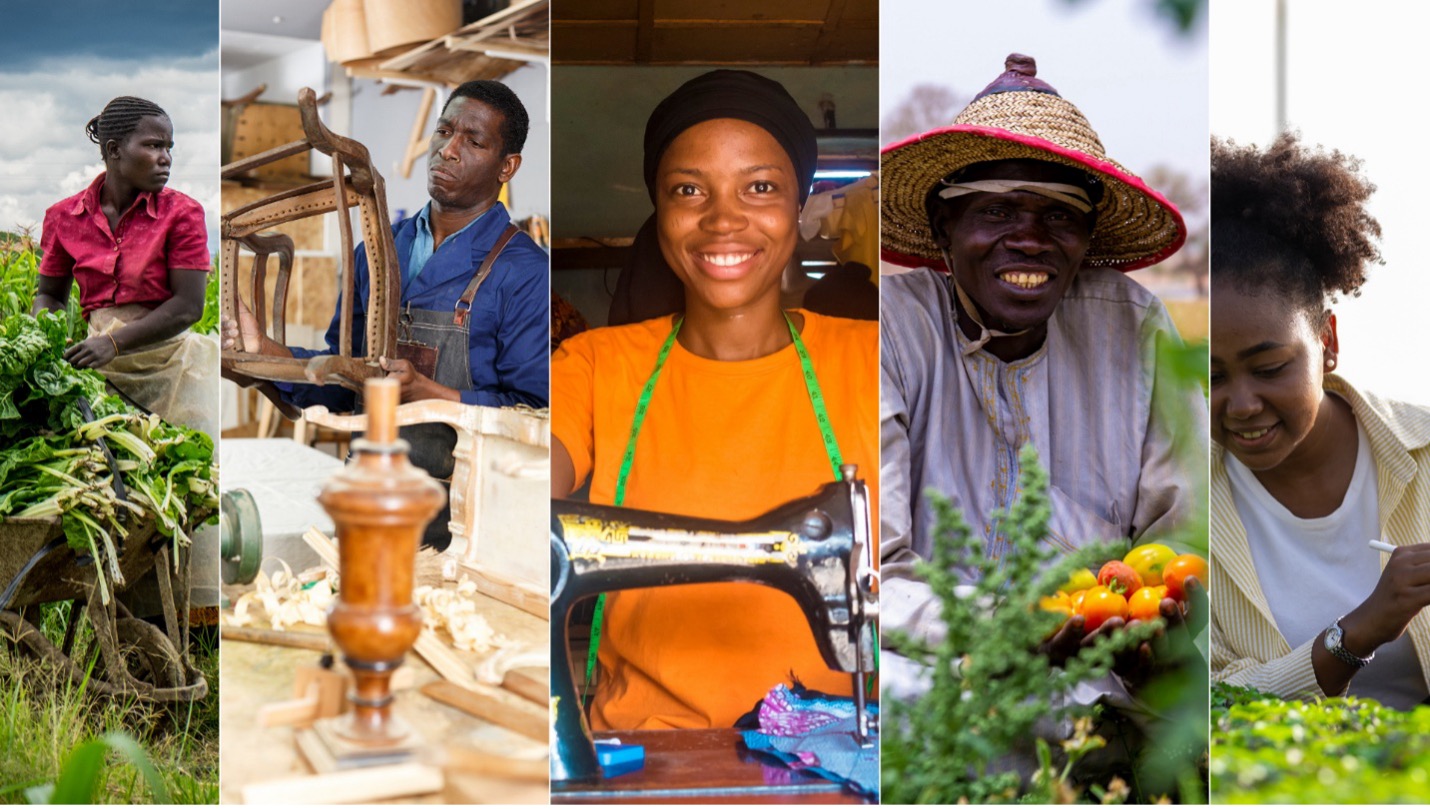
MSMEs account for more than 90 percent of African businesses and roughly seven in ten jobs, making them the backbone of the continent’s economies. With the right investment, they can scale into dynamic enterprises—creating millions of jobs, absorbing new labor market entrants, and strengthening resilience across communities. Without it, demographic momentum risks colliding with economic exclusion.
Africa is not short of capital. Up to $4 trillion in local savings and assets sit on the continent today. Yet too much of this capital remains disconnected from the enterprises that need it most. Formal financing to MSMEs is still the exception rather than the rule —
not because the opportunity is unsound, but because outdated perceptions of risk continue to shape financial decision‑making.
Traditional banking models have long treated MSMEs as too small, too informal, or too complex to serve profitably. The consequences are measurable: an estimated $331 billion financing gap in sub-Saharan Africa and $187 billion in North Africa and the Middle East. Together, this represents a half-trillion-dollar market opportunity—hiding in plain sight.
What has changed is not the importance of MSMEs, but the feasibility of serving them at scale.
Technology and data are rewriting the economics of financial inclusion. Digital platforms, mobile banking, alternative data, and advanced credit analytics now allow financial institutions to reach MSMEs efficiently and profitably. Those that have adapted are already seeing the results: higher returns on assets and equity, and margins that exceed banking sector averages.
As African economies continue to formalize, millions of new enterprises will emerge—each one a source of jobs, innovation, and demand for financial services. These businesses will seek capital with or without the participation of traditional financial institutions. The strategic question is who will meet them where they are.
At the World Bank Group, we are translating this moment into action by addressing three structural barriers that have historically constrained MSME finance.
First, we are tackling currency mismatch.
In the West African Economic and Monetary Union, we supported the region’s first multi-seller, multi-country pooled securitization platform for MSMEs. By mobilizing long-term local currency financing, this structure eliminates foreign exchange risk and unlocks billions in new lending capacity—on terms that match how African businesses actually operate.
Second, we are demonstrating that MSME finance can deliver multiple objectives simultaneously.Egypt’s first sustainability bond—$500 million, the largest issued by a private African bank—channels capital to MSMEs while advancing climate-smart development. In South Africa, our $50 million investment in SME property developers shows how targeted finance can address urban housing shortages, support local entrepreneurs, and generate competitive returns.
Third, we are changing the risk calculus itself.
Through the Small Loan Guarantee Program in West Africa—backed by $120 million in concessional financing from IDA, the World Bank’s fund for low-income countries—we are enabling local banks to lend into segments they previously avoided, particularly women-led enterprises. At the same time, the African Local Champions Initiative is strengthening entire value chains by scaling anchor firms from the Sahel to Central Africa, including in Togo, Niger, Burkina Faso, Chad, Liberia, and Guinea. These firms create ecosystems in which smaller MSMEs thrive as suppliers, distributors, and service providers.
This is what sustainable job creation looks like in practice: not isolated transactions, but systems that allow enterprises to grow together.
Taken together, these approaches reinforce one another. They show that when MSMEs receive financing aligned with their realities, the results are compelling: strong financial returns, resilient businesses, and large‑scale job creation.
Success will require forward-looking regulation that enables innovation while safeguarding stability. It will require financial instruments designed for MSMEs—from working capital facilities to long-term growth finance. It will require better data systems that allow investors to price risk accurately, rather than rely on inherited assumptions.
Above all, it will require a shift in mindset.
The convergence of demographics, technology, and enterprise has created a once-in-a-generation opportunity. Africa’s young and growing workforce will build businesses and seek financing—with or without the participation of established institutions.
The capital exists. The models work. The returns are clear.
The next phase of Africa’s growth will be defined by those willing to partner to scale what works. For banks, funds, and non‑bank financial institutions, working alongside the World Bank Group offers a pathway to deploy capital at scale—anchored in proven models, stronger data, and shared risk. Through co‑lending, long‑term investment, and local‑currency solutions, financial institutions can deepen pipelines, improve risk pricing, and unlock commercially viable opportunities aligned with the realities of African enterprises. This is about partnering to turn proven approaches into platforms for growth—building markets that are resilient, inclusive, and investable at scale.
The remaining question is whether Africa’s financial institutions will seize this moment to redefine their role in the continent’s economic future.
For those ready to act, the message is unmistakable: banking Africa’s MSMEs is not just good development policy—it is one of the most compelling business opportunities of our time. Action, in this moment, is about more than capital. It is about jobs created, productivity released, and opportunity transformed from promise into progress.
*Ethiopis Tafara is IFC’s regional Vice President for Africa