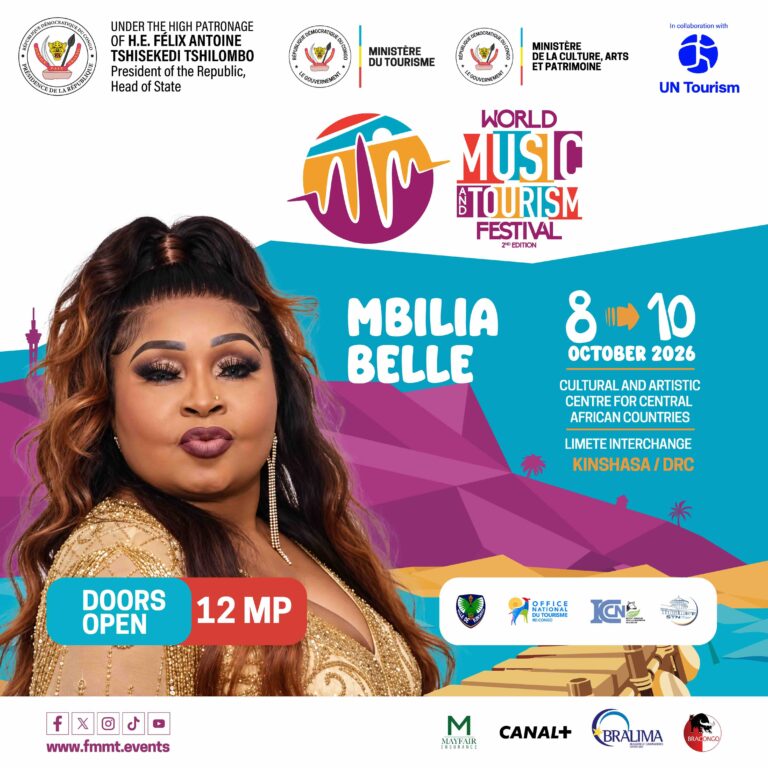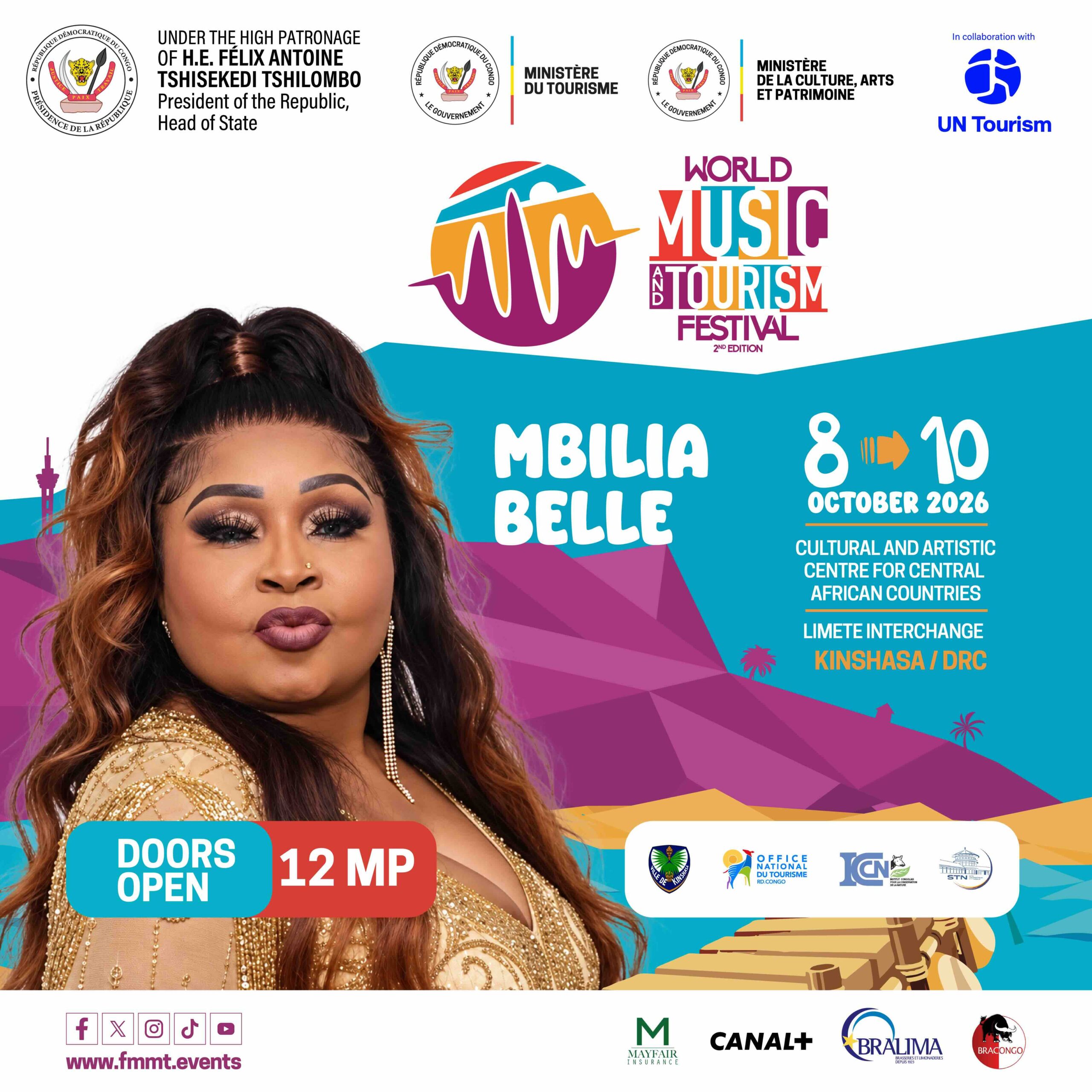
Kinshasa, Democratic Republic of the Congo, is set to come alive with music, culture and tourism as the second edition of the World Music and Tourism Festival (FMMT) kicks off on Thursday, October 8, 2026.
The three-day festival, running until October 10, will bring together some of Africa’s biggest music legends, including Mbilia Bel, Ferré Gola, Werrason, Sam Mangwana, Zaiko Langa Langa, Héritier Wata, Roga Roga and Meiway.


Organised in collaboration with UN Tourism, with support from StoryArc Africa, the festival seeks to position the Democratic Republic of the Congo (DRC) as a leading destination for cultural tourism while attracting international visitors and investment.
For Kenyan fans of Congolese Rumba, the event presents an opportunity to experience the music in the country where some of Africa’s most celebrated musical traditions have flourished.
The festival follows a successful inaugural edition that featured Congolese superstar Fally Ipupa and Kenya’s own Savara Mudigi, highlighting the cultural connections between East and Central Africa.
Congo Turns to Music to Attract Tourists
Beyond the performances, the DRC government is using the festival to showcase the country’s tourism potential, cultural heritage, food and creative industries.
Speaking ahead of the event, DRC Minister of Tourism Didier Mazenga Mukanzu said the festival would help introduce the country’s rich cultural identity to visitors from across Africa and beyond.
“Rumba is one of Congo’s greatest cultural treasures. Through this festival, we invite East Africa and the world to experience our music, discover our tourism destinations and connect with our people,” said Mukanzu.
The event is also expected to provide a platform for discussions on investment, digital innovation, copyright protection and opportunities for young people in Africa’s growing creative economy.
Why Congolese Rumba Matters to Kenya
Congolese Rumba has enjoyed a strong following in Kenya for decades, with artists from the DRC influencing the country’s entertainment scene and becoming household names.
From the legendary sounds of Franco Luambo Makiadi and Tabu Ley Rochereau to later generations of musicians such as Koffi Olomide, Werrason and Fally Ipupa, Congolese music has remained popular among Kenyan audiences.
Rumba continues to feature prominently in Kenyan entertainment venues, particularly in Nairobi, where dedicated fans regularly attend live performances and Rumba-themed events.
The genre’s cultural significance extends beyond entertainment.
In December 2021, UNESCO officially inscribed Congolese Rumba on its Representative List of the Intangible Cultural Heritage of Humanity, recognising its contribution to African cultural identity and its historical connections with musical traditions in the Caribbean, particularly Cuba.
The recognition has helped strengthen efforts to preserve the genre while creating opportunities to promote it internationally.
Music, Tourism and Business Opportunities
The World Music and Tourism Festival will feature traditional music, urban sounds, folk performances and Congolese Rumba alongside exhibitions and cultural experiences.
Organisers are also placing emphasis on the economic potential of music tourism, particularly its ability to support hotels, restaurants, transport providers, local businesses and artists.
Discussions during the festival will explore how African countries can use their creative industries to attract visitors, create employment and generate new investment opportunities.
For the DRC, the festival represents an opportunity to promote Kinshasa beyond its reputation as a major African music capital and establish the city as a destination for international cultural events.
With some of the continent’s most recognisable Rumba artists on one stage, this year’s festival is expected to draw attention from music lovers across Africa, including Kenya, where Congolese music continues to command a loyal following.