Kenya’s economic foundation unquestionably rests upon its Micro, Small, and Medium Enterprises (MSMEs). As indicated in Sessional Paper Number 5 of 2020 on Kenya Micro and Small Enterprises Policy, these enterprises contribute to 24 percent of Kenya’s GDP, encompass over 90 percent of private sector enterprises, and engage 93 percent of the total labour force in the economy. The MSMEs policy identifies access to formal financial services, financial education, and credit sharing as crucial factors for the growth of the country’s MSME sector.
According to the most recent MSME Survey conducted by the Kenya National Bureau of Statistics in 2016, there are over 7.4 million MSMEs in Kenya, employing over 14.4 million Kenyans across all sectors of the economy. Further, the World Bank estimated that SMEs account for approximately 90% of all businesses worldwide and generate more than 50% of all job opportunities.


Because of their significant contribution to the country’s GDP, their development is thus critical to the realization of national development goals anchored in the Kenya Vision 2030 and the current Bottom-Up Economic Transformation Agenda (BETA), where MSMEs have been identified as one of the five key priorities.
The sector is especially important in providing job and income opportunities for economically disadvantaged segments of the population, such as youth and women. MSMEs are a key entry point for women and youth seeking to start their own businesses because of their low capital requirements and less stringent requirements for the establishment of small businesses run as family businesses. For example, it is estimated that female entrepreneurship rates in Sub-Saharan Africa are among the highest in the world, with one in every four adult women engaged in early-stage entrepreneurial activity in the region, according to the Global Entrepreneurship Monitor. Another survey conducted by the Central Bank of Kenya found that women entrepreneurs account for slightly more than a third of all businesses in Kenya.
Despite their huge potential, women, and youth-owned businesses, continue to be battered by the global economy’s multiple external shocks, such as geopolitical tensions, supply chain disruptions, and the COVID pandemic. I am however confident that financial institutions with key strategic partners can turn these bottlenecks into success stories by providing solutions that address those challenges.
We have seen the role of commercial banks evolving over time from simply providing credit to becoming partners who help businesses grow. Banks are increasingly being compelled to assist MSMEs in gaining access to market information, markets for their products and services, mentorship, and business networks, as well as the capital required to scale their businesses to the next level. The need for this type of assistance is especially acute among women and young entrepreneurs.
The Absa SHE Stars program, a collaboration between GIZ, Absa Kenya, and the Yunus Environment Hub (YEH), is an excellent example of a four-pronged approach that encompasses mentorship and coaching, access to information, markets and finance. Since 2021, at least 1,300 women business owners have received entrepreneurial skills and knowledge in areas such as social business, circular economy, disruption management, and business continuity, human resource management, investor readiness, and taking their business online, among others, increasing their productivity and competitiveness.
Similarly, over the last two years, at least 20,000 SMEs from across the country have benefited from business training and networking opportunities organized in partnership with the Kenya National Chamber of Commerce and Industry (KNCCI).
Furthermore, MSMEs and financial institutions must adopt digital capabilities and ecosystems to remain relevant and adaptable. This is especially true as customers and businesses seek simpler, more convenient, and faster ways to conduct business. The March 2023 MSE Tracker Survey report, co-conducted by CBK, KNBS, and FSD Kenya, found that businesses owned by youth were more digitalized compared to those owned by individuals aged 36 and above.
As a result of this, Interswitch, Melanin Kapital, and VISA entered into various partnerships with Absa last year to facilitate the adoption of digital payment solutions for SMEs, allowing them to streamline their operations and seize new business opportunities. Additionally, Absa collaborated with VISA earlier this year to launch the Mobi-Tap solution, which uses smartphones to accept card purchases. This innovation has relieved SMEs of the costly burden of acquiring PDQ machines for accepting card payments.
Another example of the power of automation is the Wezesha Stock platform, which is available to both Absa and non-Absa clients. It is a digital platform that provides a convenient and efficient way to manage inventory and automate access to working capital linked to stock financing for small and medium-sized enterprises (SMEs) across various value chains, ranging from those dealing in Fast Moving Consumer Goods (FMCGs) and agro-processing to oil marketing and agro-chemicals. Absa Bank has committed KES 100 billion to support SMEs across value chains over the next three years through this initiative.
In conclusion, to foster the growth and success of MSMEs, there is a need for collaboration with various stakeholders, including the public sector, in championing favorable policies, regulations, and infrastructure that encourage MSMEs’ formalization. This way, MSMEs can be assisted in transforming into registered business entities, giving them access to opportunities to scale into larger businesses. As their partner for growth, we are greatly inspired by MSMEs’ resilience, hard work and creativity amidst the challenging operating landscape.
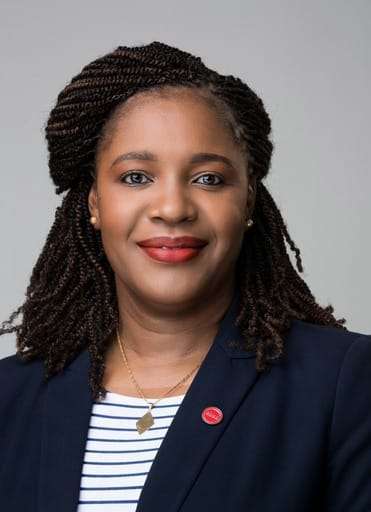
Elizabeth Wasunna-Ochwa is the Business Banking Director, Absa Bank Kenya PLC