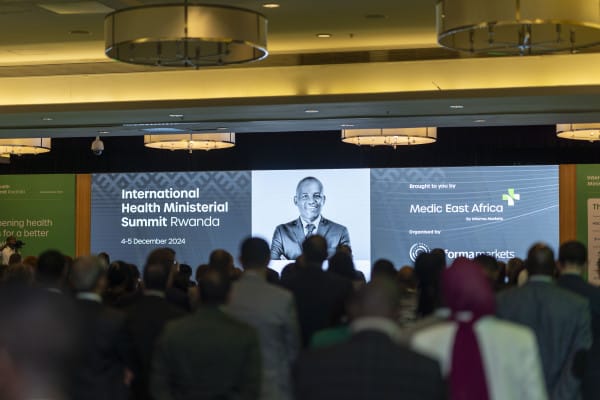


The inaugural International Health Ministerial Summit, organised by Informa Markets (www.InformaMarkets.com), began with a series of dynamic panel discussions featuring influential delegates showcasing collaborative solutions to global healthcare challenges.
Also Read

Hosting governmental figures and policymakers, corporate CEOs and investors, medical directors, and experts, the exclusive by-invitation only Summit, themed Strengthening Health Systems for a Better Tomorrow, takes place from 4 to 5 December 2024 at the Marriott in Kigali. It brings together renowned health experts from across the continent and the world and highlights topics like digital health, technological adoption, R&D in vaccinations, women’s health, healthcare investment opportunities, and health equity.
During his official opening address, Dr. Sabin Nsanzimana, the Minister of Health of host country Rwanda, said: “There is no better investment than in our health. It is not a negotiable luxury but a fundamental human right. Strengthening health systems means focusing on the four S’s: staff, space, supplies, and systems. In Rwanda, we understand that investing in health is investing in our future. That’s why the Government of Rwanda has approved the 4×4 Reform—a bold strategy to quadruple the number of healthcare workers in the next four years to meet the WHO recommendation of at least 4 healthcare professionals per 1,000 population. This initiative underscores our commitment to building a resilient health system where no one is left behind. By investing in these pillars and embracing technology/innovations like AI, we can build resilient systems that ensure uninterrupted care for all.”
Addressing health equity’s challenges and opportunities
Following the welcome address by Dr. Deborah M. Barasa, Health Cabinet Secretary of Kenya, who spoke about actions to shift primary healthcare, the first session of the day featured several panel discussions dealing with the challenges and opportunities for health equity.
In a panel discussion hosted by Dr. Tim Keuri, CEO of the Kenya Health Federation, industry leaders discussed transforming Africa into a global hub for pharmaceutical innovation and manufacturing. Representatives from the Unified Procurement Association, PharmaAccess, Global One Health Institute, Pfizer, and Bayer provided insights on investment enhancement, regulatory framework improvements, and strategic collaborations to strengthen Africa’s position in the global pharmaceutical value chain.
Another panel, moderated by Bloomberg news reporter Ondiro Oganga, addressed the urgent need for Africa to advance self-sufficiency in pharmaceutical R&D, local vaccine production, and diagnostic access. Experts from Senegal’s Ministry of Health, The Global Trust Project, UN Foundation, African Society for Laboratory Medicine, Africa CDC, and leading corporations like Genf, Hologic, and Roche Diagnostics emphasised the importance of establishing regional pharma hubs and enhancing local capabilities. According to Ahmed Ogwell, Vice President of Global Health Strategy at the UN Foundation in Kenya, “The gap is not in identifying problems or proposing solutions—it’s in executing those solutions. For example, while there’s been significant discussion around manufacturing COVID-19 vaccines, we lack local production of diagnostics and essential tools like rapid tests on the continent. To move forward, we need to prioritise what to produce, coordinate efforts regionally, and ensure that the products we manufacture are consumed within our systems.”
Women’s health and equitable access to healthcare
The second key theme of the day was health equity and women’s health, starting with an insightful discussion on what is needed to close the health equity gap. Moderated by Dominic Wilhem, Executive Director of The Global Trust Project, global health leaders debated how to unite healthcare stakeholders to address the health equity gap. Panellists focused on collaborative strategies to ensure universal access to essential medicines and vaccines. The session underscored the importance of international cooperation to progress healthcare for all, regardless of geographic or socio-economic boundaries. Pfizer Kenya Director of Policy and Public Affairs Pauline Irungu commented on the outcomes, saying, “When we think about partnerships, we have a tendency to think about government- private partnerships, but we also need to talk more about private private partnerships which then support agendas of governments in Africa and beyond. At Pfizer one of the gaps we experience is the challenge of diagnostics. How do we advance access to medicine? Currently , we have two strong partnerships with diagnostic companies on the continent. Now we also make a call that we also want others to join the partnerships because the more we partner as private sector, the more we’re able to address the multifaceted challenges within the health care system.”
A second panel on the topic brought together top health experts to tackle the urgent issue of women’s health in Africa, particularly the high maternal mortality rates in sub-Saharan Africa. Hosted by Dr. Magome Masike, Registrar, Health Professions Council of South Africa, this panel of leaders from various health organisations and government bodies debated the need for innovative approaches to enhance women’s health across the continent. The session highlighted the importance of rethinking strategies to improve healthcare outcomes for women in Africa.
Day two of the Summit will focus on advancements in digital health, how artificial intelligence is transforming healthcare, health investment and financing, and an exciting Rwandan initiative using drones to deliver essential medicines to health facilities.
For more details on the International Health Ministerial Summit, visit the event website: https://apo-opa.co/3ZBts4y
Distributed by APO Group on behalf of Informa Markets: Healthcare.