
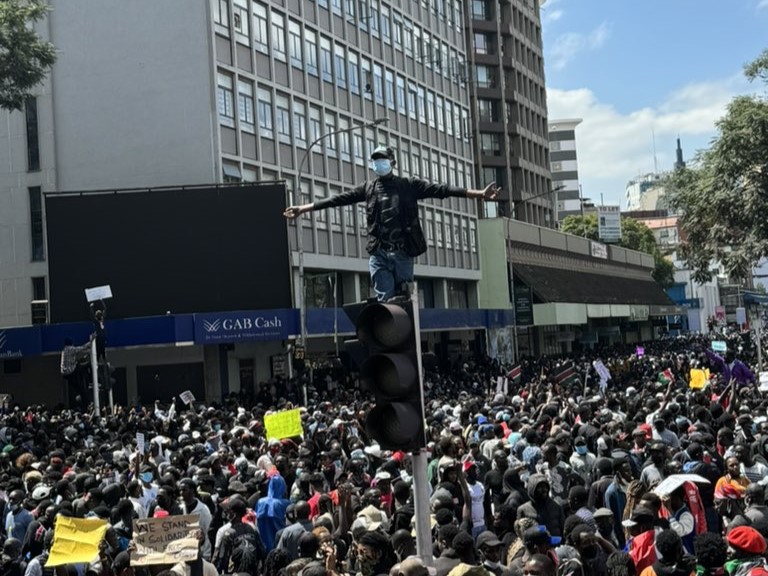
They were called “leaderless, tribeless, and party-less”. Armed only with smartphones, miniature flags, and an unyielding refusal to inherit a broken economy, Kenya’s Gen-Z redefined the landscape of civil defiance.
What began in mid-2024 as viral TikTok explainers and X spaces quickly transformed into a historic, country-wide movement against punitive tax hikes. But freedom demanded a heavy, heartbreaking toll. Between the peak of the #RejectFinanceBill protests in 2024 and the secondary waves of governance demonstrations stretching into 2025, over 120 young Kenyans were killed by security forces.
This article is a monument to their names, their courage, and their ultimate sacrifice. We write their names in ink so history cannot erase them.
The Price of Standing Up: The Casualties of 2024 and 2025
The state responded to peaceful marches with water cannons, tear gas, and ultimately, live ammunition. Human rights groups like Amnesty International and the Kenya Human Rights Commission (KHRC) documented a brutal, disproportionate crackdown.
While hundreds carry physical and emotional scars from arbitrary arrests and abductions, others paid the ultimate price. Below are some of the prominent young heroes whose names became rallying cries for justice across the nation.
The Fallen Heroes: Lest We Forget
- Rex Kanyike Maasai (29): Shot and killed during the very first week of the June 2024 protests in Nairobi’s Central Business District (CBD). His death galvanized the movement, turning a tax protest into a national revolution.
- Evans Kiratu (21): Severely injured by a teargas canister deployed at close range by police in Nairobi. He tragically succumbed to his injuries while undergoing emergency treatment at Kenyatta National Hospital.
- Kennedy Onyango (12): A young soul whose life was tragically cut short when he was shot in Rongai during the chaotic police crackdowns. His death remains one of the starkest reminders of the indiscriminate force used against civilians.
- Albert Omondi Ojwang (30): A popular teacher and outspoken political blogger known on X for his sharp, witty critiques of governance. In June 2025, his sudden and suspicious death in police custody at Nairobi Central Police Station ignited a second wave of massive youth demonstrations against police brutality and state overreach.
- Andrew Mwawasi: An energetic young protestor whose life was taken during clashes with police forces, leaving behind a family demanding structural accountability from IPOA.
“The families require more than prayers and money. They require justice. We must never forget that the reason these Kenyans died was that our leadership was unwilling to listen to its citizens.” — Joint Statement, National Council of Churches of Kenya (NCCK) & Evangelical Alliance of Kenya.
2024 vs. 2025: A Timeline of Resistance
The timeline of the Gen-Z movement showcases how a digital protest mutated into a physical, historical shift in popular sovereignty.
The Digital Spark
May 2024
Gen-Z youth translate the Finance Bill 2024 into local languages and Sheng, using TikTok and X to mobilize peers against bread, fuel, and mobile money tax hikes.
The First Blood
June 20, 2024
Rex Kanyike Maasai is shot dead in Nairobi. The hashtag #RejectFinanceBill goes global, and youth vow #RejectNotAmend.
The Storming of Parliament
June 25, 2024
Protesters breach Parliament buildings in Nairobi after MPs pass the bill. Security forces open fire with live ammunition, killing dozens. President Ruto shelves the bill hours later.
The 2025 Resurgence
June 2025
Protests reignite following the brutal custody death of blogger Albert Ojwang. Demands shift from economic policy reform to a complete overhaul of police brutality and government corruption.
Why the Gen-Z Movement Changed Kenya Forever
The Finance Bill protests were entirely different from Kenya’s historical political demonstrations. They were not organized by veteran opposition politicians, nor were they divided along ethnic lines. Instead, they stood united under a singular identity: young Kenyans fighting for their lives, their dignity, and their future.
By using decentralized technology, crowd-sourced medical funds, and open-source legal aid, Gen-Z forced a nuclear shift in how public policy is contested in East Africa.
Though the state attempted to suppress the movement through internet throttling, co-optation, and empty promises of investigation, the sacrifice of the fallen keeps the fire burning.
They did not die in vain. Their names are permanently etched into the cornerstone of Kenya’s struggle for true economic and constitutional liberation. Viva.