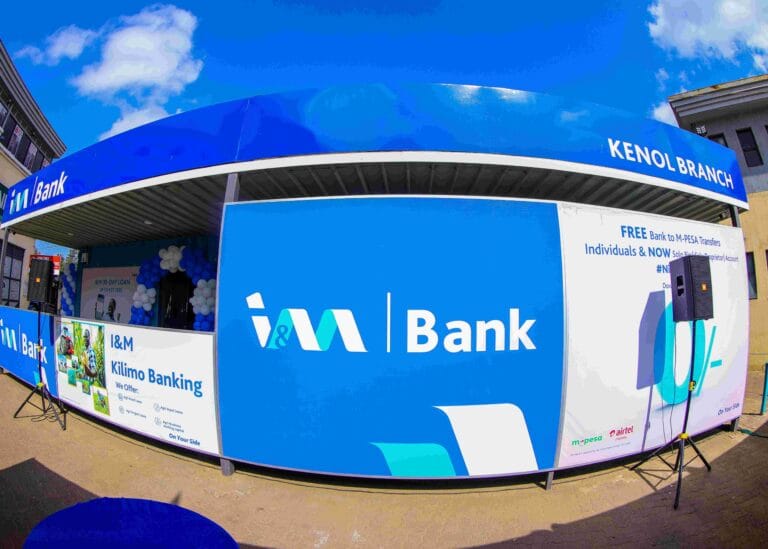
A structural shift is underway in East Africa‘s financial ecosystem, one that extends far beyond payments. Recent regulatory alignment between Kenya and Rwanda, enabling FinTech’s to operate more seamlessly across borders through FinTech licence passporting, signals an important evolution. While these developments may appear focused on improving payment efficiency, they point to something far more transformative: the emergence of cross-border financial identity.
This shift has the potential to reshape how consumers and businesses are understood, assessed and ultimately included in the formal financial system.


From Payments to Financial Identity
Cross-border financial reform in Africa has historically centred on payments, reducing transaction costs, increasing speed and enabling interoperability. These efforts remain critical. Remittance flows into Africa exceed $90 billion annually, and in recent years have approached $100 billion, underscoring their role in supporting livelihoods and economic resilience.
As payment ecosystems become more connected, however, a new layer of value is emerging. Every cross-border transaction generates data: behavioural, transactional and increasingly digital. Over time, this data forms a more holistic and dynamic picture of an individual or business’s financial life.
This creates the foundation for a key evolution: financial identity that is no longer confined by national borders but instead reflects real economic activity across markets.
Challenging Fragmented Credit Systems
Africa’s financial systems have long been shaped by fragmentation. Credit profiles are typically built and assessed within national boundaries, limiting visibility for lenders and restricting access for consumers and businesses.
The scale of this challenge remains significant across the continent. While millions of consumers are active within formal credit ecosystems, a substantial portion of adults across Africa remain underserved or entirely excluded, often due to thin or non-existent credit histories. Even in more mature markets, access remains constrained by affordability and structural barriers, while in emerging economies, demand for credit continues to outpace availability. This highlights a broader continental challenge: expanding inclusive, responsible access to credit while strengthening financial literacy and infrastructure to support sustainable participation in the formal economy.
At the same time, consumers and small businesses are economically active earning, transacting and often operating across borders. Yet their financial behaviours are not fully captured within traditional systems. As a result, individuals with strong financial track records in one market may appear invisible in another.
Cross-border financial identity begins to address this disconnect by creating a more continuous and accurate view of financial behaviour across markets.
Unlocking the Value of Alternative Data
As financial ecosystems evolve, new forms of data are becoming increasingly relevant to credit assessment. These include cross-border transaction histories, mobile money and digital wallet usage, multi-market income streams, and small business trade flows.
This is particularly important in an African context, where financial services are increasingly mobile-first. Digital wallets and mobile money are embedded in daily life, generating rich streams of behavioural data. Yet much of this data remains underutilised in traditional credit decisioning.
When applied responsibly, alternative data can enhance risk assessment, improve decisioning accuracy and expand access to credit, particularly for thin-file or previously underserved consumers.
Advancing Financial Inclusion at Scale
Financial exclusion in Africa remains widespread, with over 420 million people across the continent still outside the formal financial system. However, exclusion does not equate to inactivity. Individuals and businesses across the continent are actively participating in the economy often across borders without these activities being formally recognised.
Cross-border financial ecosystems have the potential to fundamentally change this dynamic. Digitising and connecting financial activity creates visibility where insight was previously limited. This enables lenders to better understand risk, extend credit more confidently and include more consumers and businesses in the formal economy.
Importantly, this represents more than incremental progress, it creates the conditions for financial inclusion at scale. As systems evolve, trust also becomes more dynamic, built on a continuous understanding of financial behaviour across markets rather than a single point-in-time assessment.
Building a Cross-Border Financial Ecosystem
Realising the full potential of cross-border financial identity will require coordinated action across the ecosystem. Identity must be both portable and secure, enabling consumers and businesses to carry their financial reputation across borders, supported by strong frameworks for privacy, consent and data protection. Equally, alternative data must be leveraged responsibly. While Africa is rich in behavioural and transactional data, unlocking its value depends on robust governance, transparency and clear use cases.
Regulatory collaboration will also be critical. The progress seen in East Africa provides a strong foundation and a potential blueprint for broader regional integration.
A Blueprint for a More Connected Future
Developments in East Africa reflect a broader trajectory towards integrated financial systems and a more connected continental economy. These efforts align closely with the ambitions of the African Continental Free Trade Area (AfCFTA), which aims to enable seamless cross-border trade and unlock economic scale. With intra-African trade currently accounting for only ~15% of total trade on the continent, AfCFTA presents a significant opportunity to deepen regional integration and unlock substantial economic value.
As trade barriers reduce, the financial infrastructure that underpins identity, trust and access will become increasingly important. The ability to move money across borders is a critical milestone, but the ability to move financial identity, reputation and trust may prove even more transformative.
Looking Ahead
The rise of cross-border financial identity represents a defining moment for Africa’s financial ecosystem. It challenges long-standing structural limitations and creates new pathways for inclusion in an increasingly interconnected environment.
As Africa’s economies become more integrated, access to finance will increasingly depend not on location, but on the strength and visibility of financial identity. That shift has the potential to unlock opportunity at an unprecedented scale.