Sunday, October 18, 2026
  • About
  • Advertise
  • Careers
  • Contact
NewsTrendsKE
  • Business
  • Deals
  • Investments
  • Real Estate
  • Economy
  • OpEds
  • Lifestyle
  • Sustainability
  • Women in Business
  • Technology
    • Phones
No Result
View All Result
NewsTrendsKE
No Result
View All Result

Home » Technology » Sheng, Swahili, and Schema: How to Rank on Page One in Kenya’s New Digital Era

Sheng, Swahili, and Schema: How to Rank on Page One in Kenya’s New Digital Era

Queen Amber by Queen Amber
4 months ago
in Technology
Reading Time: 3 mins read
A A
Close-up Portrait of Software Engineer Working on Computer, Line of Code Reflecting in Glasses. Developer Working on Innovative e-Commerce Application using Big Data Concept

Close-up Portrait of Software Engineer Working on Computer, Line of Code Reflecting in Glasses. Developer Working on Innovative e-Commerce Application using Big Data Concept

Share on FacebookShare on TwitterShare on WhatsApp

Global search engine optimization theories frequently treat audiences as monolingual, uniform demographics. However, localized optimization in East Africa demands a deep appreciation of the unique linguistic and structural realities of the Kenyan digital consumer. In 2026, the websites outperforming multinational corporations on regional search layouts are those mastering the triad of hyper-localization: Swahili integration, conversational Sheng syntax, and robust technical Schema markup.

Kenyans search exactly how they communicate. With the explosion of voice search and mobile-first conversational AI assistants, search queries have shifted away from formal English structures toward localized, natural language phrases that seamlessly blend multiple dialects.


Also Read

Tatu City

Tatu City graduates 100 young learners fromAfter-School AI Program

16 October 2026
Kenyan content creators posing for a selfie during the Tutunge na Gemini Workshop

Google’s ‘Tutunge na Gemini’ Workshop helps Kenyan Gen-Z Creators, Media professionals and Uni students explore AI-powered learning and storytelling

21 September 2026
Load More

The Power of Vernacular and Hybrid Search Queries

When a consumer in Nairobi searches for consumer goods, services, or financial solutions, their vocabulary is naturally hybrid. A homeowner looking for an affordable solar backup system rarely types “low-cost photovoltaic systems Nairobi.” Instead, they query “affordable solar panels Nairobi” or use Swahili-infused long-tails like “bei ya solar panels Kenya”.

Similarly, real estate platforms targeting the younger demographic are successfully optimizing for localized Sheng terms and colloquial phrases regarding accommodation (“bedsitter under 10k in Roysambu” or “form ya apartments Kilimani”). Content strategists must explicitly build keyword matrices that include these regional nuances. By incorporating Swahili and Sheng naturally into your headings and metadata, you capture hyper-targeted, high-conversion intent traffic that global competitors completely overlook.

Translating Context for AI with Schema Markup

While utilizing local dialects captures human intent, you must also ensure search engine spiders understand the context of those local expressions. This is where technical Schema markup functions as a vital translator. Schema markup is a microdata vocabulary added to your website’s code that explicitly informs search engines what your content represents.

For a business operating in Kenya, implementing precise schema is non-negotiable:

  • LocalBusiness Schema: Explicitly defines your physical coordinates in cities like Mombasa, Kisumu, or Nairobi, your working hours, and your exact accepted payment methods (e.g., specifying “M-Pesa” and “Airtel Money” as standard payment types).
  • FAQ Schema: Feeds structured questions and immediate answers directly to search engines, drastically improving your chances of securing featured snippets and local AI Overview citations.
  • Product and Review Schema: Displays localized pricing in Kenya Shillings (KES) and star ratings directly on the main search results page, instantly increasing visibility and user confidence.
Localization Best Practice: Do not relegate Swahili or Sheng keywords to secondary text blocks. Integrate them into your Primary H2 subheadings and Alt text attributes. Pair these localized content clusters with explicit JSON-LD schema code to ensure search algorithms accurately connect your site with regional market demands.

The future of search engine positioning belongs to those who speak the language of the community. By combining the conversational reality of Swahili and Sheng with the rigorous structural clarity of backend Schema markup, Kenyan platforms can successfully build an unshakeable competitive advantage on page one.


Tags: AIGoogle AIRankSearch
Previous Post

How to Survive Google’s AI Search Overviews: The 2026 Guide for Kenyan Creators

Next Post

Eritrea: Africa Day commemorated in Asmara

Related Posts

Tatu City
Education

Tatu City graduates 100 young learners fromAfter-School AI Program

16 October 2026
Kenyan content creators posing for a selfie during the Tutunge na Gemini Workshop
Technology

Google’s ‘Tutunge na Gemini’ Workshop helps Kenyan Gen-Z Creators, Media professionals and Uni students explore AI-powered learning and storytelling

21 September 2026
Markets

AI Spending Boom Faces Investor Test as Markets Demand Revenue Growth

15 September 2026
Technology

Huawei DigiTruck programme equips young people in Keiyo South with AI, digital skills

13 September 2026
Naivas

Naivas Launches Kikwetu Kila Siku Campaign with Cars, Shopping Vouchers and Hundreds of Prizes Up for Grabs

17 October 2026

Limuru Country Club to Host Golf Fore Tee-Tees Tournament in Support of Breast Cancer Awareness

16 October 2026
CS Lee Kinyanjui at the Event

Unicharm and Toyota Tsusho Launch Sofy Unicharm East Africa in Kenya at CFAO

16 October 2026
Glovo

Glovo Concludes 2026 Partner Academy In Nakuru, Boosting Msme Digital Capabilities

16 October 2026
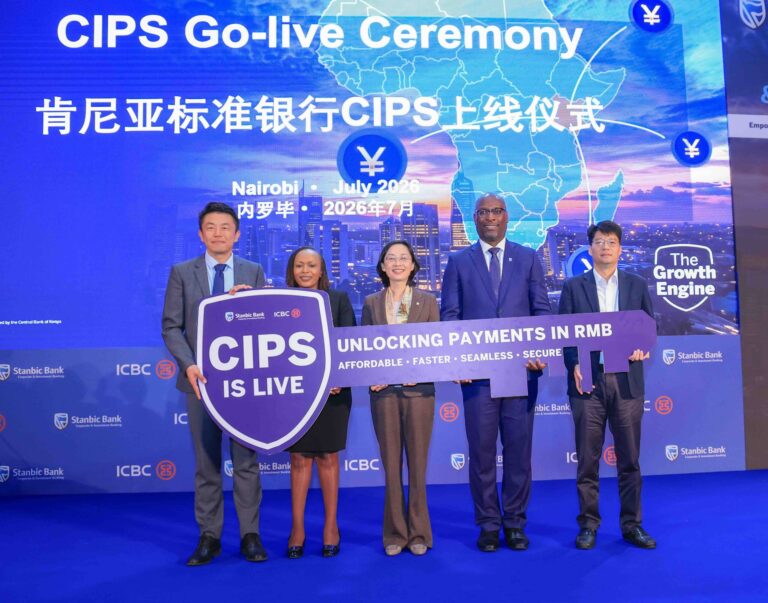
From left: Liu Jia, Deputy Chief Representative Officer, ICBC Africa; Florence Wanja, Head of Business and Commercial Banking, East Africa, Stanbic Bank; Guo Haiyan, Ambassador of the People’s Republic of China to Kenya; Jonathan Muga, Head of Corporate and Investment Banking, Stanbic Bank Kenya; and Mo Yongnian, Chief Financial Officer, China Road and Bridge Corporation Kenya, pose for a photograph during Stanbic Bank Kenya’s Economic Outlook and RMB Business Ecosystem China Day celebration.

Stanbic Launches Direct China Payment System for Kenyan Businesses

31 July 2026
Wangari Mutuku

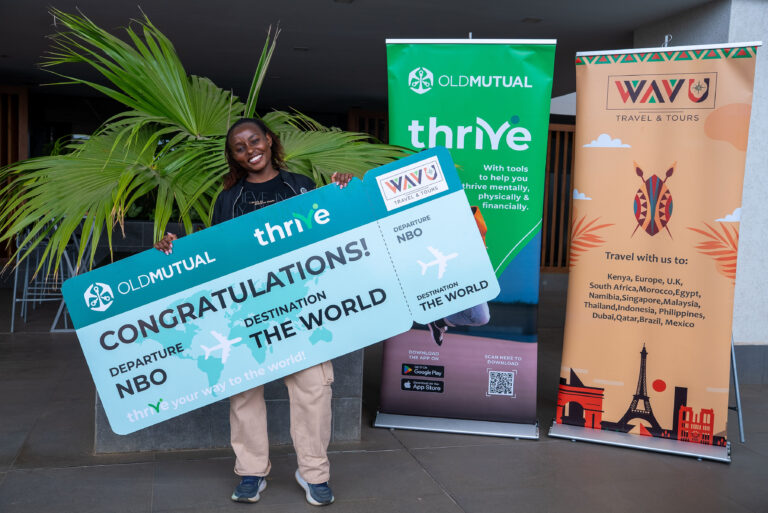
Kenyan lecturer wins 15-day Asian adventure after using Old Mutual Thrive App

16 October 2026
NewsTrendsKE

NewsTrendsKE

NewsTrendsKE: the business intelligence read for Kenya's decision-makers.

Follow us on social media:

  • About
  • Advertise
  • Careers
  • Contact

©2026 NewsTrendsKE.

No Result
View All Result
  • Business
  • Deals
  • Investments
  • Real Estate
  • Economy
  • OpEds
  • Lifestyle
  • Sustainability
  • Women in Business
  • Technology
    • Phones

©2026 NewsTrendsKE.