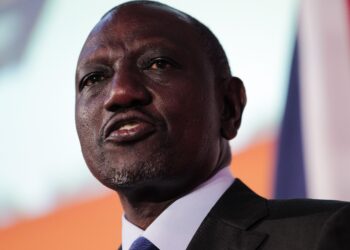
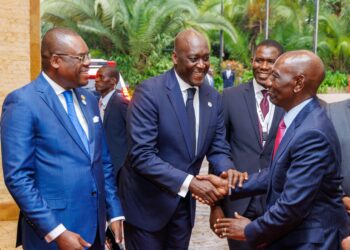
![President William Ruto flanked by Environment CS Aden Duale. [PCS]](https://newstrends.co.ke/wp-content/uploads/2025/02/President-William-Ruto-flanked-by-Environment-CS-Aden-Duale-PCS.jpg)
The leadership approaches of U.S. President Donald Trump, in his second term, and Kenyan President William Ruto offer a rich comparative study. Both leaders, ascending to power with promises of transformative change, have employed distinct strategies in governance, policy implementation, and international relations. Analyzing their methods provides valuable lessons for Kenya’s political class.
1. Communication Strategies: Directness vs. Consultation


President Trump’s communication is characterized by unfiltered directness. He frequently utilizes platforms like social media to convey his messages, often bypassing traditional media channels. This approach allows him to connect directly with his base but has also led to controversies and a polarized political environment. For instance, during the Conservative Political Action Conference (CPAC) in Maryland, Trump delivered a speech filled with bold claims and criticisms, energizing his supporters while deepening divisions.
In contrast, President Ruto adopts a more consultative communication style. He maintains regular dialogues with Members of Parliament and other stakeholders, fostering a sense of inclusion in decision-making processes. This method aims to build consensus and collective responsibility, promoting unity within the government. However, it requires careful management to ensure efficiency and prevent potential delays in policy implementation.
Balancing direct communication with inclusivity is crucial. While unfiltered messaging can energize a support base, it risks deepening divisions. Conversely, a consultative approach promotes unity but requires careful management to avoid perceptions of overreach. Leaders should strive for transparent communication that incorporates diverse viewpoints, ensuring policies resonate broadly without undermining institutional trust.
2. Policy Implementation: Decisiveness vs. Deliberation
President Trump’s second term has been marked by swift and assertive policy actions. On his first day back in office, he signed multiple executive orders, including withdrawing the U.S. from the Paris Agreement and revoking certain diversity programs. These decisive moves signal a commitment to his campaign promises but have also sparked significant debate and legal challenges.
President Ruto, on the other hand, emphasizes deliberation and stakeholder engagement in policy formulation. His administration often pilots programs and seeks input from various sectors before full-scale implementation. This approach aims to ensure that policies are well-informed and sustainable, though it may slow the pace of change.
Effective policy implementation requires a balance between decisiveness and inclusivity. Rapid actions can demonstrate commitment but may backfire if not well-considered. Conversely, overly cautious approaches can stall progress. Engaging stakeholders, conducting impact assessments, and clear communication are essential to enact meaningful and sustainable reforms.
3. Handling Opposition: Confrontation vs. Engagement
President Trump’s approach to opposition is often confrontational. He frequently employs combative rhetoric against political adversaries, the media, and even members of his own party who disagree with him. This stance energizes his base but also deepens political divisions and, at times, hinders bipartisan cooperation. For example, his recent CPAC speech included sharp criticisms of “globalists” and political opponents, reinforcing an adversarial political climate.
In contrast, President Ruto has shown a willingness to engage with opposition figures. He has incorporated members of rival parties into his cabinet, aiming to foster a sense of national unity. This inclusive strategy can mitigate tensions but risks alienating his core supporters if perceived as compromising on key principles.
Managing opposition requires a nuanced approach. While standing firm on core values is essential, engaging constructively with dissenting voices can promote national cohesion. Leaders should seek common ground where possible, fostering dialogue and understanding to build a more inclusive political environment.
4. Institutional Relations: Disruption vs. Strengthening
President Trump often positions himself as an outsider intent on disrupting established institutions. His skepticism towards traditional media, intelligence agencies, and even the judiciary has led to strained relationships and, in some cases, institutional pushback. While this approach resonates with voters distrustful of the establishment, it also raises concerns about the erosion of democratic norms and checks and balances. For instance, his recent executive orders have sought to reshape federal policies significantly, prompting debates about institutional integrity.
Conversely, President Ruto emphasizes the importance of strong institutions in achieving his policy objectives. He advocates for servant leadership and has called on public servants to uphold integrity and accountability. By focusing on institutional capacity building, Ruto aims to ensure that governance is effective and that public trust is maintained. However, this requires continuous effort to combat corruption and enhance transparency within governmental bodies.
The health of a democracy depends on robust institutions. While challenging the status quo can be necessary for reform, undermining institutional integrity can lead to instability. Leaders should work to strengthen institutions, ensuring they are resilient, transparent, and accountable to the people they serve.
5. Economic Strategies: Nationalism vs. Global Integration
President Trump’s economic policies are characterized by a nationalist approach, focusing on protecting domestic industries through tariffs and renegotiating trade deals. This “America First” strategy aims to revitalize local manufacturing but often leads to trade tensions. For example, his administration has proposed significant tariffs on imports from various countries, sparking debates about the impact on global trade relations.
President Ruto, in contrast, seeks to integrate Kenya more deeply into the global economy. He promotes policies that attract foreign investment and enhance trade partnerships,