Safaricom PLC (NSE: SCOM) has reported a strong performance for the half year ended 30 September 2025, posting a 52.1 percent rise in group net income to KES 42.8 billion. The growth reflects sustained momentum across its Kenyan operations and improving results from its Ethiopian subsidiary, underscoring the company’s resilience and diversified growth strategy.
Group service revenue rose 11.1 percent year-on-year to KES 199.9 billion, while earnings before interest and tax (EBIT) increased by 54.5 percent to KES 65.2 billion. EBITDA grew 34.9 percent to KES 101.3 billion, even as total capital expenditure declined 25.6 percent to KES 43.7 billion.


Kenya Operations Anchor Performance
Safaricom Kenya remained the group’s core profit engine, registering a 22.6 percent rise in net income to KES 58.2 billion. Service revenue increased by 9.3 percent to KES 194 billion, supported by double-digit growth in key segments.
M-PESA, the company’s mobile money service, led the expansion with a 14 percent year-on-year jump to KES 88.1 billion, reaffirming its position as a critical driver of Safaricom’s financial services strategy. Connectivity revenue, which includes mobile data, voice, and messaging, grew by 5.3 percent to KES 96.2 billion, while fixed service and IoT revenue rose 9.5 percent to KES 9.8 billion. EBIT climbed 13.1 percent to KES 89.5 billion, reflecting operational efficiency and sustained demand across services.
Capital expenditure in Kenya rose 11 percent to KES 34.2 billion, as the company continued investing in network expansion and digital infrastructure to enhance customer experience.
Ethiopia Operations Show Signs of Progress
Safaricom Ethiopia reported a strong top-line performance, with service revenue more than doubling by 136 percent to KES 6.2 billion. Voice revenue grew by an impressive 328.5 percent to KES 1.4 billion, while mobile data revenue rose 102.2 percent to KES 4.1 billion, signalling growing adoption of the brand’s services in a competitive market.
Despite challenges from pricing and currency reforms, the subsidiary reduced its net loss by 20.1 percent year-on-year to KES 15.5 billion. Customers increased 83.7 percent to 11.1 million, demonstrating Safaricom’s expanding footprint and brand recognition in Ethiopia.
Ethiopia’s CAPEX dropped sharply by 66 percent to KES 9.5 billion, reflecting a shift from initial infrastructure rollout to commercial consolidation. However, M-PESA revenue in Ethiopia declined by 45.6 percent to KES 8.7 million, highlighting early-stage operational challenges in the mobile money segment.
Leadership Perspective
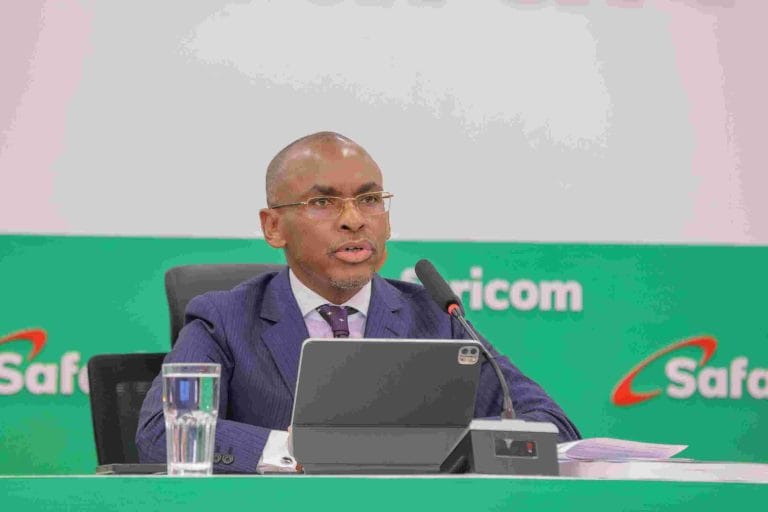
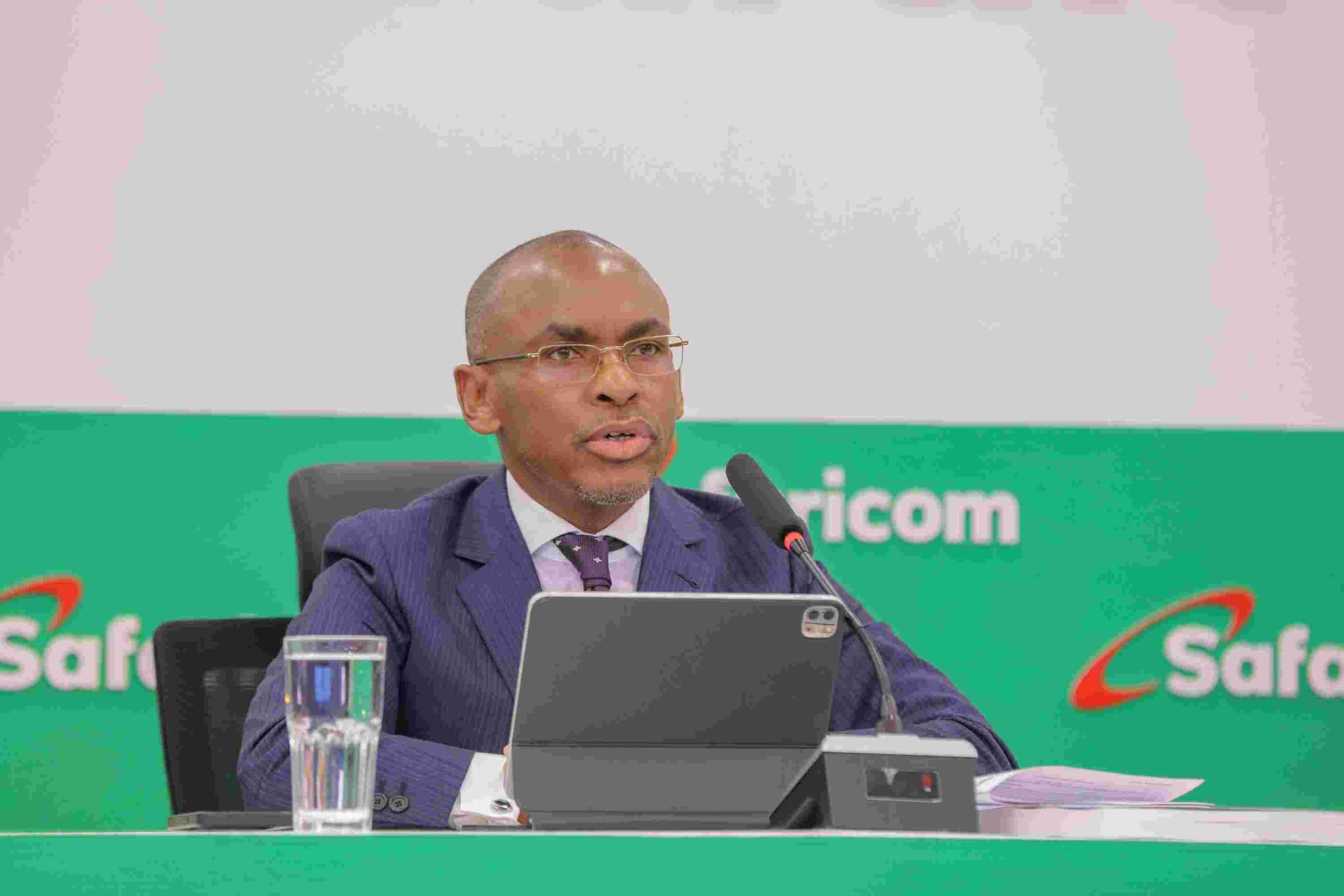
“This is a strong set of results and a solid start to our Vision 2030 strategy cycle, maintaining our FY26 guidance. We remain focused on executing our strategy through segment-led execution and integrated solutions,” said Peter Ndegwa, Safaricom Group CEO.
He noted that the company’s sustained growth aligns with its long-term objective of becoming a technology and purpose-led business, both in Kenya and in emerging markets such as Ethiopia.
Investing in Communities and Purpose
Beyond financial performance, Safaricom maintained its investment in social impact initiatives. Through its Citizens of the Future programme, the company aims to support 500 schools with infrastructure upgrades, provide 10,000 scholarships, and empower more than 56,000 learners with digital literacy over the next five years.
“It has been 25 years of transforming lives through innovation and community empowerment, a journey powered by purpose and collaboration. We have transformed the lives of over 22 million Kenyans through the Safaricom and M-PESA Foundations. We remain anchored in purpose, driving sustainable growth and positive change,” said Ndegwa.
In Kenya alone, Safaricom has invested KES 43 billion in projects focusing on education, health, economic empowerment, and environmental conservation, impacting over 22 million lives.
In Ethiopia, the company launched the Safaricom Ethiopia Foundation in July 2025, investing over ETB 650 million in community projects supporting education, youth, and economic empowerment. The foundation’s early initiatives have reached 76 schools, benefiting 84,000 people, and supported 2,224 women and farmers through income-generating programmes.
Outlook
With growth across both markets and narrowing losses in Ethiopia, Safaricom’s half-year results mark a confident start to its Vision 2030 strategy. The company’s dual focus on commercial growth and social investment positions it as a leading player in Africa’s evolving digital and financial services landscape.