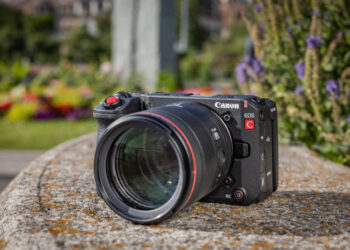
Canon’s latest addition to its full frame mirrorless system, the EOS R6 III, enters a highly competitive segment that now spans entry hybrid bodies to professional high resolution and high speed flagships. Expectations are higher than ever for cameras that must excel equally in stills and video. The R6 III positions itself as the refined middle ground, offering more power and versatility than the R6 II, yet without the premium cost and complexity of the R5 series. This review draws on the latest verified data available online to provide a detailed comparison in clear narrative form.
The R6 III brings a more substantial technical leap than many expected. At its core is a new 32.5 megapixel full frame CMOS sensor, which is a marked increase over the 24.2 megapixel sensor in the R6 II. This uplift in resolution places the R6 III much closer to the 45 megapixel R5 and R5 II, while remaining efficient in low light and maintaining manageable file sizes. The added resolution offers more cropping flexibility for wildlife, sports and wedding photographers, without pushing the post production burden associated with the R5 series.


Autofocus is one of the most notable areas of improvement. Canon has expanded its artificial intelligence driven subject detection, enabling more reliable tracking of people, animals and vehicles, and adding a feature that prioritises registered individuals. This is especially useful in scenarios such as events or weddings where specific faces must remain in focus. With the ability to shoot at up to forty frames per second, complemented by a pre capture buffer of twenty frames, the R6 III shows a clear intention to appeal to fast action photographers who once relied heavily on the R6 II for speed.
Video performance is where the R6 III makes its biggest statement. The camera records seven K sixty frames per second RAW light and delivers four K at up to one hundred and twenty frames per second. This is a large step forward from the R6 II, which is limited to four K sixty frames per second. Open gate recording and the more efficient sensor readout give videographers significantly more creative flexibility, whether for reframing, high quality slow motion or professional grading workflows. Canon has included one CFexpress type B slot alongside an SD slot, which supports the higher bit rates without forcing creators to use only CFexpress for general shooting.
In body image stabilisation remains one of Canon’s strengths, and the R6 III continues this with up to eight and a half stops of stabilisation with supported lenses. This makes handheld video and low light stills more confident, reducing the need for rigs or tripods in many shooting conditions.
In contrast, the R6 II remains a highly capable yet more economical option. Its twenty four megapixel sensor produces excellent low light results and very manageable file sizes, which is ideal for long event coverage, journalism and documentary assignments. It maintains forty frames per second electronic shooting and a very dependable Dual Pixel autofocus system. With dual SD card slots, it keeps operating costs lower and allows photographers to carry more media at a reasonable price. For stills centric users who do not need high resolution video, the R6 II continues to represent strong value.
The original R5 sits in a different category, offering a forty five megapixel sensor that remains attractive for commercial, portrait and landscape photography. The level of detail it captures is excellent, and its files are well suited to large format printing and heavy cropping. Its eight K RAW capability was groundbreaking at release, although its thermal limitations in extended video sessions are widely documented. Nonetheless, its combination of resolution, stabilisation and build quality keeps it relevant for photographers who prioritise stills above all else.
The R5 II refines that formula with a stacked backside illuminated forty five megapixel sensor that delivers faster readout, reduced rolling shutter and better overall responsiveness. This provides tangible advantages for wildlife, sports and handheld video work. With eight K sixty frames per second RAW, improved colour depth and Canon Log 2 and Log 3 support, the R5 II strengthens its status as a flagship hybrid camera. Eye control autofocus is a standout feature that allows the photographer to shift focus by looking through the viewfinder, which once mastered can feel intuitive and extremely fast. The image stabilisation system improves further to eight and a half stops, and processing performance increases through the addition of a DIGIC Accelerator.
When placed side by side, the R6 III emerges as the most balanced camera in the group. It offers much stronger video capability than the R6 II, increased resolution, modern autofocus and a flexible card configuration, making it an appealing choice for creators who need professional video without the file size demands or cost associated with the R5 line. It does not match the forty five megapixel resolution of the R5 and R5 II, nor does it inherit their stacked sensor advantages, but it sits in a sweet spot where cost, performance and efficiency come together.
For photographers who focus primarily on stills and appreciate low light performance and speed, the R6 II remains a dependable workhorse with lower operating costs. For those who need maximum detail for commercial work, the original R5 remains relevant. For creators who require the absolute best hybrid performance Canon currently offers, the R5 II continues to set the standard with its stacked sensor, eye control autofocus, eight K workflows and robust professional build.
The R6 III therefore represents a thoughtful evolution of one of Canon’s most popular full frame bodies. It expands its appeal to hybrid creators, professionals seeking a second body, and photographers who want a more capable camera without moving into the highest tier. With its improved sensor, more powerful video engine, refined autofocus and strong stabilisation, it is positioned as one of the most compelling all rounders in Canon’s current ecosystem.