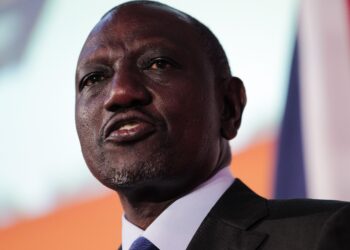
President William Ruto has officially signed the landmark Sovereign Wealth Fund Bill, 2026 into law during a morning ceremony at State House, Nairobi. The enactment marks a defining legislative milestone aimed at anchoring Kenya’s long-term economic stability and safeguarding mineral and petroleum revenues for future generations.
The Presidential assent follows intense debate and subsequent approval by the National Assembly. The final Act features robust oversight and governance guardrails intended to shield public resource wealth from political vulnerability and fiscal mismanagement.


A Tripartite Framework for Resource Wealth
The newly enacted Sovereign Wealth Fund Act establishes a strict structural divide for all state funds accrued via mineral royalties, prospecting licenses, and acreage leases, which currently sit at nearly Sh200 billion. Revenues will be funneled into three highly liquid, foreign-invested asset components:
- The Stabilisation Component: Designed to insulate the national budget from volatile global commodity price shocks.
- The Strategic Infrastructure Investment Component: Structured to finance commercially viable capital projects domestically without driving up national debt.
- The Future Generations Component: A long-term savings pool legally ring-fenced to build wealth for the nation’s posterity.
In a major win for fiscal accountability, a National Assembly amendment dictates that exactly 30% of all resource revenue flowing into the Central Bank of Kenya holding account must be automatically locked away into the Future Generations component.
Strict Guardrails and Fee Caps
Addressing historical public concerns over the handling of state funds, the legislation implements severe restrictions on fund deployment. Lawmakers decisively rejected civil and opposition efforts to utilize the reserves for servicing mounting national public debt, strictly cementing the fund’s definition as an investment-only vehicle.
Additionally, the Act prohibits the fund from being utilized to provide credit, loans, or guarantees to government entities to curb political patronage. High-risk speculative instruments, including derivatives and private equity trading, are banned outright.
To protect yields, annual management fees payable to external investment asset managers are legally capped at 2%. The Act enforces absolute transparency, mandating that all service fees be made fully public.
Shielding Savings from Election Cycles
To insulate national savings from electoral interference, the Act bars any capital withdrawals within three months of a General Election. The Fund’s board of management is legally required to certify asset balances and submit verified financial audits to the National Treasury, Parliament, and the Auditor-General before any national transition window.
Speaking during the signing at State House, executive officials noted that the operationalization of the fund begins immediately, with the recruitment of an independent 7-member governing board and fund managers expected to commence in the coming weeks. Guy