Renowned oceanographer Dr. Sylvia Earle and coral reef conservationist Titouan Bernicot are joining forces to highlight the urgent threats facing the world’s oceans and inspire greater action to protect marine ecosystems.
The two conservationists feature in a new documentary by CNN’s Call to Earth, which follows their work over the course of a year and examines how their organisations are helping restore coral reefs, protect marine habitats and build public support for ocean conservation.


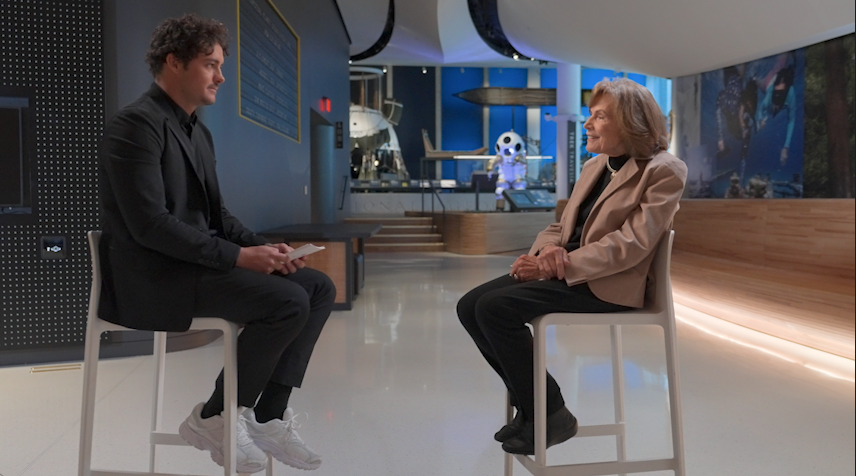
In the first half-hour documentary, Earle and Bernicot sit down for a one-on-one conversation at the National Geographic Museum of Exploration in Washington, DC, where they discuss the health of the oceans and the global target to protect at least 30 per cent of the ocean by 2030.
Bernicot is the founder and chief executive officer of Coral Gardeners, an organisation established in 2017 to restore damaged coral reefs. To date, Coral Gardeners has planted 221,212 corals across more than 25,100 square metres of ocean.
The organisation is headquartered in Mo’orea, French Polynesia, but Bernicot says its ambitions extend far beyond the island.
“My dream was to go beyond the borders of French Polynesia, because coral reef is a global issue,” he tells CNN.
He notes that when he was 16 years old, about 25 per cent of the world’s coral reefs were already dead. A decade later, he says, the figure has risen to more than 50 per cent.
Coral Gardeners now aims to operate in 10 countries by the end of 2030 as it scales up efforts to address coral reef decline.
Bernicot warns that the scale of destruction beneath the ocean surface remains largely invisible to the public.
“People don’t realise that the biggest fire of all times is happening underwater,” he says. “They talk about fires on land, but in the water, it’s boiling. And the ocean is on fire.”
Earle, a Rolex Testimonee and founder of Mission Blue, has spent decades advocating for stronger protection of marine ecosystems.
Mission Blue supports 169 Hope Spots across 116 countries and the high seas. Together, the areas cover more than 57 million square kilometres of ocean.
Earle says communication is central to conservation because many people do not fully understand how closely human survival is connected to the ocean.
“People don’t know why they should really care about the ocean,” she tells CNN. “Until they know that the ocean keeps all of us alive, why would you care?”
She says positive conservation stories can help communities understand that change is possible and encourage more people to participate in protecting the environment.
During the conversation, Bernicot asks Earle whether the world can meet the target of protecting 30 per cent of the ocean by 2030.
Earle says progress will depend on how protection is measured, noting that only about three per cent of the ocean is currently under meaningful protection by her standards.
However, she says the recently adopted international treaty on the high seas offers a framework for expanding conservation efforts and protecting a greater share of waters beyond national borders.
Both conservationists believe public engagement will be critical to achieving lasting change.
Bernicot says environmental conservation must move beyond being viewed as a niche subject and become something that reaches and motivates a much wider audience.
“We need to create an emotional connection between people and the thing we want to protect,” he says.
Earle is also optimistic that a growing global network of conservationists, communities and businesses can turn hope into action.
“We need some of those who have made a fortune from taking from nature to give back to nature,” she says. “To find the joy in being part of the solution.”
She adds that ocean advocates must continue participating in climate conferences, scientific forums, engineering meetings and other global platforms to maintain a sense of urgency and promote practical solutions.
“We can do this to inspire people to do what they can do to be part of the solution,” Earle concludes.