Strengthening African agriculture is one of the most powerful levers for advancing global development, according to a new report by Boston Consulting Group (BCG) in collaboration with the Paris Peace Forum. The ‘African Agriculture Is the Key to Global Sustainable Development‘ report shows that improving productivity in the sector could help achieve between 30% and 50% of the United Nations’ Sustainable Development Goals (SDGs). Yet African agriculture remains underfunded, with just $49 billion invested in 2022, far short of the estimated $200 billion required.
The agricultural sector is a crucial sustenance of livelihoods for 70% of Africans, most of them women, and contributes around 30% of the continent’s GDP. Despite this, African farmers receive an average of just $140 in annual investment per farmer, compared with $1,300 globally. Low productivity, driven by limited irrigation and mechanisation, forces the continent to import over $27 billion in cereals annually, a figure projected to rise to $110 billion by 2030 without urgent action.

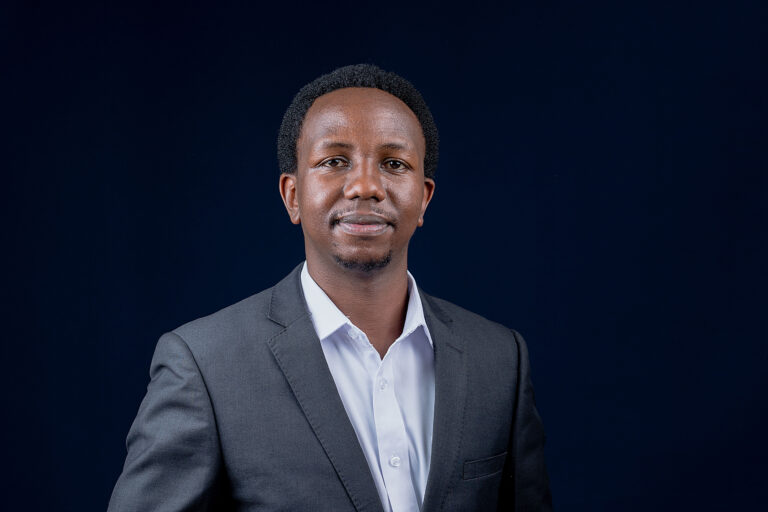
“Investing in African agriculture is about more than feeding the continent. It’s about transforming Africa into a driver of global food security, resilience, and economic growth,” said Younès Zrikem, Managing Director and Partner at BCG in Casablanca and report coauthor, adding that: “Agriculture offers one of the most direct and impactful ways to reduce poverty, empower women, and build long-term climate resilience.”
Agriculture as a triple win
The report highlights that investment in African agriculture can have far-reaching development impacts. It is central to reducing poverty and hunger, as more than 400 million Africans live in extreme poverty and 60% of the world’s acutely food-insecure people reside on the continent. Improvements in agricultural productivity would also address health and education challenges: chronic malnutrition affects 290 million Africans, impairing health outcomes and hindering learning for 45 million children under the age of five.
Investment in agriculture also directly supports gender equality, with women comprising 40% of the global agricultural workforce. Beyond social outcomes, building climate-smart agricultural systems will be essential to helping Africa withstand climate shocks and reduce the projected displacement of 40% of the world’s climate migrants by 2050.
“Strengthening Africa’s agricultural systems is not just a necessity for the continent, it’s just as important for the rest of the world,” said Zoe Karl-Waithaka, Managing Director and Partner at BCG in Nairobi. “With the right investment, Africa can meet its own growing food needs, safeguard livelihoods for millions of farmers, and make a decisive contribution to global climate action.”
Closing the funding gap
The report also puts a spotlight on the importance of stronger policy commitments. Public spending on African agriculture amounts to just 3% of government budgets, far below the African Union’s target of 10%. Only Malawi and Ethiopia consistently meet this benchmark. Meanwhile, private-sector investment represents just 3% of total African agriculture funding, well under the global average of 10%.
“Africa’s agricultural potential remains vastly underleveraged, not due to lack of opportunity, but due to underinvestment,” said Olayinka Majekodunmi, Partner at BCG in Lagos. “With the right incentives, blended financing, scalable innovations, and regional collaboration, we can unlock a new era of agricultural transformation – one that creates jobs, enhances food systems, and positions Africa as a global hub for sustainable development.”
In June 2024, the Paris Peace Forum launched the Agricultural Transitions Lab for African Solutions (ATLAS) to promote investment, transparency, and accountability. As part of this initiative, the 2×30 Challenge calls on funders to double annual investment from $49 billion to $100 billion by 2030.
Zoe concludes, “African agriculture is not a peripheral issue but a global priority. With the right investment, policy alignment, and international collaboration, Africa can transform its agricultural sector into a cornerstone of sustainable development. Bridging the funding gap is not just a moral imperative; it is a strategic opportunity to unlock progress across poverty reduction, gender equality, climate resilience, and food security. The time for action is now, because when Africa’s farms thrive, the world moves closer to achieving the SDGs.”