

Africa’s energy sector is entering a different phase of capital formation. For the past two decades, the focus has been on attracting international investment into the continent’s upstream oil and gas projects. Now, a growing base of African sovereign wealth funds, state-backed vehicles and independent operators have both the balance sheet strength and the strategic mandate to look beyond domestic opportunities.
This shift is already beginning to translate into outward-looking investment strategies, with South America emerging as a key target market. Africa’s oil and gas production is expected to reach 11.4 million barrels of oil equivalent per day in 2026, with upstream capital expenditure at $41 billion. At the same time, asset sales and farm-downs are creating entry points for new players, while transactions such as Vitol’s $1.65 billion acquisition of Eni assets in Ivory Coast and the Republic of Congo reflect a broader shift toward independents and trading houses taking a more prominent role.
As African players consolidate positions at home, attention is increasingly turning outward. South America offers large-scale, resource-rich opportunities with increasingly well-defined development pathways. Brazil’s pre-salt continues to deliver some of the most competitive deepwater barrels globally, while Argentina’s Vaca Muerta is moving into a new phase focused on infrastructure, LNG exports and long-term monetization. Beyond upstream, Brazil’s offshore gas infrastructure, FPSO-driven developments and subsea supply chains are creating opportunities across services and midstream segments, while Argentina’s LNG export ambitions, pipeline expansions and gas processing infrastructure are opening the door to long-term capital deployment.
The opportunity, however, is not one-directional. African investors are entering the market with relevant experience. Exposure to deepwater developments, LNG monetization and complex project structures is increasingly common among state-backed funds and their partners. This is particularly relevant in areas such as floating LNG and gas commercialization, where Africa has already demonstrated operational capability in markets like Congo, Nigeria, Cameroon and Mozambique. That expertise is directly transferable to South America’s next phase of gas and infrastructure development.
A South Atlantic Energy Corridor is beginning to take shape, driven by capital flows, shared investment priorities and growing institutional ties. Africa and South America are often seen as competing for the same capital, technology and market access, but there is increasing scope for coordination. African capital is seeking diversification and scale, while South America is advancing projects that require long-term investment and experienced partners.
Institutional alignment will be critical to realizing this potential, and the groundwork is already in place. The African Energy Chamber (AEC) has developed bilateral engagement frameworks linking Latin American stakeholders with African governments, national oil companies and private sector players. In Venezuela, this has been formalized through cooperation with the Ministry of Hydrocarbons and PDVSA across upstream, gas and investment promotion, while similar structures have been advanced with Brazil. The objective is to move beyond ad hoc engagement toward structured South-South energy cooperation, leveraging the Chamber’s network across more than 40 African countries to create direct pathways for investment, partnerships and government-to-government collaboration.
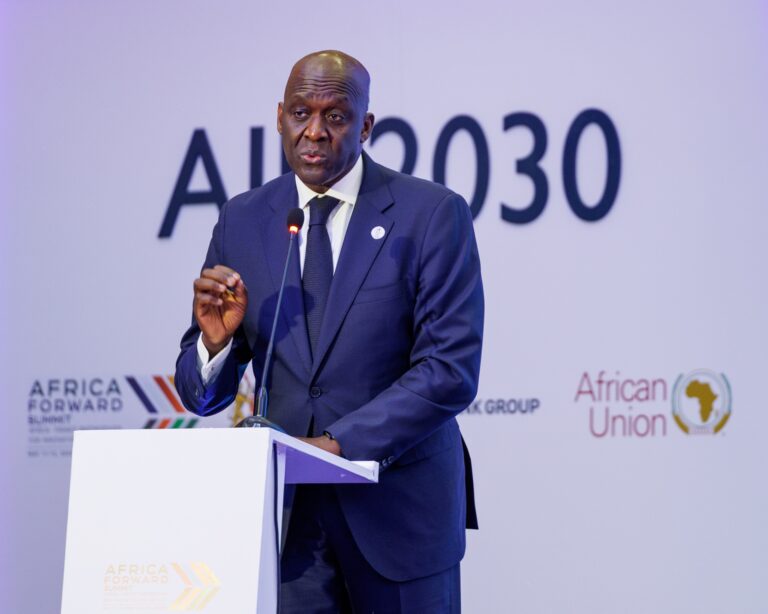
“The Atlantic has historically been treated as a barrier between these two regions,” said NJ Ayuk, AEC Executive Chairman. “The reality is that it is a corridor – and the opportunity is to build the institutional and commercial relationships that allow capital, technology and expertise to move in both directions.”
There is also a broader strategic dimension. Both Africa and South America have taken clear positions on energy sovereignty, local content and the right to develop hydrocarbon resources in line with national priorities. Aligning those positions at a multilateral level – from the G20 to the International Energy Forum – strengthens their collective influence at a time when global energy policy remains contested.
The capital required to develop the next generation of energy projects will not come from traditional sources alone. As South America advances large-scale developments across deepwater, LNG and infrastructure, the opportunity lies in engaging that capital early, before investment relationships are locked in elsewhere.
Distributed by APO Group on behalf of African Energy Chamber.