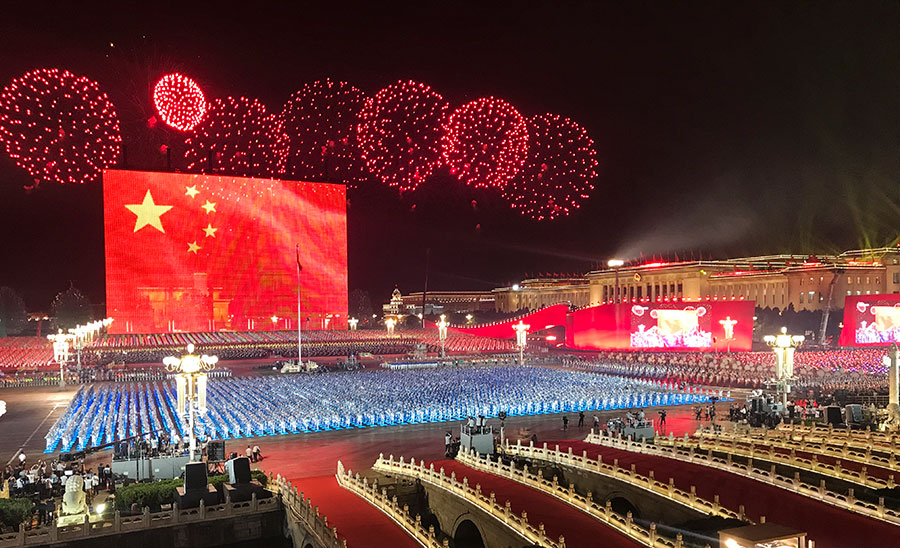
China today marks the beginning of its annual National Day holiday, a major national celebration also known as Golden Week. In 2025, the holiday is extended to eight days, from 1 October through 8 October, to incorporate the Mid Autumn Festival.
In the early hours of the morning, China’s coast guard mounted a symbolic flag raising ceremony aboard a ship in the waters off Scarborough Shoal, a disputed maritime area claimed by both China and the Philippines. Officials aboard pledged to “stand guard” over the atoll, underscoring Beijing’s resolve over its territorial claims.

In the Macao Special Administrative Region, a flag raising ceremony and reception took place at Lotus Square. Macao Chief Executive Sam Hou fai remarked, “The nation’s prosperity has bolstered Macao’s confidence in its development and progress, and the city will ride on the motherland’s development momentum to continuously seek new opportunities for growth.”
Across mainland China, public plazas, buildings, and streets are decorated with red lanterns, national flags, and light displays. The Golden Week holiday is traditionally a peak travel period, with millions expected to journey domestically and abroad.
President Xi Jinping, in an address marking the 76th anniversary of the founding of the People’s Republic, reiterated a firm line on sovereignty and territorial integrity. He called on the nation to “firmly oppose Taiwan independence separatist activities and external interference,” reaffirming that China would “resolutely safeguard national sovereignty and territorial integrity.”
State commentary has emphasised that the holiday season is not only about national pride but also about boosting domestic consumption, tourism, and economic activity. With the country facing headwinds including slower growth and pressures in the real estate sector, officials have framed the eight day break as an opportunity to strengthen internal demand.
Under the 2025 schedule approved by the State Council, the National Day holiday is legally three days long, but adjustments to weekends and compensatory rest days have extended it into an unusually long break. The overlap with the Mid Autumn Festival has further stretched the period from 1 to 8 October.
Travel agencies, transport systems, and tourist destinations have reported strong bookings, with many citizens planning multi city tours or countryside getaways. Hotels and airlines are preparing for surging demand, while local governments have warned of congestion and logistical pressure. On the streets of Beijing and provincial capitals this morning, families, elderly citizens, and school children gathered for flag raising ceremonies, patriotic songs, and cultural performances. “It is a good chance to take a break and see more of my own country,” said one tourist in Xian.
Internationally, the celebrations have drawn attention as well. North Korean leader Kim Jong Un extended congratulations, stating that Pyongyang would “continue developing its relationship with China regardless of changes in the global political landscape.”
As the Golden Week unfolds, the focus will be on how well transport systems manage the holiday surge, whether consumer spending rises, and how the strong political messaging resonates both domestically and internationally. For now, China enters a festive period marked by national pride, family reunions, and an undercurrent of strategic posturing.