Global trade is not collapsing under the weight of tariffs and economic nationalism. Instead, it is reorganising — and continuing to grow.
That is the key finding of a new report by Boston Consulting Group (BCG), which says world trade in goods could expand steadily over the next decade, even as countries pursue more inward-looking economic policies.

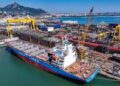
According to BCG’s latest analysis, global goods trade is projected to grow by 2.5 per cent annually through 2034, slightly outpacing global economic growth. The total value of traded goods would rise from about $23 trillion in 2024 to nearly $30 trillion by 2034.
However, the routes that goods take — and the partners countries trade with — are expected to change significantly.
A Patchwork Global Trading System
BCG’s report, Trade in Transition: How to Prepare for a Patchwork World Order, says global trade is moving away from a single, rules-based system towards a fragmented structure organised around four major trade centres.
These are the United States, China, and two broader groupings: the Plurilateralists, made up of countries committed to open, rules-based trade, and BRICS+ economies excluding China, a bloc of emerging markets increasingly focused on South–South trade.
Many countries in Africa, the Middle East and Latin America fall outside these blocs and are expected to act as strategic “free agents”, trading across multiple systems.

US Turns Inward, China Looks South
Under BCG’s most likely scenario, the United States’ share of global trade is expected to decline as it continues to prioritise domestic production over imports. Higher tariffs are playing a key role, with the share of US imports covered by tariffs rising sharply from 13 per cent to 61 per cent since January 2025.
Trade between the US and China is projected to fall by 4.5 per cent, continuing a trend seen in recent years. Trade growth between the US and both BRICS+ countries and Plurilateral economies is also expected to be modest, at about 1.5 per cent per year.
China, by contrast, is projected to strengthen its trade links with the Global South. BCG says China will remain the largest trading partner for many developing economies, driven by its demand for energy, food and industrial inputs, as well as its search for new markets for manufactured goods.
Trade between China and other BRICS+ countries is forecast to grow by 5.5 per cent annually, while China’s trade with the rest of the world is expected to expand by 3 per cent per year.

Plurilateral Economies Deepen Ties
The Plurilateral group includes the European Union, the United Kingdom, South Korea, members of the Comprehensive and Progressive Agreement for Trans-Pacific Partnership (CPTPP), and smaller open economies such as Costa Rica and Morocco.
Although not a formal bloc, these countries share a commitment to lowering trade barriers and strengthening multilateral rules. BCG projects trade among these economies to grow by about 3 per cent annually over the next decade, with continued engagement across the Global South.

BRICS+ Push for South–South Trade
BRICS+ countries excluding China — including Brazil, Russia, India, South Africa, Egypt, Ethiopia, Indonesia and the United Arab Emirates — are expected to expand trade links with one another and with other developing economies.
Despite facing higher US tariffs averaging 27.5 per cent, the group’s trade is forecast to grow by 3.3 per cent per year through 2034, with China accounting for roughly 40 per cent of that growth.
BCG notes that new institutions and infrastructure are supporting this shift, including financing from the BRICS New Development Bank, local-currency payment systems that reduce reliance on the US dollar, and improved logistics and digital trade processes.
Implications for Africa
The report suggests that global trade is not retreating but becoming more fragmented. For African economies such as Kenya, this could create new opportunities as countries seek diversified supply chains, new markets and reliable suppliers.
“Global trade isn’t retreating; it’s reorganising,” said Marc Gilbert, a senior partner at BCG and co-author of the report. “Leaders who factor geopolitics into strategic and investment decisions will be better positioned to secure both resilience and growth over the next decade.”
As the global trading system evolves, BCG argues that flexibility — rather than alignment with any single bloc — may prove to be a key advantage for emerging economies.