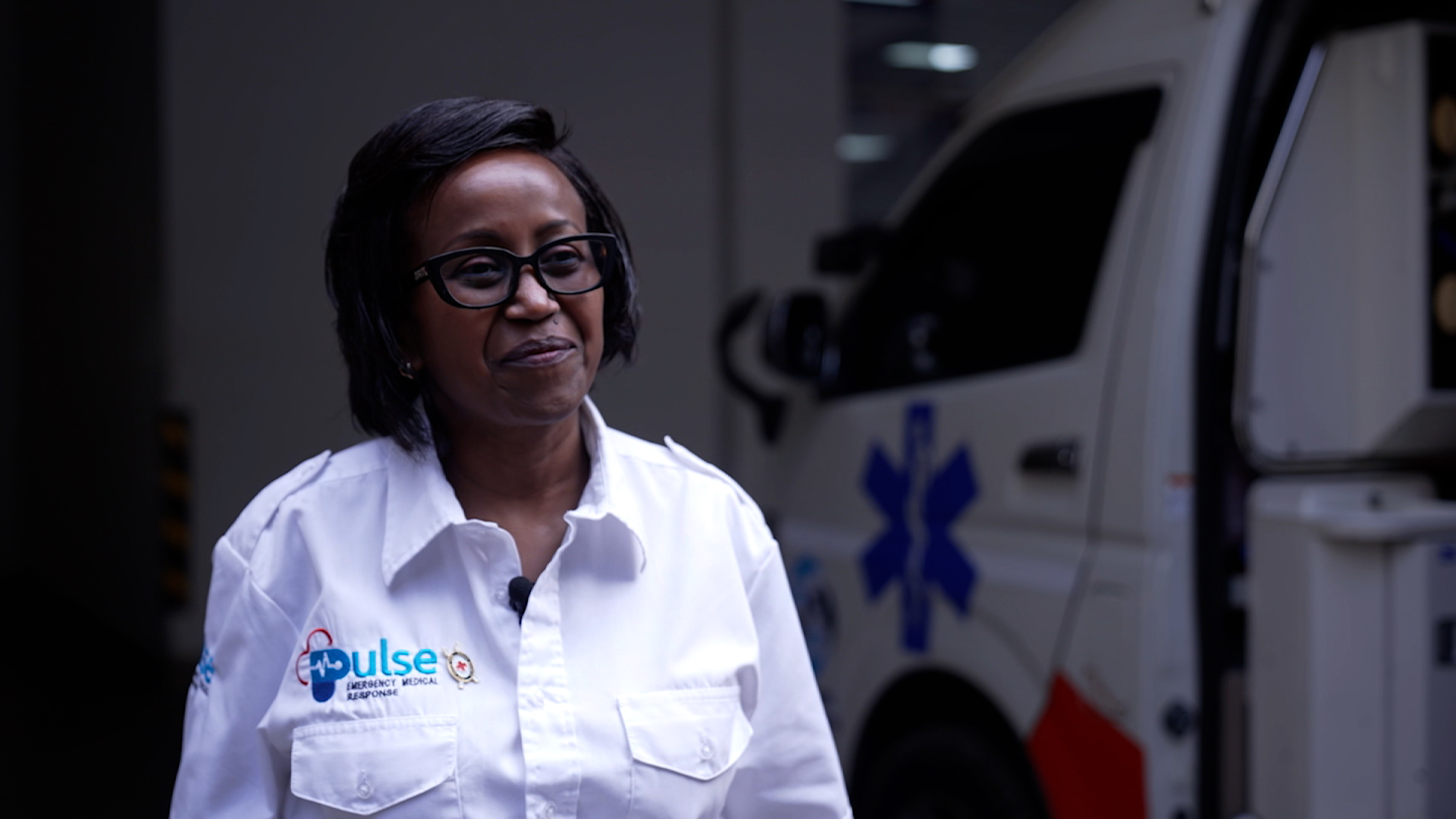
In the latest episode of Connecting Africa, CNN’s Victoria Rubadiri explores how a Kenyan technology company is helping to close critical gaps in emergency response services across the continent.
Many African countries still lack public-run emergency medical services (EMS), leaving private providers to fill the void. In Kenya, where the government is only now rolling out its first national emergency response system, private companies have long operated independently to deliver life-saving care.


One such company is Pulse Emergency Medical Response (Pulse EMR). Its founder and CEO, Margaret Gitau, says reaching patients can be a major challenge, particularly in remote or underserved areas. Network blackouts, unreliable electricity and dead phone batteries often make it difficult for responders to locate those in need.
“In some parts of the country we do have network blackouts. So, there is latency there and at times we have got electricity problems,” Gitau explains. “When someone wants to be assisted you get to their destination and you find that they don’t have power on their telephones. So, it becomes a bit of a challenge even to locate them.”
To overcome these obstacles, first responders are increasingly turning to technology platforms such as AURA, a Kenyan-founded emergency response app designed to connect people in distress with vetted private responders.
Victor Odera, AURA’s Kenyan Country Manager, says the platform uses GPS technology to bridge the gap between those needing help and emergency providers. “We give users access to these emergency services, to the exact GPS location anywhere, anytime by connecting them to a network of vetted private emergency response providers,” he says.
In Kenya, AURA partners with dozens of private emergency response companies operating in more than 40 cities and towns. The services range from roadside assistance to urgent medical care. Unlike many competitors, AURA has diversified the ways users can access help.
“We’re able to cater to people who do not want to download an application,” Odera explains. “We have the phone call modality. Now we’re also looking at panic buttons, and wearables like smart watches. So very different and very varied channels through which you’re able to get our product and our solution to the hands of many people.”
CNN’s Eleni Giokos spoke with AURA’s co-founder and CEO, Warren Meyers, who reflected on the problem that inspired the company’s creation in 2017. At the time, he says, access to emergency help lagged far behind everyday conveniences.
“People could get a taxi or a pizza quicker than they could get help when they’re dying, having an emergency,” Meyers says. “That obviously didn’t make sense.”
AURA was built as a platform marketplace, providing technical access to a wide range of users while linking them to emergency responders. Meyers says the goal has always been to democratize access to emergency response services, particularly in regions where public infrastructure is limited.
Looking ahead, Meyers says the company is focused on expanding its footprint across the continent. While AURA already operates in several African countries, new markets are firmly in its sights.
“At the moment we haven’t set up our product in North Saharan countries like Morocco and Egypt, which are massively growing markets,” he says. “As well as in the French-speaking countries. That’s the new frontier—enabling our service across those regions and doubling down on partnerships that allow for Africa-wide distribution.”
As Kenya continues to develop its national emergency response framework, platforms like AURA are playing a crucial role in ensuring help can reach those who need it most—quickly, accurately and across borders.