Friday, September 18, 2026
  • About
  • Advertise
  • Careers
  • Contact
NewsTrendsKE
  • Business
    • Deals
  • OpEds
  • Sustainability
  • Women in Business
  • Lifestyle
  • Featured
  • Technology
    • Phones
  • Sports
  • World
  • Contact Us
No Result
View All Result
NewsTrendsKE
No Result
View All Result

Home » Health » Kenya’s Hospitals Are Practising for the Worst – Here Is Why It Matters

Kenya’s Hospitals Are Practising for the Worst – Here Is Why It Matters

Queen Amber by Queen Amber
1 year ago
in Health
Reading Time: 2 mins read
A A
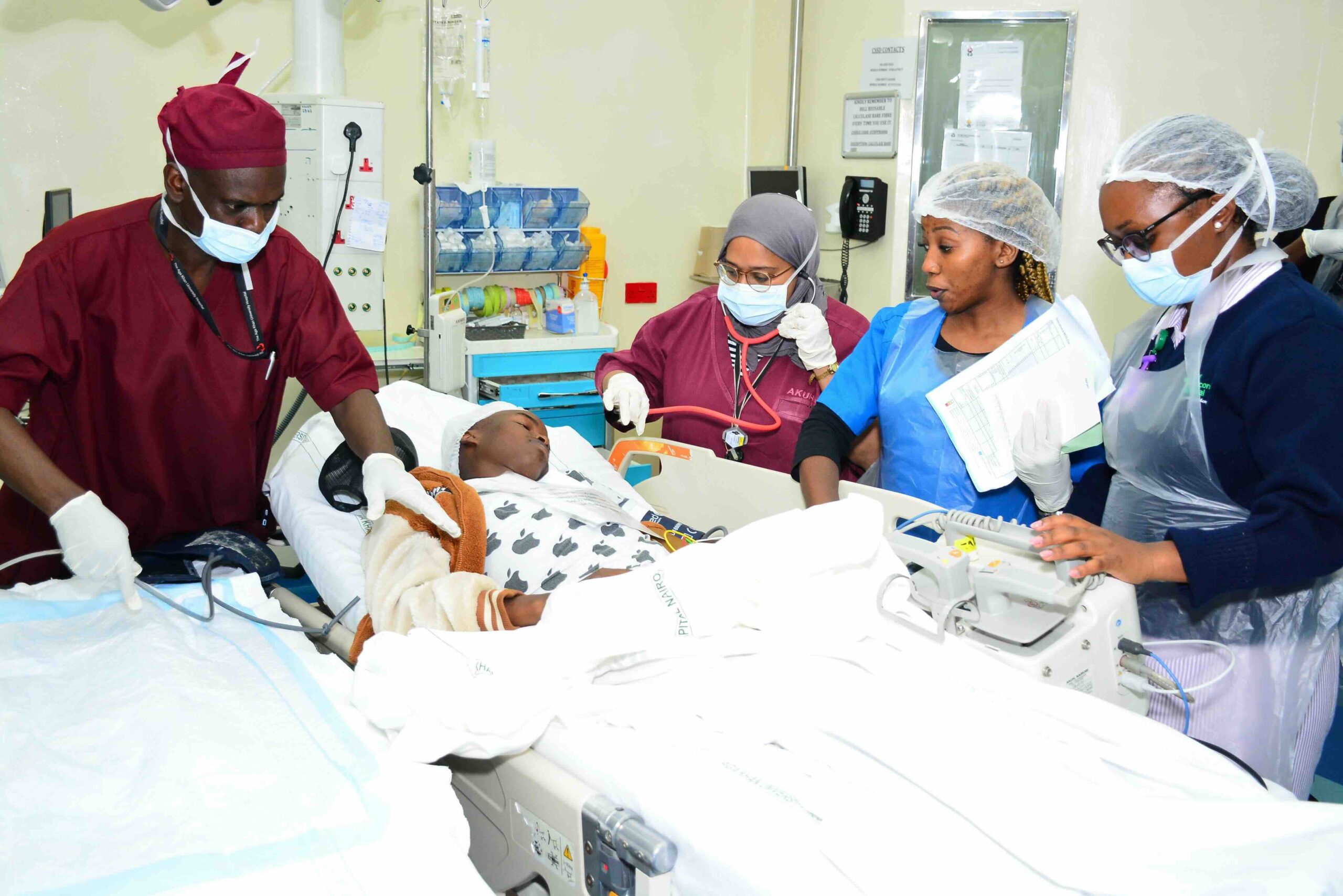
Aga Khan Hospital drills
Share on FacebookShare on TwitterShare on WhatsApp

Sirens, flashing lights, and a heavy security presence at the Aga Khan Sports Club Pavilion were not a real attack, but a carefully staged emergency drill involving Aga Khan University Hospital, M.P. Shah Hospital, Gertrude’s Children’s Hospital, and Avenue Hospital.

The simulation re-enacted a coordinated terror incident, with a lone shooter scenario leaving 70 mock casualties in need of urgent care. Ambulances from E-Plus and Rescue.co rushed patients to the four hospitals, while emergency teams practised triage and treatment under pressure.


Also Read

Aga Khan University Hospital Nairobi unveils AI-enabled radiotherapy technology to treat Cancer

Aga Khan University’s Brain and Mind Institute Takes Kenya On a Major Pathway Towards Awareness of Neurological Conditions

17 July 2026
Doctors Implant Pacemaker Without Surgical Blade In Regional First

Aga Khan University Hospital Doctors Implant Pacemaker Without Surgical Blade in Regional First

2 April 2026
Load More

According to Dr Benjamin Wachira, Emergency Physician at Aga Khan University Hospital and Lead Coordinator of the drill, “Drills like this are critical because they allow hospitals to test and strengthen their emergency preparedness without the consequences of a real incident.”

For Kenyans, the exercise goes beyond the spectacle of flashing lights and dramatic role play. It is a stark reminder that the country faces a range of risks that can quickly overwhelm health facilities. These include:

  • Terror and insecurity: Kenya remains vulnerable to extremist threats, with past incidents showing how unprepared systems can lead to loss of life.
  • Public health emergencies: From cholera outbreaks to the threat of pandemics, health systems must remain agile.
  • Environmental and climate disasters: Floods, droughts, and industrial accidents increasingly put pressure on hospitals and emergency responders.

By simulating high-pressure scenarios, hospitals are building capacity not just for terror attacks but for any large-scale emergency. The involvement of disaster management agencies, ambulance services, and foreign embassies underscored the importance of collaboration in saving lives.

Observers noted strengths such as rapid activation of emergency plans, clear role awareness among staff, and timely mobilisation of critical resources. At the same time, areas for improvement were flagged, particularly around the integration of pre-hospital care with hospitals.

What does this mean for Kenyans? It shows that health facilities are not waiting for the next crisis to strike. They are testing their systems, identifying weaknesses, and strengthening coordination so that when a real emergency happens, lives can be saved.

A formal debrief has ensured that lessons from the drill are being translated into daily practice, from updated standard operating procedures to regular staff training. For ordinary Kenyans, this is reassurance that hospitals are preparing for the unexpected, whether it is a terror attack, a disease outbreak, or an environmental disaster.

In a country where emergencies often strike with little warning, such preparedness can make the difference between chaos and resilience.

Tags: Aga Khan Hospital
Previous Post

I&M Group PLC Announces 34% Rise in Half-Year Profit Before Tax to KES 11.7 Billion

Next Post

Wings to Fly and Elimu Scholars Gather for Innovation-Focused Congress

Related Posts

Aga Khan University Hospital Nairobi unveils AI-enabled radiotherapy technology to treat Cancer
Health

Aga Khan University’s Brain and Mind Institute Takes Kenya On a Major Pathway Towards Awareness of Neurological Conditions

17 July 2026
Doctors Implant Pacemaker Without Surgical Blade In Regional First
Health

Aga Khan University Hospital Doctors Implant Pacemaker Without Surgical Blade in Regional First

2 April 2026
Aga Khan University Hospital Nairobi unveils AI-enabled radiotherapy technology to treat Cancer
Health

Aga Khan University Hospital Nairobi unveils AI-enabled radiotherapy technology to treat Cancer

6 February 2026
Health

Breast Cancer Is No Longer A Disease Of The Elderly

23 October 2025

Goldfield & Banks Brings a Distinctly Australian Scent Story to Kenya

17 September 2026

Cofek Loses Stanbic Yetu Festival Case After Evidence Fails to Show Up

17 September 2026

CFAO Motors partners with Metal Equipment Co. Ltd, announces new improved Safari Landcruiser 79

30 March 2023
I&M Bank Branches

I&M Bank Partners with Surecomp to Strengthen Trade Finance Services Across Regional Markets

16 September 2026
Kenya seal

Kenya’s Public Seal Custody Moves from Attorney General to Head of Public Service

21 May 2025
Lipa na M-pesa

Lipa na M-PESA Gets Better: How New KSh 500 Kadogo Limit Benefits Businesses

16 September 2026
NewsTrendsKE

NewsTrendsKE

A News Blog For Readers Who Want More

Follow us on social media:

  • About
  • Advertise
  • Careers
  • Contact

©2026 NewsTrendsKE.

No Result
View All Result
  • Business
    • Deals
  • OpEds
  • Sustainability
  • Women in Business
  • Lifestyle
  • Featured
  • Technology
    • Phones
  • Sports
  • World
  • Contact Us

©2026 NewsTrendsKE.

Go to mobile version