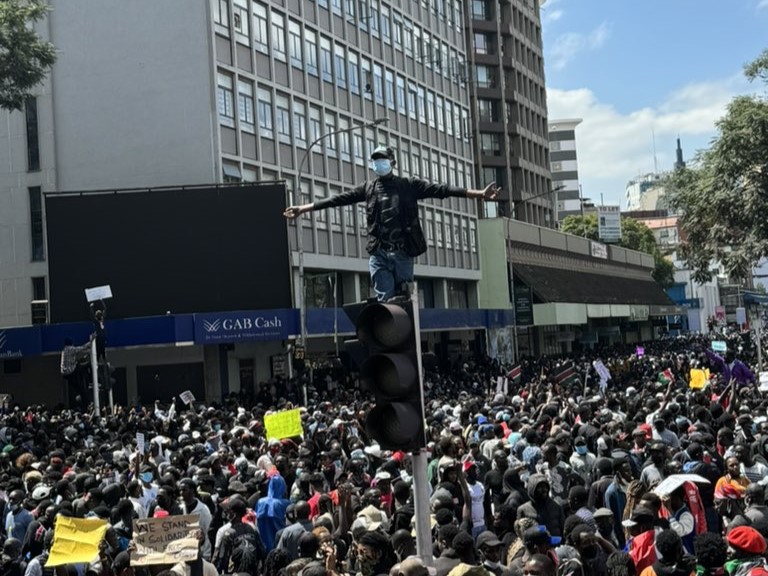
As tensions build around this year’s Gen-Z protests, Kenya’s business community have moved to secure shops and commercial spaces against potential damage from protests.
As late as Sunday evening, the city’s commercial heart was abuzz not with customers, but with the clanging of welding tools and hammering of steel. Traders, particularly along Tom Mboya Street, were seen working late into the night, reinforcing doors and windows with metal sheets and grills.


The fear of recurrence has driven more than just small traders to take precautionary steps. Thika Road Mall, a major retail centre outside Nairobi, announced its closure for the day, citing the need to protect staff and customers from potential violence. The mall joins a growing list of businesses suspending operations as a preventive measure.
The private sector has also stepped in with contingency plans. The Kenya Bankers Association has issued an advisory urging banks to allow employees to work remotely or to relocate to branches in low-risk areas, particularly those outside the Nairobi CBD.
Although security authorities have given assurances of preparedness, many businesses remain sceptical, haunted by the financial and emotional toll of previous protests. Small businesses bore the brunt of the June unrest, with many incurring heavy losses due to vandalism, looting, and forced closures.
For many entrepreneurs, survival now means spending thousands of shillings not on stock or staff—but on steel.