“Nionyeshe message” is a familiar request after paying through M-PESA. At a petrol station, in a restaurant, at the local kiosk or in a matatu, showing a payment message has become part of the transaction. You pay, turn your screen towards the attendant and wait for them to check before moving on.
It’s become normal, but it can reveal more than the payment itself. The message may also show your full name, phone number and M-PESA balance. What begins as a request to confirm a purchase can become an unnecessary glimpse into personal financial information.

For the person serving you, there is a practical reason for asking. The payment notification may have gone to the business owner’s phone, leaving the attendant without a direct way to confirm receipt. They either need to call the owner or ask to see your message. Meanwhile, you are waiting, and so is the next customer.
M-PESA Jumbe brings greater privacy and convenience to that everyday exchange. This capability lets Lipa na M-PESA and Pochi la Biashara merchants nominate up to fifty additional users to receive payment notifications, giving authorised staff the information they need to confirm payments while limiting the personal details shared.
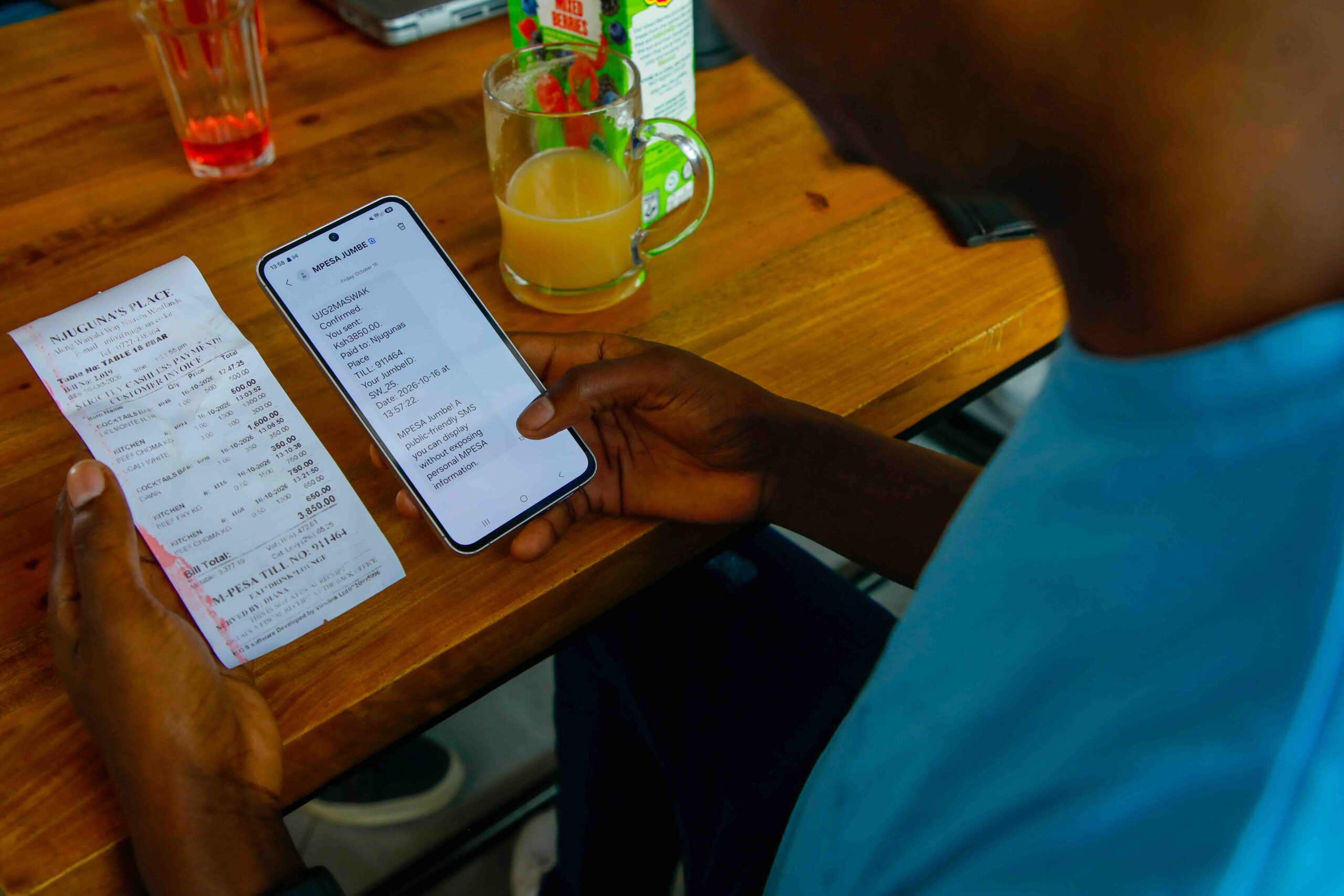
At the centre of the privacy feature is JumbeID, an alias that replaces the customer’s full name and phone number in the Jumbe notification. It combines the first letters of the customer’s first and last names with the last two digits of their phone number. For example, Nancy Kamau, whose number ends in 74, would appear as NK_74.
The notification retains the details needed to identify the payment, including the transaction reference, amount, business name, Till number, date and time. The customer also receives a separate Jumbe proof-of-payment SMS that they can show if needed, without displaying their M-PESA balance, full name or full phone number.
This makes a difference in places where payment confirmation happens in front of other people. At a busy restaurant, a customer can show the Jumbe message when settling a bill. At a fuel station, an attendant can check the notification received on their own phone. The payment can be verified without needing to open a personal M-PESA message to check.
The convenience extends to business owners. Running a business often means being in several places throughout the day: collecting supplies, meeting a supplier or handling responsibilities away from the counter. When every payment confirmation depends on the owner’s phone, even stepping out briefly can lead to repeated calls from staff.
With Jumbe, nominated employees receive payment alerts directly. A waiter can confirm a bill, a salon attendant can verify a client’s payment, and a shop assistant can complete a sale without first reaching the owner. Customers spend less time waiting for someone elsewhere to check their phone.
For Pochi la Biashara merchants who use their personal line for business, this also reduces the need to leave their phone at the premises so employees can read payment notifications. Owners can keep their phones with them while authorised staff receive the alerts needed to serve customers.
Receiving those alerts does not give staff access to the owner’s account balance, PIN, statement or transaction history. It gives them visibility of the payment information needed for their role, helping owners delegate confirmation while keeping broader account information private.
Merchants can nominate recipients through the M-PESA Jumbe menu on *234#. The nominated staff member then receives an invitation and must accept before receiving notifications. The service uses SMS and USSD, allowing staff to receive alerts on a basic phone as well as a smartphone.
For customers and businesses alike, the benefit comes down to an ordinary moment at the end of a purchase. A customer needs to show that they have paid. An attendant needs to confirm receipt. An owner needs the business to keep running when they are away.
M-PESA Jumbe makes that exchange easier, allowing payment confirmation to reveal what is needed to complete the transaction while keeping more personal information private.