For millions of African farmers, an unpredictable rainy season can mean the difference between a successful harvest and months of uncertainty. Plant too early, and seeds may fail before the rains arrive. Plant too late, and crops may not mature in time. These decisions shape household incomes, food security and the livelihoods of communities that depend on farming.
For a smallholder household, the timing of one decision can affect the next season as well: money spent on seed cannot easily be recovered, while a poor harvest can reduce funds available for school fees, food and essential future planting supplies.


Climate uncertainty is making these choices harder. According to the Food and Agriculture Organization, approximately 309 million Africans faced hunger in 2025. As governments convene for COP31 in Antalya, Türkiye, the urgent question is whether farmers and institutions have the information and capacity to act before climate risks become crises.
Artificial intelligence (AI) offers part of the answer. But predicting the rain is only the beginning.
At Microsoft Research, scientists have developed Probabilistic Bias Correction, a machine-learning approach designed to improve forecasts two to six weeks ahead by correcting recurring errors in existing weather models. Research involving Kenya points to the potential value of advance warning: farmers could adjust planting schedules, anticipate dry spells and make better-informed decisions about seeds and other inputs.
However, a forecast alone cannot tell a farmer what to do. Advice must account for soil conditions, crop varieties, irrigation, costs and local experience. A recommendation that works in one region may be unsuitable in another. The real task is turning climate intelligence into guidance farmers can use.
Governments face a related challenge: identifying where crops are struggling, how much food a country may produce and which communities need support. AI can combine satellite imagery, weather observations, agricultural records and field reports to monitor conditions, estimate harvests and inform decisions about food reserves, inputs and drought assistance.
In Kenya, we are pursuing this approach through ADAPT-Kenya, part of the wider ADAPT-Africa initiative. Led by Kenya’s Ministry of Agriculture and Livestock Development, the collaboration brings together NASA Harvest, the Kenya Agricultural Data and Information Centre (KADIC), Microsoft’s AI for Good Lab and other partners to strengthen agricultural information systems.
Consider a county agricultural officer deciding where to send assistance after poor rainfall. Crop-monitoring data, checked against field reports, could identify areas under stress, while harvest forecasts could help officials prepare for shortages. ADAPT-Kenya aims to support this through a shared, government-owned agricultural information system.
During Kenya’s 2026 long-rains growing season, ADAPT partners supported drought-response assessments. This is not yet evidence of improved yields or reduced losses. Its longer-term value lies in developing tools that government teams can maintain, evaluate and improve.
Our work at the AI for Good Lab reinforces one lesson: even advanced AI has limited value when institutions lack reliable data, skilled personnel, resources or the authority to act.
Information must also reach farmers in a form they can understand. Across Africa, language barriers, limited connectivity and differing levels of digital literacy restrict access to agricultural advice. Even accurate guidance is unlikely to help if it ignores local crops and growing conditions.
LINGUA Africa, led by the Masakhane African Languages Hub with the Gates Foundation, Microsoft’s AI for Good Lab and Google.org, supports African-language data and AI tools. Its agricultural awardees include AGRA’s MlimiVoice Malawi, designed to support farmers in Chichewa and Tumbuka, and AntuGrow’s SemaShambani, which aims to offer spoken farming advice and credit information in languages including Kiswahili and Dholuo. These approaches are promising, although wider impact remains to be demonstrated.
But accessible advice is only part of the challenge. The larger obstacle is institutional. Agricultural records are often fragmented, connectivity uneven and public agencies short of specialist capacity. AI cannot repair those weaknesses by itself. At COP31, governments and development partners should treat agricultural data systems as essential climate adaptation infrastructure, not optional technology projects.
Adaptation finance should fund regular crop and field surveys, interoperable databases, affordable connectivity and sustained training for public analysts and extension workers. Governments should establish responsible data-sharing and coordination among agricultural, meteorological and disaster-management agencies, while ensuring national institutions can sustain these systems beyond individual pilots or grants.
AI cannot stop droughts, replace irrigation or solve the financial pressures facing farmers. It can, however, help us see risks earlier and choose how to respond. Africa should build that capability around its own farmers, researchers and public institutions, whose knowledge determines whether a recommendation works in practice.
Progress will not be measured by sophisticated algorithms alone. It will be visible when farmers can protect more of their harvests, officials respond sooner to emerging shortages and communities face climate shocks with greater confidence. The future of climate-resilient agriculture depends not just on predicting the rain, but on what Africans can do before it falls.
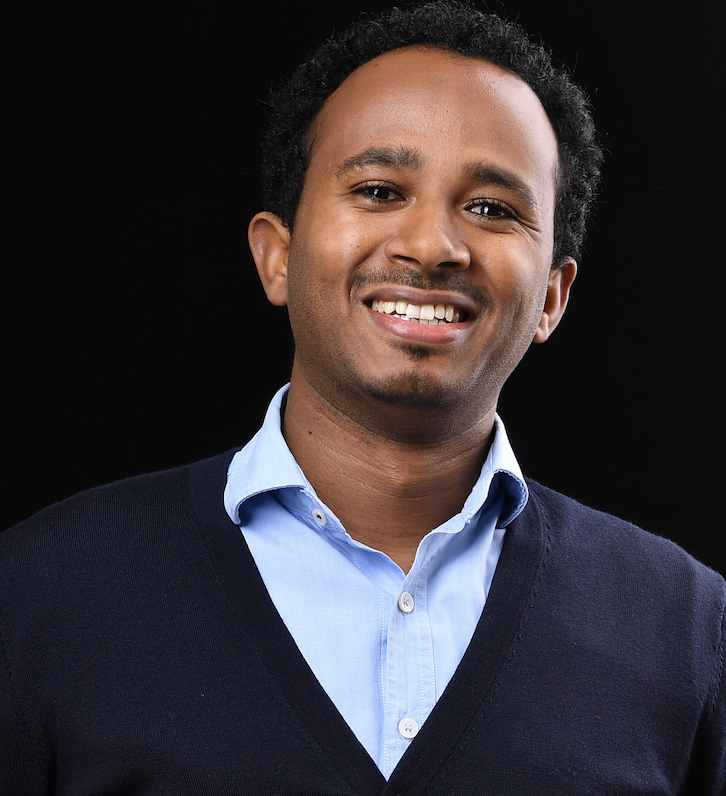
Dr Girmaw Abebe Tadesse leads Microsoft’s AI for Good Lab in Nairobi and is a member of the UN’s Independent International Scientific Panel on AI.