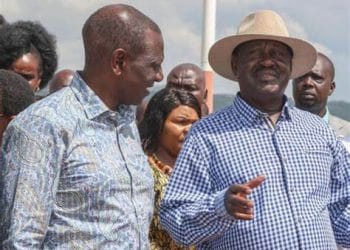
Orange Democratic Movement (ODM) leader Raila Odinga has called on Kenyans to gather at Kamukunji Grounds in Nairobi on Monday to commemorate the historic Saba Saba Day, marking 35 years since the landmark pro-democracy protests of 1990.
Addressing journalists on Sunday, Odinga stated that many of the injustices that triggered the original Saba Saba demonstrations remain unresolved. He cited economic hardship, human rights violations, and ongoing police brutality as persistent issues undermining the movement’s original goals.


“We have not achieved what Saba Saba intended,” he said. “Violation of human rights is still a challenge in the country, police brutality is there, and the economy has not performed as we expected.”
Odinga affirmed his attendance at the Kamukunji rally, a site etched into Kenya’s democratic memory as the starting point of the 1990 protests that pushed for the repeal of Section 2A of the Constitution and ushered in multiparty democracy. He noted the event would honour those who died in the struggle.
“My idea is to call the people and go to Kamukunji, the first place where Saba Saba took place. I will be attending the Saba Saba at Kamukunji to remember those who were killed,” he added.
This year’s anniversary is unfolding amid heightened public dissatisfaction with the current administration, as Kenyans decry the soaring cost of living, clampdowns on dissent, and violent dispersal of protests. Recent demonstrations have seen fatalities, injuries, and alleged deployment of armed groups to disrupt peaceful gatherings.
Educational institutions in urban areas have asked students to stay home on Monday, fearing disruptions. Meanwhile, Public Service Cabinet Secretary Geoffrey Ruku has warned civil servants that Saba Saba is not a public holiday, vowing to personally inspect offices and demanding explanations from absentees.
“Anyone who fails to report will have to produce a show-cause letter,” Ruku said.
It remains to be seen which other leaders will support Odinga’s call, especially amid speculation about his current alignment with President William Ruto’s administration. Nonetheless, the Saba Saba legacy endures — as both a symbol of past victories and a mirror of Kenya’s present-day democratic challenges.