The East African region is experiencing remarkable growth in mobile penetration, surpassing the African average and approaching global levels. With a penetration rate of 100%, East Africa stands as a leader in mobile connectivity, driven by countries like Kenya and Tanzania, which boast rates of 129% and 113%, respectively. This growth is supported by the affordability of mobile devices and the widespread adoption of mobile money services, which are transforming financial inclusion.
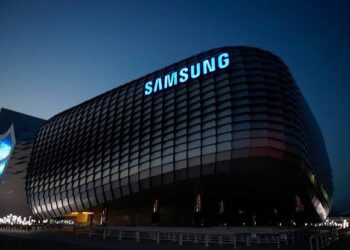
As a key player, Samsung has contributed significantly to this progress through innovative technology like Knox, enabling partnerships with companies such as Watu Simu and Mkopa to drive accessibility via the “buy now, pay later” model. Samsung’s 33% single-brand market share in Kenya highlights its role in shaping the mobile landscape across the region.

What is the current state of mobile penetration in the East African region?
Answer: The East African Community (EAC) boasts a 100% mobile penetration rate, surpassing Africa’s average of 92% and nearing the global average of 111%. Kenya leads with a penetration rate of 129%, followed by Tanzania at 113%. Mobile subscriptions have grown significantly, supported by the affordability of devices and widespread adoption of mobile money services. [1] As Samsung I believe we have played a key role in this through our Knox technology that allows our partners; Watu Simu and Mkopa to drive the buy now pay later model of business. This is reflected in our 33% single brand market share in Kenya.
Talk to me about mobile phone technology…
Answer: 4G has become the dominant technology in East Africa, with adoption set to increase significantly by 2030. However, while 5G remains in its infancy, and with significantly slow adoption. Countries like Kenya are leading the charge with initial deployments. By 2030, while 4G will likely have more connections than 5G, 5G’s superior speed and low latency will revolutionize IoT, smart homes, and smart city solutions.[2]
5G technology is rapidly transforming connectivity, offering faster internet speeds and reduced latency. Samsung is a leading player in 5G technology[3], and we are collaborating with network providers to ensure compatibility with our devices, including the S-series, A-series, and foldables.
What trends are being observed in mobile internet penetration?
Answer: Mobile internet penetration in the region grew to an average of 61% in 2023, up from 49% in 2022. Kenya leads at 72%, followed by Tanzania at 55%. The availability of affordable smartphones and competitive data pricing are key drivers of this growth.[4]
For instance, in 2024, we have witnessed more launches of affordable smartphones. Additionally, Samsung is increasing its footprint across the East African region. We have strategically opened about ten Samsung Experience Stores (SES) in the region with our most recent being in Meru, Kenya to ensure further penetration in East Africa. Another interesting market to note is Ethiopia where the mobile phone penetration is currently on the rise with 61%, as a brand we are looking forward to driving smartphone penetration in this market in 2025 through strategic partnerships with device financing partners.
How is mobile contributing to East Africa’s socioeconomic development?
Answer: The mobile industry is driving growth through innovations in digital education, remote jobs, financial inclusion such as mobile money, and improved access to services. The sector also supports job creation and boosts GDP, with increasing contributions expected from IoT and AI technologies. Kenya and Tanzania are leaders with mobile penetration rates of 75% and 81%, respectively, largely due to platforms like M-Pesa. Governments have also promoted mobile money for public payments, further boosting socio-economic development in the region.
What challenges remain for the East African mobile industry and how is Samsung addressing some of these challenges?
Answer: Some of the challenges facing our industry include high taxation on mobile services and devices, energy costs, shipment costs and the need for significant investment in infrastructure. Additionally, there is a high usage gap driven by limited affordability and low digital literacy in certain rural areas.[5]
While the issue of affordability and competition might be there, Samsung is addressing these by offering a range of mobile devices at affordable prices, experience/service stores across the region, and we are always innovating to stay ahead in the industry.
What is the outlook for East Africa’s mobile industry in 2025?
Answer: 2025 presents an exciting opportunity for the region’s mobile industry. The industry is poised for significant growth and transformation driven by several key trends. The rollout of 5G networks will accelerate, offering faster speeds and lower latency, enabling innovative services. Higher smartphone penetration and expanding IoT applications. Investments in infrastructure and competitive pricing will likely bridge the digital divide. Additionally, mobile money and data services are expected to play pivotal roles in enhancing digital inclusion and economic growth. However, as the digital landscape expands, cybersecurity threats will also increase. Strong cybersecurity measures and data privacy regulations will be crucial to protect consumer data and business operations.[6]
With the rise of Artificial Intelligence(AI), what can we expect in 2025?
Answer: The rise of AI will significantly shape the mobile industry by 2025, both in East Africa and globally. In 2024, Samsung launched its first AI-powered[7] smartphones, the Galaxy S24 series. The lineup included the S24, S24+, and S24 Ultra, with advanced AI features like Live Translate for real-time call translations, Photo Assist for intelligent photo editing, and Circle to Search with Google for quick searches by simply drawing a circle. Samsung has also expanded its AI capabilities to other phone models, highlighting its commitment to enhancing user experience and redefining mobile technology through AI.
Mobile operators will continue to leverage AI for energy management, as demonstrated by Safaricom’s AI-powered systems for reducing energy consumption. By 2025, such solutions are likely to become industry standards. AI-powered fraud detection and security systems will safeguard digital assets. Further than technological advancements, AI will enhance digital literacy and accessibility. To fully realize AI’s transformative potential, strategic investments, strong partnerships, and responsible governance frameworks will be essential.