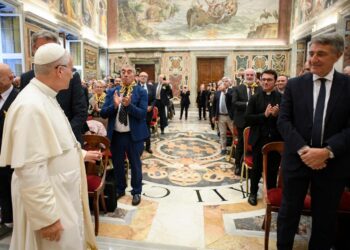
The death of a pope is a major moment in the Catholic Church. It marks the end of one spiritual chapter and the beginning of another. But what actually happens between the death of a pope and the arrival of his successor?
Here’s a step-by-step breakdown of the traditions, rituals, and decisions that unfold during this time.

1. Confirmation of the Pope’s Death: The First Rituals
The first step is to officially confirm the death of the pope. This solemn responsibility falls to the Camerlengo, a senior cardinal appointed to oversee the Church during the period between popes (called the “interregnum”).
Traditionally, the Camerlengo would gently call out the pope’s baptismal name three times, waiting for a response. Once there is none, he would pronounce the pope dead. Today, this ritual is largely symbolic and performed alongside confirmation from the pope’s medical team.
The key rituals that follow include:
- The sealing of the pope’s bedroom and personal rooms in the Vatican, preventing tampering or removal of personal documents.
- The removal and destruction of the “Fisherman’s Ring”, a gold ring bearing the seal of the pope. This symbol of papal authority is ceremonially smashed in the presence of Vatican officials to prevent its misuse.
- The announcement of death is then made by the Camerlengo to the public, usually via a statement delivered from the Vatican or to news agencies.
2. Mourning Period Begins: The Novendiales
Immediately after the pope’s death, the Church enters a nine-day mourning period known as the Novendiales. During this time:
- Special masses are held every day.
- Flags are flown at half-mast in Vatican City.
- Bells may toll across Catholic churches around the world.
- The pope’s body is prepared for viewing and placed in state at St. Peter’s Basilica, where the faithful can come to pray and pay their respects.
This period also allows time for leaders, cardinals, and the Catholic faithful worldwide to begin arriving in Rome.
3. The Funeral of the Pope
The pope’s funeral is typically held between the fourth and sixth day after his death. It’s a deeply sacred and public event:
- Held in St. Peter’s Square, attended by heads of state, world religious leaders, and thousands of mourners.
- The Mass is led by the Dean of the College of Cardinals.
- After the Mass, the pope is buried in the crypt beneath St. Peter’s Basilica, usually in a simple cypress coffin.
4. Life at the Vatican Slows Down
While daily functions of the Church continue, no major decisions can be made. During this period, the Camerlengo handles daily administration, but major offices are temporarily suspended until a new pope is chosen.
5. The Conclave is Announced
Once the mourning period ends, the process of choosing the next pope begins.
- All cardinals under the age of 80 are called to Rome to take part in the conclave—the gathering to elect the new pope.
- The cardinals take an oath of secrecy and are housed within Vatican grounds, completely cut off from outside influence.
The conclave is usually held in the Sistine Chapel, where voting takes place under Michelangelo’s famed frescoes.
6. The Voting Process
Voting is serious, secret, and steeped in tradition:
- A pope must receive a two-thirds majority of the vote.
- Up to four votes can take place each day—two in the morning, two in the afternoon.
- After each round, the ballots are burned:
- Black smoke (created by adding chemicals) means no decision has been made.
- White smoke means a new pope has been elected.
Sometimes the process is short; other times, it takes several days.
7. “Do You Accept?”: The New Pope is Chosen
Once a cardinal receives enough votes, he is asked a historic question:
“Do you accept your election as Supreme Pontiff?”
If he says yes, he immediately becomes the next pope and chooses a papal name. From that moment, he is the Bishop of Rome and the leader of the Catholic Church.
8. First Public Appearance: “Habemus Papam!”
The world first sees the new pope when he steps onto the balcony of St. Peter’s Basilica.
The cardinal protodeacon announces:
“Habemus Papam” — We have a pope!
The new pope then delivers his first blessing, Urbi et Orbi (to the city and to the world), beginning his public ministry.
9. The Inauguration Mass
A few days after his election, the new pope celebrates an inaugural Mass in St. Peter’s Square. It marks the official beginning of his papacy.
During this Mass, the pope receives the Fisherman’s Ring and the pallium (a woolen band symbolizing his authority as bishop and shepherd).
Thousands of people—lay Catholics, cardinals, bishops, and world leaders—attend this beautiful and historic moment.