


Kenya must urgently move beyond GDP growth and headline macroeconomic stability and re-anchor fiscal policy around people-centred outcomes. The Government of Kenya must address budget credibility concerns, enforce fiscal discipline, strengthen oversight institutions and fully comply with constitutional and Public Finance Management (PFM) principles. Only when these foundations are in place is when economic growth can translate into tangible improvements in citizens’ livelihoods and resilience.
Kenya’s GDP growth is projected at around 5 percent in the medium-term, signaling macro-economic stability after years of shocks. The continued efforts by the government to implement prudent fiscal and monetary management policies and enhanced domestic revenue mobilization efforts have emerged as some of the key drivers to macro-economic stability in the medium-term outlook. However, this stability is not translating into improved living standards for most citizens. For many Kenyans, macro-economic stability has meant coping with higher costs, decline in real incomes, limited to no employment opportunities and declining access to essential public services.


Households in Kenya have experienced erosion of income where total real wage earning per employee dropped by 4% from KSh 696,817 in 2022 to KSh 665,418 in 2024. This has sharply reduced purchasing power. In the same period, the Government of Kenya data on inflation reported an ease from 7.7% in 2022 to 4.5% in 2024. This highlights the disparity between macro-economic growth and economic realities for the majority of citizens.
Over the period, there has been poor job growth in Kenya. The economic expansion is concentrated on the service industry and agriculture. These sectors are characterized by informality, low wages, and limited employment security. Sadly, for Kenya growth in manufacturing continues to decline. The Institute of Public Finance in its latest Macro-Fiscal Analytic Snapshot notes that while Kenya’s economic trajectory shows gradual stabilization in GDP growth alongside a steady recovery in investment, the 2027 general election presents a notable risk. Historically, Kenya’s election cycles often bring increased uncertainty, postponements in investment and slower economic growth, which could hinder overall momentum.
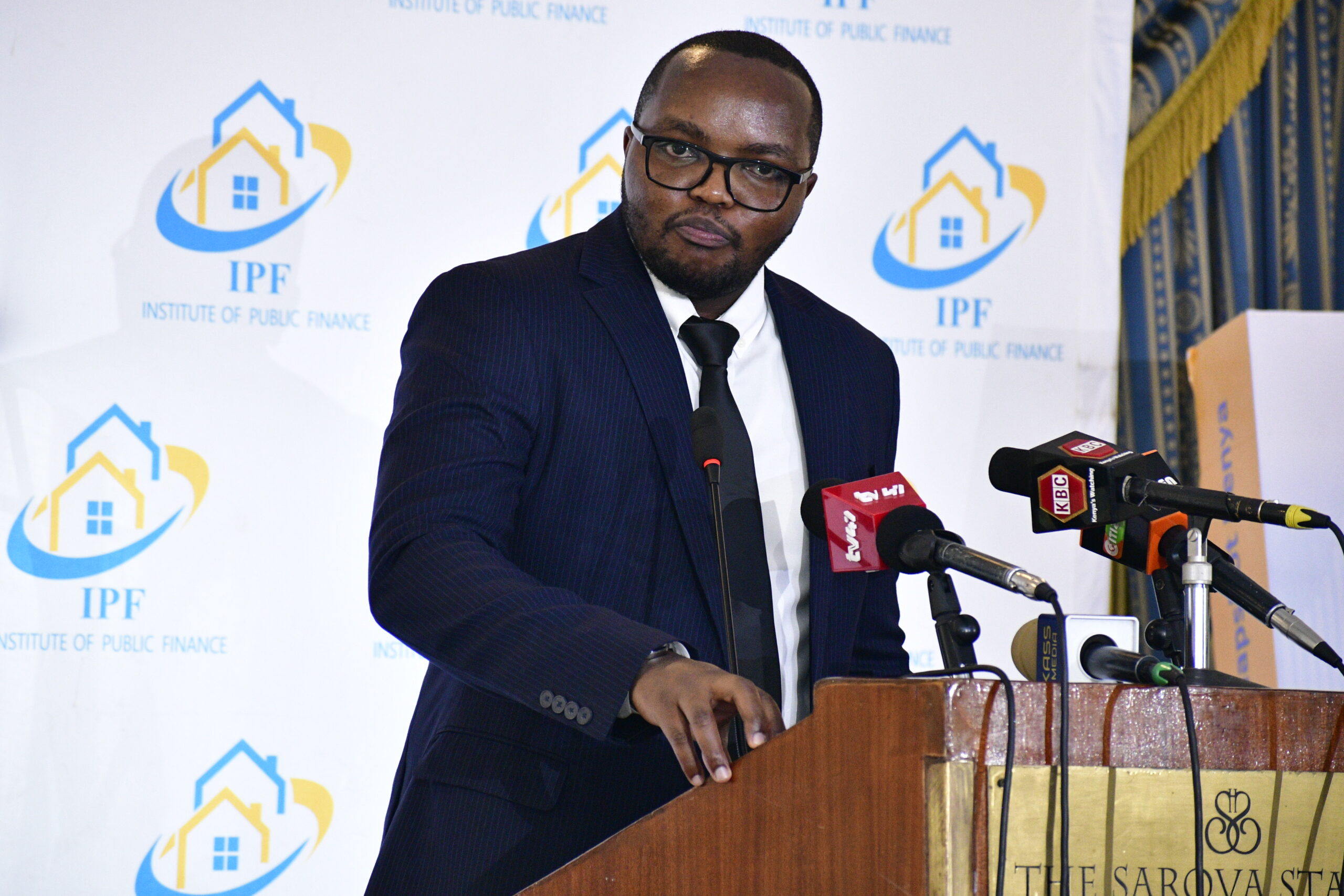
Daniel Ndirangu, CEO of the Institute of Public Finance said “The issue of tight fiscal space facing the government is not in question. But what the government is not doing right now is the right conversation for actionable recommendations such as those made by the 2026 MFAS. Every shilling must be optimally put into use in critical sectors like health, education, food security, water, nutrition, social protection, and gender equality.”
The report also gives evidence on persistent revenue underperformance that signal forecasting weaknesses. IPF underscores the importance of realistic revenue targets grounded in economic reality, not political pressure.
Moreover, limiting the use of supplementary budgets and having effective oversight by Parliament can significantly curb the misuses and wastage of public resources. These are critical issues that recur in the Controller of Budgets and Office of the Auditor General reports every financial year. “Compared to her regional peers, Kenya exhibits significant optimism in fiscal consolidation with repeated revisions illustrating credibility challenges and implementation risks facing Kenya’s medium-term fiscal strategy.” Mr. Ndirangu further highlights.
Experts from the Institute of Public Finance warn that Kenya risks deepening poverty and inequality if economic growth continues to bypass informal workers, women, youth, and climate-vulnerable communities. Budget underfunding and under-execution in health, nutrition, water and hygiene and agriculture threatens hard-won progress toward Kenya’s Universal Health Coverage and food security. This further increases household vulnerability due to high out-of-pocket health costs and declining social protection benefits.
While Kenya’s macroeconomic outlook remains broadly stable, the key issues to monitor in the next 12 months include
• Credibility of revenue forecasts,
• Execution of austerity measures.
• Transparency and accountability in the management of National Infrastructure Fund,
• Progress in health insurance reforms, and
•Funding trends across gender, water, and agriculture sectors.
To spur rapid economic growth, government policy should encourage investment in industries linked to decent job creation. Policies should create an enabling environment for stable, well-executed agricultural financing focused on productivity, climate resilience, and smallholders.








![President William Ruto flanked by Environment CS Aden Duale. [PCS]](https://newstrends.co.ke/wp-content/uploads/2025/02/President-William-Ruto-flanked-by-Environment-CS-Aden-Duale-PCS-768x480.jpg)
