As Kenya joins the world in marking World Youth Skills Day, attention will naturally turn to the progress made in equipping young people with the skills needed to secure employment, establish businesses and contribute to economic growth.
However, the day should also prompt a more difficult question: Are young people being given a fair opportunity to apply their skills and build sustainable livelihoods?


Across the world, millions of young people remain excluded from education, employment and skills development opportunities. At the same time, rapid technological change is transforming the workplace and altering the skills employers require.
According to UNESCO, approximately 273 million children and young people remain out of school, while one in every five people aged between 18 and 34 is disconnected from education, employment or skills development pathways.
The organisation also estimates that 40 per cent of existing skills no longer match current labour-market requirements. By 2030, about 22 per cent of jobs are expected to undergo significant transformation as technology changes how people work and how businesses operate.
This means that education and training systems must do more than prepare young people for the jobs available today. They must equip them with practical, adaptable and future-ready skills that allow them to respond to a constantly changing economy.
Kenya’s skills challenge
Kenya faces a similar challenge.
With nearly 75 per cent of the population below the age of 35, the country has a large and energetic youth population capable of driving economic growth. However, youth unemployment remains persistently high, while employers continue to report a mismatch between the skills available in the market and those required in the workplace.
More than one million young Kenyans enter the labour market every year. Many of them struggle to secure decent and sustainable employment, even after completing their education or training.
The Government has made notable progress in expanding Technical and Vocational Education and Training through national polytechnics, county vocational training centres and constituency-based institutions.
These investments have helped make practical and industry-relevant training more accessible to young people across the country. They have also contributed to changing attitudes towards technical education, which is increasingly being recognised as a credible pathway to employment and entrepreneurship.
But training alone cannot resolve the youth unemployment challenge.
The conversation must now move from skills acquisition to skills application.
The true measure of success is not simply the number of young people graduating from training institutions. It is the number who can convert their knowledge and technical capabilities into jobs, sustainable businesses and improved livelihoods.
The journey begins after graduation
For many young people, graduation is not the end of the journey. It is the beginning of a more demanding one.
A technically skilled mechanic, plumber, tailor, carpenter, beautician or construction worker may still struggle to earn a sustainable income without access to the tools, financing and customers needed to practise their trade.
Similarly, a young entrepreneur may have a strong business idea but lack the capital, technology, mentorship and market connections required to turn it into a viable enterprise.
Skills create capability, but affordable finance unlocks opportunity. Technology improves efficiency and productivity, while access to markets allows businesses to attract customers, expand and create employment.
These elements must therefore be brought together.
This is especially important in Kenya, where Micro, Small and Medium Enterprises form the backbone of the economy and employ millions of people. Supporting youth-led enterprises is not merely a youth empowerment initiative; it is an investment in the country’s wider economic growth.
Young entrepreneurs need an enabling environment in which they can start businesses, survive the difficult early stages, grow their operations and eventually employ others.
Partnerships can close the gap
The scale of the youth employment challenge means that no single institution can address it alone.
Government agencies, training institutions, financial organisations, development partners and private-sector players must work together to connect training with financing, technology, mentorship and market opportunities.
The KCB Foundation’s 2Jiajiri Programme demonstrates how such partnerships can support young people beyond the classroom.
Established in 2016, the programme works with the National Government, county governments, TVET institutions, development partners and industry stakeholders to equip unemployed and out-of-school youth with practical vocational skills.
The initiative particularly targets young people operating in the informal sector and supports them to pursue employment, self-employment and enterprise development.
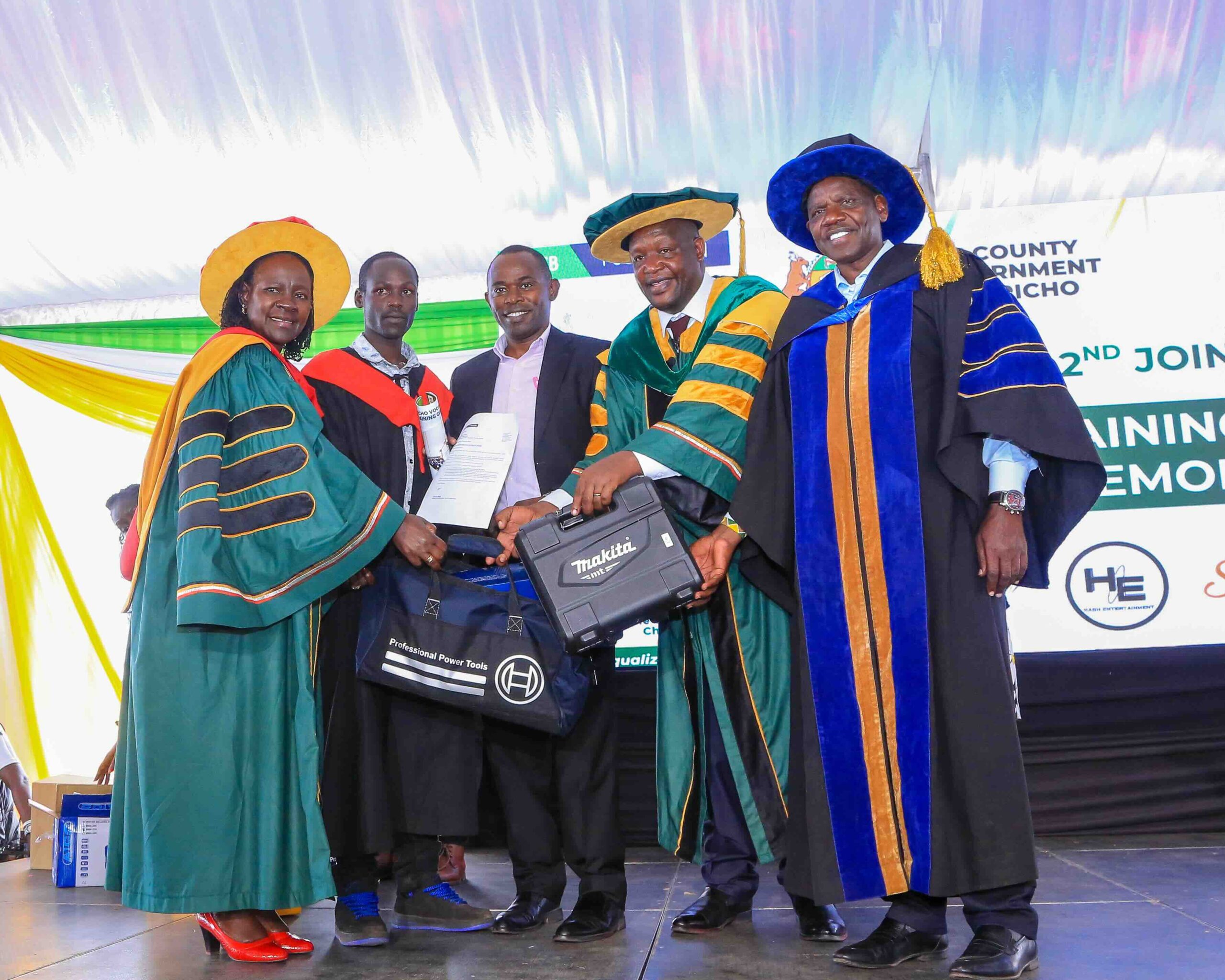
Importantly, the programme goes beyond technical training. Young people also receive access to tools, business networks, financial support and enterprise development opportunities to help them establish sustainable micro and small businesses.
This integrated approach recognises that training is only one part of the solution. Long-term success depends on whether young people can access the resources and opportunities needed to apply what they have learnt.
“Youth are not just the future of our economy; they are its present,” says KCB Foundation Managing Director Mendi Njonjo.
“By investing in practical skills, strengthening TVET education, and building partnerships that connect training to finance, technology, markets and opportunity, we are empowering young people to create sustainable livelihoods, build resilient enterprises, transform their communities and drive inclusive economic growth.”
Since its establishment, the 2Jiajiri Programme has trained more than 35,000 young people, supported over 150,000 jobs and facilitated the disbursement of more than KSh1.7 billion in enterprise financing.
The programme has also distributed more than 2,200 business start-up toolkits, enabling young entrepreneurs across Kenya to establish and grow their enterprises.
Moving from potential to productivity
World Youth Skills Day should therefore be more than a celebration of training programmes and graduation numbers.
It should be a moment to assess whether young people can turn their skills into productive work.
Kenya has already made progress in expanding access to technical and vocational education. The next step is to strengthen the connection between training institutions, employers, financial institutions and markets.
Young people do not simply need certificates. They need opportunities to practise their trades, access affordable financing, adopt appropriate technology, reach customers and build resilient enterprises.
By creating an ecosystem that connects skills to real economic opportunities, Kenya can enable its young population to move from unemployment and uncertainty to productivity, entrepreneurship and sustainable livelihoods.
Investing in youth skills is important. Ensuring those skills can be applied is what will ultimately transform lives, strengthen communities and drive inclusive economic development.