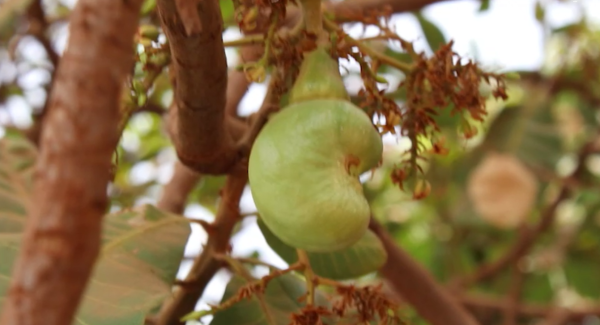
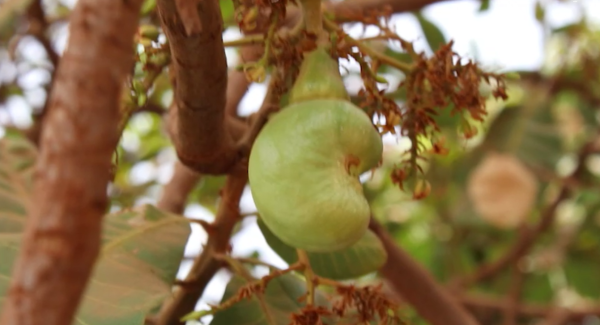

Launched in 2017 and completed in 2024, the Cashew Development Support Project in the Comoé Basin for REDD+ (PADA/REDD+) exemplified sustainable development. The project combined poverty reduction, ecological transition and the empowerment of women and young people, achieving a remarkable implementation rate of 95 percent. It has revitalised the cashew nut industry, Burkina Faso’s third largest agricultural export after cotton and sesame.

The PADA/REDD+ project received support from the African Development Bank, which granted a loan of $4 million, and the African Development Fund, the Bank Group’s concessional funding window, with a grant of $1.39 million, representing 61 percent of the total project cost of $8.82 million. The government of Burkina Faso and the beneficiaries provided the remaining funding.
The project mobilised the necessary resources to contribute to the sustainable transformation of the Cascades, Hauts Bassins and South-West regions, with significant participation from women. It enabled producers to reduce maintenance costs, improve soil fertility and structure, and increase cashew productivity and incomes in a sustainable manner.
Climate action combined with agricultural production
The first component of the PADA/REDD+ focused on carbon sequestration. This resulted in the creation of seven tree parks, the production of more than 1.6 million improved seedlings and the development of approximately 27,000 hectares of agroforestry plantations. One-third of these plantations are maintained by women, underlining the project’s commitment to promoting social inclusion. A total of 35,340 producers, including 6,047 women, were trained in good agricultural and organic practices.
This capacity-building approach for producers and processors equipped each stakeholder with the skills required to meet their needs and expectations, particularly in mastering technical production and processing methods.
Adama Patrick Sombié, a cashew nut processor in Bérégadougou, confirms his satisfaction: “Before the project, there were no cashew tree parks in the village, only forest and a few orchards. When the project offered plots to promoters, I signed up and received two hectares.”
Access to finance and modernization of processing
The second component of the project focused on strengthening value chains. Long hampered by limited access to finance, the sector’s development has benefited from an innovative partnership with the umbrella organisation of Burkina Faso’s Caisses populaires banks, alongside savings and loan cooperatives.
This mechanism enabled investment loans to be granted based on a sliding scale of interest rates, financing 103 microprojects for a total of 888 million CFA francs, or approximately $500,000. The project also created 9,580 additional “green” jobs, 92.66 percent of which were for women, by financing micro-investment projects.
Thanks to the funding provided, seven processing units were modernised. A new unit called “Tensya” was established in the commune of Toussiana, and three warehouses were built, one of which is reserved for women. The project also enabled the purchase of 12 trucks and 45 tricycles, training in good practices for 631 people, strengthening the environmental skills of 477 stakeholders, and the construction and equipping of infrastructure such as a cooking and shelling centre for women in Diéri, entirely subsidised by the African Development Bank.
An inclusive and sustainable impact
These microprojects reached nearly 18,000 people, 61 percent of whom were women, further strengthening the inclusive approach of PADA/REDD+. “This project is a blessing for us. Thanks to the income generated, we can send our children to school and keep them healthy. Before, we used to sell our products at rock-bottom prices, but now, with our own processing units, we control the entire value chain,” says Aramatou Barro, a processor in Diéri.
Christiane Koné, a processor in Toussiana, confirms this postive impact: “Thanks to the project, we have been able to purchase six automatic shelling machines, which are twice as fast as our 25 manual shelling tables.”
At the same time, the project structured supply networks, ensured that 96 cooperatives complied with OHADA (Organization for the Harmonization of Business Law in Africa) standards and implemented an environmental management plan. Working conditions have improved significantly. Isso Kindo, a trader in Bobo-Dioulasso, says: “Transport was our main obstacle. Today, thanks to the truck financed by the project, I can transport up to 60 tonnes of nuts from the towns of Banfora and Mangodara.”
The impact of PADA/REDD+ can also be measured in terms of job creation for young people and rural entrepreneurs. In Orodara, Arzouma Zougouri, a producer and business owner, explains that “the project’s support has enabled me to better equip my processing unit. I’ve gone from 200 to 300 employees,” he says proudly.
By structuring the cashew nut sector sustainably, increasing productivity and strengthening local processing, PADA/REDD+ achieved its objectives whilst laying the foundations for more resilient rural development. Its contribution to carbon sequestration through agroforestry plantations strengthens its environmental impact. Perennial plantations, modernised agricultural practices, a strengthened local processing network and better access to finance were the pillars of this success.
Distributed by APO Group on behalf of African Development Bank Group (AfDB).