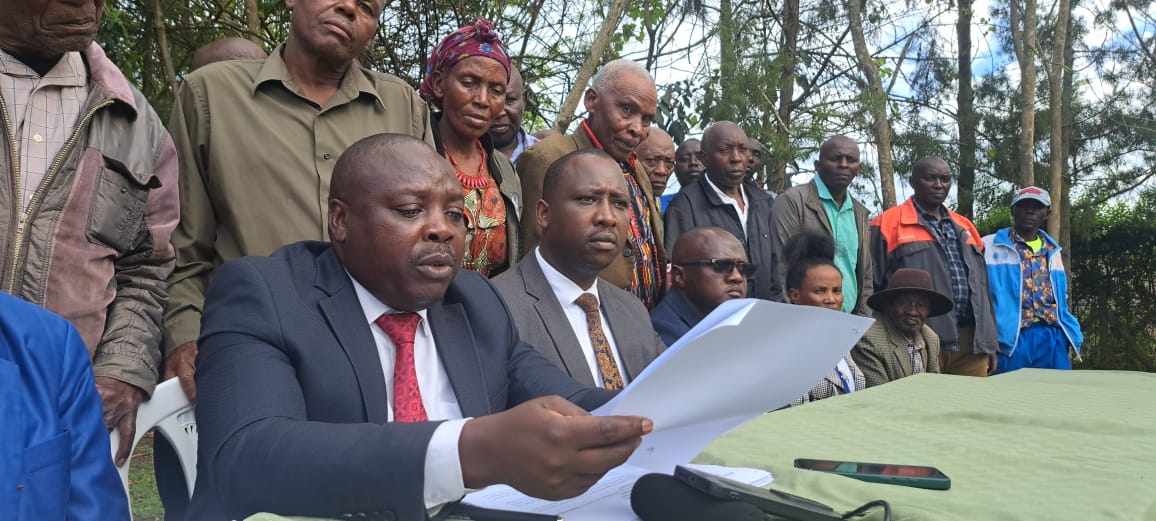
A landmark decision by the Environment and Land Court has paved the way for the return of 3,200 acres of ancestral land in Makuyu, delivering long-awaited justice to members of the Kakuzi Division Development Association (KDDA) and marking a major legal setback for Kakuzi PLC.
The ruling brings renewed hope to hundreds of families who have pursued restitution for decades over land taken during the colonial era and later allocated to the agricultural firm.


Court Removes Legal Shield on Disputed Land
In his judgment, Justice Maxwell Gicheru lifted interim orders that had temporarily protected Kakuzi PLC from relinquishing the contested land.
The move clears the path for the subdivision and allocation of the acreage to KDDA members and other affected claimants.
By removing these legal barriers, the court has effectively accelerated the process of resettling communities that have long awaited redress.
The decision affirms recommendations by the National Land Commission, which on November 14, 2025, gazetted its determination on the historical land injustice claim.
The commission had directed Kakuzi PLC to cede 3,200 acres from its Makuyu estate to KDDA and three additional claimant groups. The land was originally alienated from local communities during colonial rule, a legacy that has fueled prolonged disputes and demands for restitution.
Appeal Allowed but Implementation to Proceed
While Kakuzi PLC has been granted permission to appeal the ruling at the Court of Appeal, the court declined to issue further injunctions that could delay implementation.
This means the restitution process will move forward despite the pending appeal—a critical step in ensuring that justice is not postponed further for affected families.
The judgment represents a significant milestone in Kenya’s ongoing efforts to confront and resolve historical land injustices. It underscores the growing role of the courts in enforcing recommendations aimed at correcting colonial-era land dispossession.
For KDDA claimants, the ruling is more than a legal victory—it is a restoration of dignity, heritage, and economic opportunity after years of uncertainty.
As attention shifts to implementation, stakeholders will be watching closely to see how quickly the land is subdivided and allocated—and whether the appeal process will influence the final outcome of this historic case.