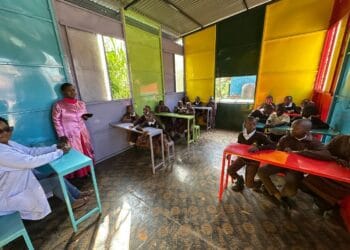
In a continued effort to reduce the burden of cervical cancer, the Ministry of Health, supported by the World Health Organization (WHO) and other key partners has launched a national training initiative aimed at strengthening the capacity of both doctors and nurses in the screening and treatment of pre-cancerous cervical lesions.


The two-week training brought together healthcare workers from various districts, including Good Hope, Mochudi, and Palapye. The programme focused on equipping six doctors and a group of nurses with advanced clinical skills, particularly in managing cases that require more than basic procedures such as thermal ablation or cryotherapy. “Our goal is to ensure that both doctors and nurses are adequately trained to identify and manage cervical pre-cancer,” said Ms Thomamo Pheto, National Coordinator for the Cervical Cancer Prevention Programme at the Ministry of Health. “Many districts in Botswana still lack skilled personnel, and this training is designed to close that gap.”
Since the inception of the programme in 2015, more than 283 healthcare professionals have been trained in cervical cancer screening and treatment, an achievement made possible through ongoing collaboration with WHO and other development partners. Ms Pheto noted that the training has sparked a growing interest in women’s health among healthcare workers and has significantly strengthened capacity at the district level. “This time around, we are building a team of professionals who will return to their districts better prepared to screen more women and manage cases early, before they progress to full-blown cancer,” she added.
Despite the availability of services, Botswana continues to record low cervical cancer screening rates. Ms Pheto attributes this to the asymptomatic nature of pre-cancer and the resulting lack of urgency.
“When you have a pre-cancer, you don’t feel sick. There’s no pain, no discharge, so many women assume they’re fine,” she said. “This false sense of security is one of the reasons women don’t come forward for screening.” She emphasized the importance of reaching women who have never screened. “Those who have never screened are the ones we are most concerned about. Their health status is unknown, and they may already be at risk.”
In his remarks, WHO Botswana’s focal person for Noncommunicable Diseases (NCDs), Dr Tebogo Madidimalo, reaffirmed the country’s commitment to eliminating cervical cancer as a public health threat. “Botswana is committed towards eliminating cervical cancer by 2030, and we all, particularly us health care workers, have a responsibility to ensure that women coming through our facilities are offered cervical cancer screening and timely follow-up care,” said Dr Madidimalo. He further highlighted the nation’s strong record in addressing major health challenges: “We have proven before that elimination of communicable diseases is possible in Botswana, and likewise, elimination of cervical cancer is within reach for us. It will, however, take all hands-on deck to achieve the WHO targets for elimination.”
Ms Pheto echoed this call to action, encouraging communities to support eligible women, especially those aged 25 and above, to come forward for screening. “Cervical cancer is a silent killer. By the time symptoms appear, it may already be too late. But with early detection, it is both preventable and treatable.”
With continued support from WHO and other partners, the Ministry of Health remains committed to scaling up prevention efforts, enhancing healthcare worker capacity, and expanding community outreach. “With the right skills, tools, and community support, we can save lives and move closer to eliminating cervical cancer as a public health threat in Botswana,” Ms Pheto concluded.
Distributed by APO Group on behalf of World Health Organization (WHO), Botswana.